


Nigeria’s Startup Funding Crisis 2026; The Reasons Egypt Is Winning More Investors
The African startup ecosystem is seeing one of its most dramatic transitions in recent years, with Nigeria, long seen as the continent’s undisputed startup hub, experiencing a severe investment slowdown. The talk in boardrooms, venture capital circles, founder communities, and technology conferences throughout Africa is no longer about Nigeria’s dominance, but rather if the country is progressively losing its status as the continent’s premier investment destination.
Nigeria’s startup businesses raised a total of $78.6 million in Q1 2026, spread over 15 investment agreements, demonstrating ongoing investor interest in Africa’s largest startup ecosystem.
This represents a 28% year-on-year decrease in funding compared to Q1 2025, showing a slowdown in capital investment. The findings have sparked heated debate among investors, entrepreneurs, politicians, and ecosystem builders, who are wondering if this is just a temporary correction or an indication of deeper structural issues in Africa’s largest technology sector.
What has sprouted the situation is Egypt’s emergence as a more viable finance source. For the first time in recent memory, Egypt apparently drew more startup money than Nigeria during the same period, indicating a significant shift in Africa’s startup investment environment and raising concerns about Nigeria’s capacity to sustain its competitive edge.
The Numbers Behind Nigeria’s Startup Funding Decline
While Nigeria remains one of Africa’s most active startup ecosystems, the decrease in capital deployment reflects increased investor caution. Venture capital organisations that used to aggressively chase growth-orientated startups are now enforcing stricter investment standards, including stronger financial performance, clearer profitability prospects, and more sustainable business models.
This huge financing drop reflects a larger global venture capital reset that began following the post-pandemic investment boom. Investors will no longer fund rapid development without proof of revenue generation and operational effectiveness. Instead, founders are being compelled to demonstrate that their companies can survive and develop without resorting to constant fundraising rounds.
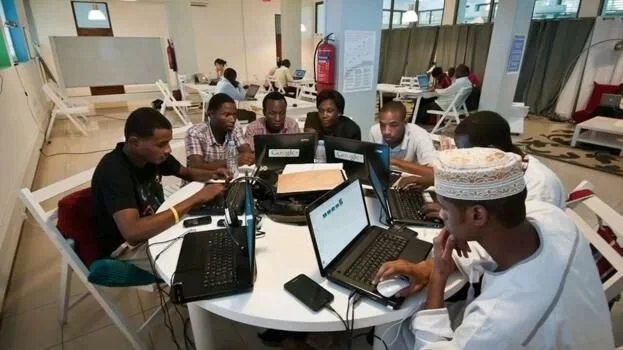
The situation has proven especially difficult for early-stage entrepreneurs, which have typically relied on venture money to validate ideas, scale products, and get consumers.
Egypt’s Rise
Egypt’s climb above Nigeria in startup funding rankings has become one of the most widely discussed trends in African technology.
For many years, Nigeria, Egypt, Kenya, and South Africa dominated African startup investment. However, current investment trends indicate that Egypt is gaining traction as a result of economic changes, enhanced startup support systems, stronger government-backed innovation efforts, and higher investor confidence.
Many observers believe Egypt’s growing appeal originates from its strategic location, which connects Africa, the Middle East, and Europe. This positioning enables Egyptian companies to reach larger markets and attract a broader spectrum of investors seeking regional expansion prospects. Egypt’s ability to outperform Nigeria in attracting startup funding has become a strong symbol of the shifting dynamics in Africa’s innovation economy.

One of the most significant factors influencing African startup investment in 2026 is a greater emphasis on quality over quantity. These days investors are no longer pursuing development at any cost. Instead, they are looking for firms with established revenue streams, solid unit economics, efficient operations, and realistic paths to profitability.
This shift is reflected in Nigeria’s financial distribution. Nearly 99 percent of the capital raised during Q1 2026 went to the top ten startups, indicating that investors are focusing their efforts on companies with the best long-term prospects.
For founders, raising funding has become much more challenging. Before committing cash, investors undertake additional due diligence, ask more difficult questions, and demand greater evidence. But despite the fundraising downturn, numerous Nigerian entrepreneurs received big investments throughout the quarter, demonstrating that investors are still interested in high-growth enterprises.
Terra Industries stood out as Nigeria’s largest fundraiser, raising a total of $33.8 million through seed and venture funding rounds. The company received funding from notable international investors, demonstrating their sustained belief in deep technical solutions with long-term industrial applications.
Another notable success story was MAX, which raised $24 million through a combination of debt and venture capital. The transaction revealed a rising preference among African companies for alternate funding methods that avoid stock dilution.
Despite the larger slump, fintech startups continued to attract funding. Startups such as Nairagram, OneDosh, and Cardtonic have secured funding rounds, cementing fintech’s position as Nigeria’s strongest startup sector.
The Rise of Debt Financing Throughout Africa
Across the continent, African companies raised nearly $600 million in Q1 2026. However, debt financing rather than traditional stock investments contributed significantly to that rise. Debt funding reportedly increased sixfold over the previous year, but equity funding fell significantly.
Rather than providing investors huge ownership holdings, mature firms with stable revenue are increasingly using debt financing to support expansion. This allows entrepreneurs to maintain more control over their businesses while still gaining access to the finance required to expand operations.
The increased popularity of debt financing implies that Africa’s startup ecosystem is maturing and adopting funding strategies similar to those found in more established venture markets.
Furthermore, broader economic factors in Africa continue to sway investment decisions. Rising debt requirements, foreign exchange issues, and macroeconomic unpredictability have compelled investors to prioritise markets and companies that exhibit durability and long-term development potential.
Conclusion
The reduction to $78.6 million, combined with Egypt’s emergence as a stronger funding destination, has spurred important discussions about investor trust, ecosystem competition, and the future of African innovation.
The next few years will determine whether Nigeria can restore its status as Africa’s leading startup destination or whether a new era of regional rivalry, headed by Egypt and other rising ecosystems, will change the continent’s innovation environment.
What is certain is that Africa’s startup story is about to take a radical new turn, and the competition for venture capital has never been more fierce, competitive, or revolutionary than it is now.
Related Posts

HP and UpSkill Universe Launch Free AI Training for 55,000 African SMEs
HP and UpSkill Universe are giving 55,000 African SMEs free AI training—helping entrepreneurs turn AI from hype into practical business growth.
Meta, 3MTT, NCAIR & RAIN Partner to Accelerate AI Skills and Innovation in Nigeria
Meta, 3MTT and RAIN launch AI Academy Nigeria to equip developers with AI skills, build startups and turn Nigeria’s growing AI talent into global innovation.

Nomba and Synafare Commit ₦2 Billion to Solar Financing for 300 Nigerian SMEs
Nomba and Synafare are committing ₦2 billion to solar financing, helping 300 Nigerian SMEs cut energy costs, boost productivity and power their growth.

Ghana’s Wobil Technologies Is Putting Solar to Work in Rice Farming, And Fighting Africa’s Post-Harvest Crisis
Ghana’s Wobil Technologies is using solar-powered machinery to cut rice losses, lower farming costs and help smallholder farmers keep more of every harvest.

Uber’s Exited Nigeria, Just Weeks After It Acquired ‘Delivery Hero’ (Glovo) for €13 Billion
Uber has exited Nigeria after 12 years, just weeks after launching a €13 billion bid for Delivery Hero, Glovo’s parent. One exit, one massive global gamble.