

South Africa Loses Its Crown To One Of Its Biggest Competitors
Morocco Overtook South Africa As The Continent’s Most Industrialised Economy
The balance of industrial power in Africa has shifted dramatically, with Morocco surpassing South Africa in major industrialisation rankings. What was formerly thought to be a stable hierarchy has suddenly been disturbed in an impressive and contentious manner, provoking extensive debate among economists, investors, and policy analysts.
Recent industrial competitiveness and manufacturing production assessments have recognised Morocco as Africa’s most industrially advanced economy, displacing long-time leader South Africa.
“While South Africa remains a continental industrial powerhouse, it continues to experience a steady decline in industrial competitiveness,” the African Development Bank said in its Africa Industrialisation Index for 2025.
This change indicates a more profound structural transition, fuelled by strong policy reforms, export diversification, and sustained investment in high-value businesses.
The Rise of Morocco’s Industrial Machine
Morocco’s growth has been nothing short of calculated, purposeful, and ambitious. Over the last decade, the country has established itself as a worldwide manufacturing hub, connecting Africa, Europe, and the Middle East. Its industrial policy has been characterised by aggressive expansion of automotive manufacture, aeronautical engineering, renewable energy manufacturing, and fertiliser exports.
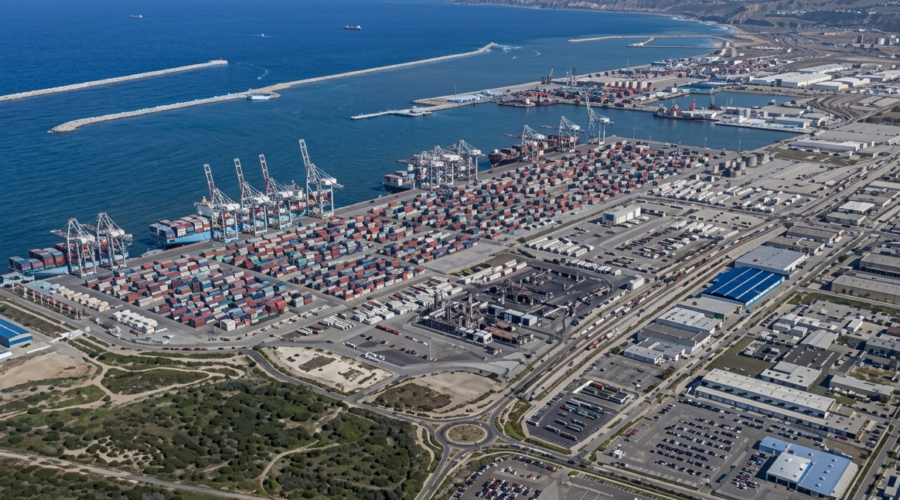
This metamorphosis is not an accident. It is the product of long-term planning that focuses on infrastructure development, export competitiveness, and attracting foreign direct investment. Industrial zones like Tangier Med have become emblems of Morocco’s fast rise, serving as effective gateways for international trade and logistics efficiency.
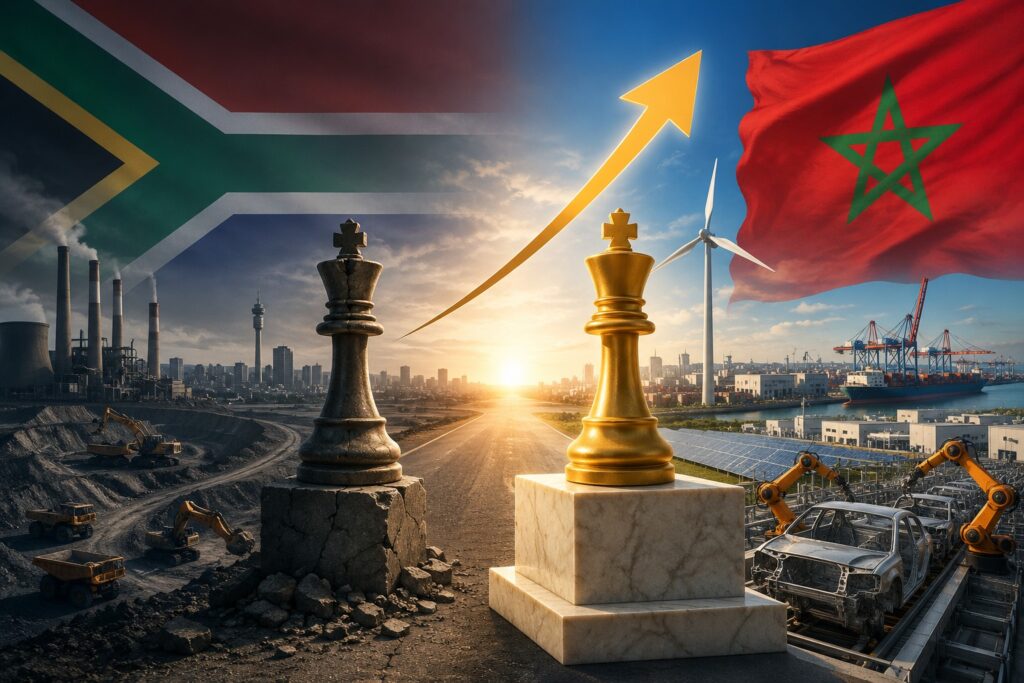
The country’s economic model has shifted toward diversification, lowering reliance on agriculture and traditional sectors while emphasising technology-driven and export-led industrial expansion. This strategic shift has made Morocco a highly appealing destination for global firms looking for reliable production bases with easy access to Europe.
While South Africa remains one of the continent’s most sophisticated and diverse economies, its industrial dominance has waned in contrast. The shift does not always imply an absolute decrease but rather a slower industrial expansion relative to Morocco’s increased growth.
South Africa’s industrial sector has suffered continuous issues such as energy insecurity, infrastructure bottlenecks, policy uncertainty, and slow manufacturing expansion.
Years of power outages, governmental corruption, political uncertainty, and rising living costs have discouraged investment and stifled economic growth, with GDP increasing by less than 1% per year on average over the last decade.
President Cyril Ramaphosa has previously projected that South Africa needs up to R1.6 trillion in public-sector infrastructure investment and an extra R3.2 trillion from the private sector to meet its infrastructure targets by 2030.
Gross fixed-capital formation fell in three of four quarters last year, rebounding only in the final four months of 2025, indicating that businesses are beginning to invest in machinery and structures, potentially increasing the economy’s productive capacity.
These limits have hampered its ability to increase industrial output at the rate required to sustain continental leadership in manufacturing competitiveness. But, despite these challenges, South Africa maintains solid industrial underpinnings in mining, automotive assembly, chemicals, and financial services. Analysts have described its growth trajectory as stable but less dynamic, particularly in comparison to developing industrial hubs such as Morocco, which are actively scaling export-orientated manufacturing ecosystems.
Morocco’s advantage
One of the strongest forces propelling Morocco’s rise is its steady and investor-friendly policy environment. The government has made changes to improve the ease of doing business, increase trade logistics, and encourage international partnerships.
Morocco’s diversification strategy has been particularly impactful, with heavy investments in renewable energy projects such as solar and wind farms, which not only support domestic energy needs but also power industrial production sustainably. This green industrial strategy has given Morocco a competitive edge in a global economy increasingly focused on sustainability and low-carbon production.
In contrast, South Africa’s policy environment has often been described as complex and slow-moving, which has impacted investor confidence and industrial agility. While reforms continue, the pace has not matched Morocco’s aggressive industrial acceleration.
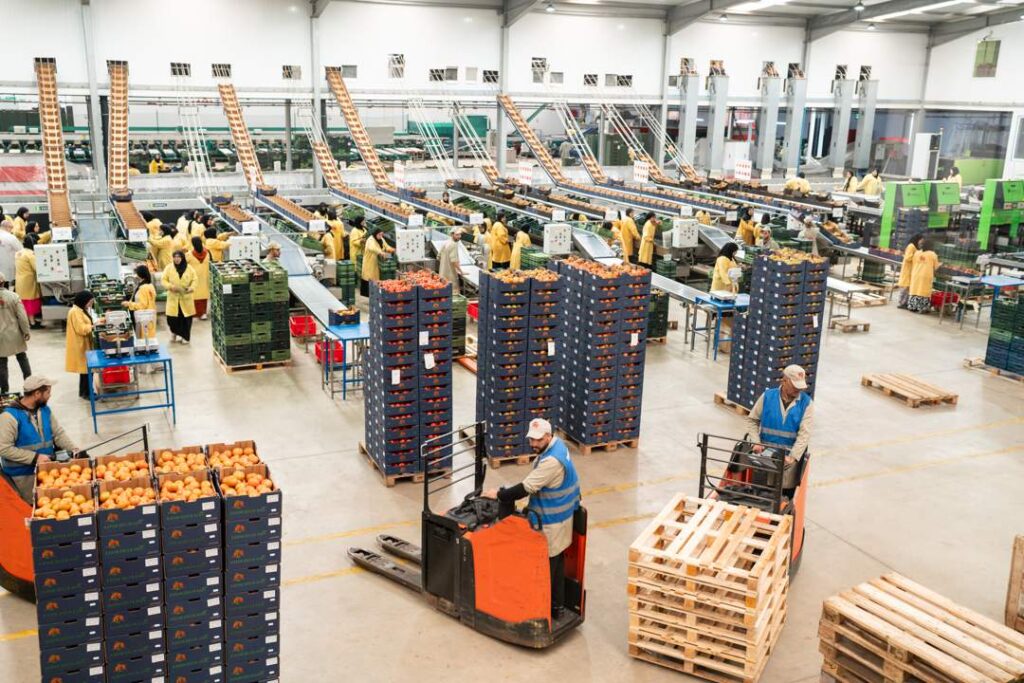
Also, Morocco’s industrial growth is likewise closely linked to its export-driven paradigm. The country has successfully integrated into global supply chains, especially in Europe, where proximity provides a logistical advantage. Morocco’s developing industrial footprint includes automotive exports, aviation components, textiles, and agricultural processing items.
This export strength has been bolstered by trade agreements and strategic alliances that enable Moroccan products to enter key markets with lower obstacles. As a result, the manufacturing sector remains extremely competitive, attracting multinational businesses and long-term industrial investment.
South Africa, while still a major exporter, confronts increased global rivalry and logistical inefficiencies, which might diminish export competitiveness. These structural constraints have made it more difficult for it to sustain its previous industrial dominance.
Conclusion
On the bright side, Morocco’s ascent demonstrates successful industrial transformation, economic modernisation, and forward-thinking administration. It highlights how African economies can compete worldwide when industrial policy is in sync with infrastructure development and export strategy.
On the other side, South Africa’s relative drop in industrial ranking raises worries about structural inefficiencies, policy delays, and energy shortages, all of which could jeopardise long-term competitiveness if not addressed immediately. It also emphasises the potential of stagnation for once-dominant economies when reform momentum slows.
Morocco’s growth is a compelling success story of strategic planning, export diversification, and industrial modernisation, whereas South Africa’s position serves as a reminder that past dominance is not permanent in a quickly changing global market.
As Africa continues to industrialise, this trajectory points to a future in which competition, innovation, and policy execution will determine which countries lead the next wave of economic transformation.
Related Posts
HP and UpSkill Universe Launch Free AI Training for 55,000 African SMEs
HP and UpSkill Universe are giving 55,000 African SMEs free AI training—helping entrepreneurs turn AI from hype into practical business growth.
Meta, 3MTT, NCAIR & RAIN Partner to Accelerate AI Skills and Innovation in Nigeria
Meta, 3MTT and RAIN launch AI Academy Nigeria to equip developers with AI skills, build startups and turn Nigeria’s growing AI talent into global innovation.

Nomba and Synafare Commit ₦2 Billion to Solar Financing for 300 Nigerian SMEs
Nomba and Synafare are committing ₦2 billion to solar financing, helping 300 Nigerian SMEs cut energy costs, boost productivity and power their growth.
Ghana’s Wobil Technologies Is Putting Solar to Work in Rice Farming, And Fighting Africa’s Post-Harvest Crisis
Ghana’s Wobil Technologies is using solar-powered machinery to cut rice losses, lower farming costs and help smallholder farmers keep more of every harvest.

Uber’s Exited Nigeria, Just Weeks After It Acquired ‘Delivery Hero’ (Glovo) for €13 Billion
Uber has exited Nigeria after 12 years, just weeks after launching a €13 billion bid for Delivery Hero, Glovo’s parent. One exit, one massive global gamble.