

EU and EBRD back Nigeria’s 90,000km fibre dream with €22 million grant major funding push
Nigeria’s digital landscape is set for a huge leap ahead, thanks to a significant finance breakthrough for the federal government’s ambitious statewide fibre-optic expansion programme. The European Union has provisioned a €22 million grant to action this, and the European Bank for Reconstruction and Development (EBRD) has approved a $100 million investment into the project as part of a series of historic commitments.
The award, according to the European Union, supplements a €86 million loan from the EBRD’s own funds that is awaiting final clearance in the upcoming weeks. These financial packages show that international partners are increasingly supporting Nigeria’s plan to increase connectivity and promote digital inclusiveness. Since Nigeria became a stakeholder in the bank, the $100 million investment is the EBRD’s first significant sovereign activity in Nigeria.
Talking points
Odile Renaud-Basso, the president of the EBRD, who was in Nigeria on an official visit, spoke at the signing ceremony in Abuja. She expressed the bank’s satisfaction with the EU’s partnership to develop digital infrastructure in the biggest economy in Africa.
According to her, the financial package includes technical cooperation meant to draw in private investment while guaranteeing safe, equitable, and long-lasting connectivity throughout the nation.

“We are proud to join forces with the EU to advance the deployment of digital infrastructure in Nigeria,” she remarked.
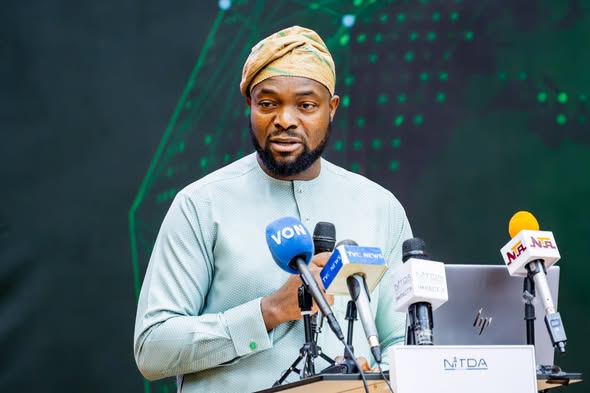
The deal, according to Bosun Tijani, the minister of communications, innovation, and digital economy, is a significant step toward completing project BRIDGE on time. According to him, the availability of reliable, resilient, and inclusive internet infrastructure is essential to Nigeria’s digital transformation goal.
According to Mr Tijani, the collaboration shows that foreigners are becoming more confident in Nigeria’s digital strategy.
He stated, “We look forward to ensuring that 2026 will be a year of delivery on this and other areas of cooperation with the EU,”
Also, according to Gautier Mignot, the EU ambassador to Nigeria, high-integrity digital infrastructure constructed in accordance with international standards is strategically significant for both Nigeria and the EU.
The EU ambassador stated that Nigeria is quickly emerging as a powerful digital partner worldwide, noting that
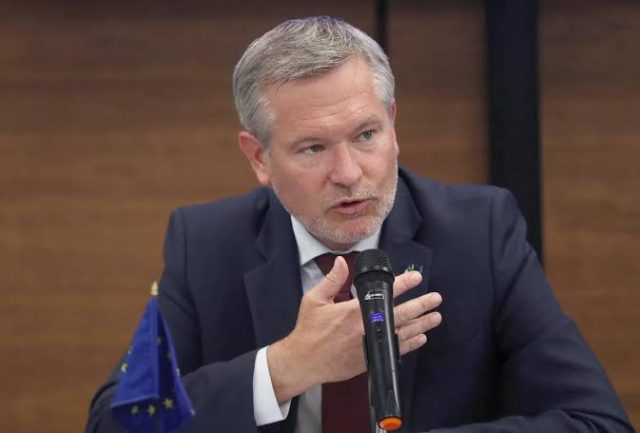
“digital has emerged as one of the strategic areas of partnership between Nigeria and the EU,” Mignot said.
“Both Nigeria and the European Union share the critical importance of trusted and resilient networks, with the highest level of integrity and reliability, operating at the highest international standards.” Mignot further described.
The bigger picture
This project aims to increase the country’s backbone from an estimated 35,000 km to a planned 90,000 km of fibre-optic cables that will link all 774 local government areas. It is anticipated that this project will assist public services and enterprises, enabling more engagement in the digital economy, and provide dependable high-speed internet to rural and underprivileged populations.
In addition, the EU funding’s importance extends beyond design work. The package includes capacity-building programmes to train some 2,000 technicians, specific equipment subsidies, and auctioned procurement options to reduce costs and allow domestic companies and subcontractors to successfully participate in the rollout. Project officials claim that these actions might boost local supply chain resilience, draw in European technology providers, and save overall deployment costs by 20 to 30 percent.
Money alone does not ensure any of these results; effective management of the new expansion, cooperation between several financiers and private partners, the development and maintenance, and cooperation among communities to effectively put to use this newly provided infrastructure, amongst a few, are all necessary to realise the project’s full potential. Additionally, maintaining end-user cost and resolving any regulatory obstacles that could impede rollout will continue to be problems.
Takeaway
In conclusion, the European Union’s and the EBRD’s combined support not only demonstrates the high level of international trust in Nigeria’s digital strategy, but it also establishes the technical and financial foundation for a change in the way Nigerians use the internet and engage in the global digital economy.
Project BRIDGE, if properly executed, has the potential to be a pillar of the nation’s economic future by fostering innovation, bringing people together, and solidifying Nigeria’s standing as a pioneer in Africa’s digital revolution.

Related Posts

Aliko Dangote Says Nigerians Can Buy Refinery Shares Within Five Months
Aliko Dangote has confirmed that ordinary Nigerians will be able to purchase shares in the…

Local Voices, Global Translation; AI That Understands Every Nigerian Voice
With 500+ languages in Nigeria, AI often leaves millions unheard. A new partnership between NITDA and Nkenne AI aims to build tech that understands local voices.

Inclusive FinTech Forum 2026, Kenya hosts global fintech leaders
Global fintech leaders gather at the Inclusive FinTech Forum 2026 in Kigali, Rwanda, where innovation, policy, and investment shape the future of inclusive finance worldwide.
Nigeria approves digital postcode systems to fix address problems nationwide
Nigeria is set to end decades of address confusion as government approves a GIS-powered digital postcode system, giving every home a digital location across Nigeria
A gathering of visionaries: Enugu Tech Festival 2026 targets over 50,000 participants
From Coal City to Code City, the Enugu Tech Festival 2026 brings together over 50,000 innovators, global tech leaders, and investors to shape Africa’s ambitious digital future.