

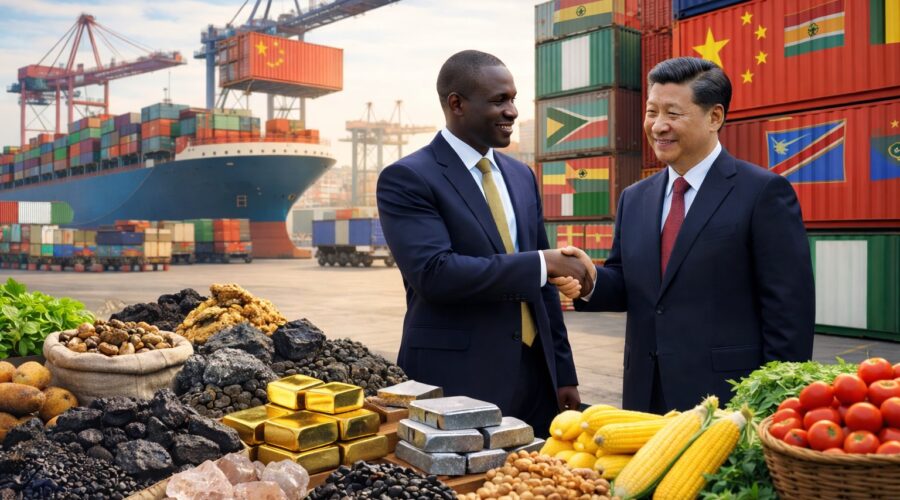
Zero tariffs: China opens Its doors to 53 African nations, including Nigeria, Kenya, South Africa, Ghana and others
In a decision that has lifted souls across trade capitals from Beijing to African nations, China has announced that it will scrap import taxes on goods from 53 African countries, thus granting nearly the whole continent tariff-free access to the Chinese market beginning May 1, 2026. President Xi Jinping announced the decision at the African Union summit in Ethiopia, framing it as a significant step toward expanding economic cooperation with Africa, deepening bilateral trade ties, and providing new opportunities for African exporters to reach one of the world’s largest consumer markets.
China already provided rather preferential tariff treatment to a subset of African countries, mainly least-developed countries, which received zero taxes on several imports, but this current increase now includes 53 out of 54 African countries in total with which Beijing maintains diplomatic relations.
What does zero-tariff access mean for African industries?
Removing tariff levies in one of the world’s major consuming marketplaces is a huge opportunity, but the size of the reward varies substantially across sectors.
- Agriculture and agro-processing: This is probably the most noticeable benefit. African countries export a wide range of agricultural products, including coffee, cocoa, avocados, tea, spices, cashews, sesame seeds, horticultural items, and more, which were formerly subject to import charges when entering China. With tariffs removed, African producers may enjoy improved pricing competitiveness in the Chinese market.
- Minerals & raw materials: Africa’s resource-rich countries, such as Angola, the Democratic Republic of the Congo, and South Africa, have long sold oil, copper, cobalt, and iron ore to Chinese smelters. With the newly introduced zero-tariff status, the greatest impact could occur if African producers migrate farther up the value chain to semi-processed or refined products, which could command higher prices in a tariff-free environment.
- Textiles and apparel: The textile and garment sectors in Africa, from Ethiopia to Ghana, offer significant growth potential in China. Duty-free access can increase the price competitiveness of African garments in comparison to regional producers such as Bangladesh and Vietnam.
- Light manufacturing and industrial goods: Zero tariffs can help African manufacturers exporting light machinery, automobile components, and consumer goods. However, many local sectors still lack the scale, quality standards, and transportation infrastructure required to compete on a Chinese scale; thus, this benefit is more medium to long term unless complemented with productivity gains.
- Technology, Renewable Energy, and Services: While less directly affected by tariff removal, sectors such as renewable energy components (e.g., solar panels), fintech, and digital services could benefit indirectly.
However, there is a cautionary perspective: zero tariffs alone do not guarantee exports. Without industrial capacity, quality standards compliance, logistical improvements, and value-chain upgrading, Africa risks underutilisation of capacity, resulting in “zero exports” if producers are unable to deliver competitive goods.
Country-level benefits: Nigeria, Kenya, South Africa and others
This huge China tariff decision differs greatly depending on each country’s economy, export profile, and infrastructure readiness.
1. Nigeria
This Africa’s greatest economy is heavily reliant on oil exports, which already have competitive terms in global markets. Zero tariffs on crude or refined oil exported to China will not significantly affect Nigeria’s position, but agricultural exports such as cocoa, sesame seeds, palm oil, and processed food goods may gain momentum. Nigerian agro-processors can use tariff relief to meet Chinese consumer demand for tropical produce and processed staples, provided quality and supply consistency are improved.
2. Kenya
Kenya’s economy is based heavily on agriculture. Tea, coffee, cut flowers, avocados, and macadamia nuts are already in high demand in China, and duty-free access can boost exports even more. Kenya also exports titanium ore while already negotiating trade deals that would provide nearly duty-free access to a broader range of commodities, and China’s move expands on this potential.
3. South Africa

With the continent’s most diverse industrial base, South Africa will benefit from agriculture, manufacturing, mining, and processed commodities. The government has even negotiated a framework providing zero-tariff treatment on all tariff lines in its bilateral connection with China, potentially expanding markets for citrus fruits, rooibos tea, automotive parts, and capital goods. The industrial foundation and export sophistication here are key advantages, allowing South African producers to benefit faster than some peers.
In all cases, even with the rest of the African countries, following China’s regulatory, quality, and packaging standards will remain a strong gateway: tariff removal reduces costs, but compliance and competitiveness determine actual export outcomes.
Final thoughts, opportunities and realities
China removing tariffs on imports from 53 African countries beginning May 1, 2026, marking one of the most important commercial openings between Africa and a major global market. If African producers and governments take it strategically, this policy has the potential to boost agricultural exports, encourage value-added manufacturing, and deepen economic integration with a key partner.
However, the opportunity must be matched with capacity development, infrastructural upgrades, and export preparation. Zero tariffs are not a silver bullet; governments must also invest in quality control, logistics, and industrial strategy to transition from raw commodity dependence to higher value chains.
Finally, this move reflects China’s intention to expand its role as Africa’s greatest trading partner and serves as a litmus test for African countries aspiring to transition from resource exporters to diversified producers in the twenty-first-century global market.

Related Posts

Aliko Dangote Says Nigerians Can Buy Refinery Shares Within Five Months
Aliko Dangote has confirmed that ordinary Nigerians will be able to purchase shares in the…

Local Voices, Global Translation; AI That Understands Every Nigerian Voice
With 500+ languages in Nigeria, AI often leaves millions unheard. A new partnership between NITDA and Nkenne AI aims to build tech that understands local voices.

Inclusive FinTech Forum 2026, Kenya hosts global fintech leaders
Global fintech leaders gather at the Inclusive FinTech Forum 2026 in Kigali, Rwanda, where innovation, policy, and investment shape the future of inclusive finance worldwide.

Nigeria approves digital postcode systems to fix address problems nationwide
Nigeria is set to end decades of address confusion as government approves a GIS-powered digital postcode system, giving every home a digital location across Nigeria

EU and EBRD back Nigeria’s 90,000km fibre dream with €22 million grant major funding push
With €22m EU grant and $100m EBRD backing, Nigeria’s plan to expand fibre to 90,000km could transform internet access, power innovation, and connect 774 LGAs nationwide.