

AfCFTA, Agility And Industrial Growth: How African CFOs Are Rethinking Business Strategy
Global economic uncertainty is reshaping the way businesses plan for growth, manage risk and pursue investment opportunities. Supply chain disruptions, shifting trade policies, currency pressures and geopolitical tensions have exposed the limitations of traditional business models, compelling organizations to rethink how they compete in an increasingly interconnected world.
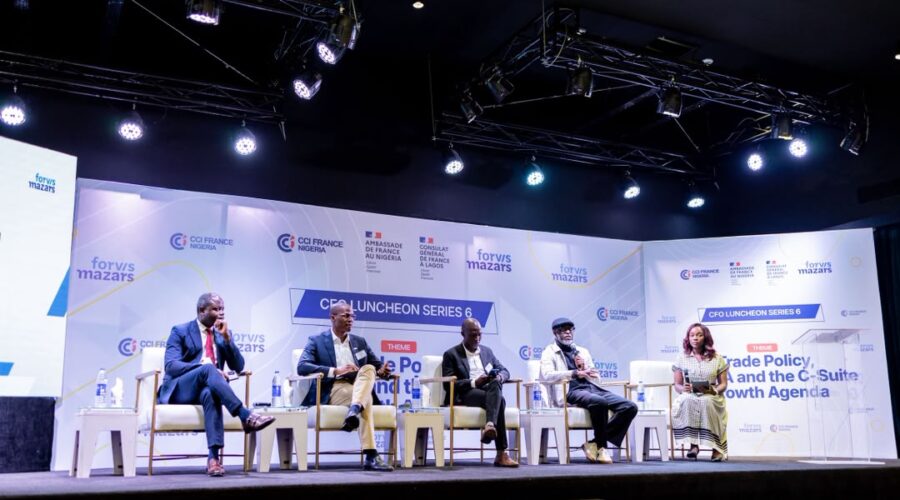
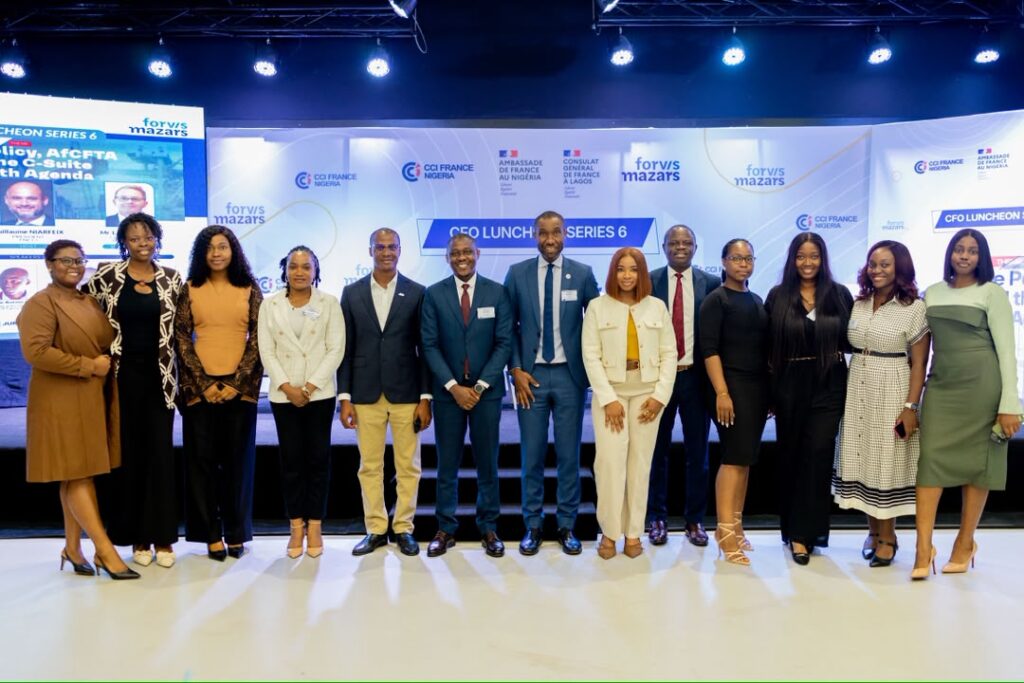
Against this backdrop, leading global professional services firm Forvis Mazars, in collaboration with the Franco-Nigerian Chamber of Commerce and Industry (FNCCI), convened finance executives, policymakers and industry leaders for the sixth edition of its annual CFO Luncheon Series. The event, themed “Trade Policy, AfCFTA and the C-Suite’s Growth Agenda,” explored how the African Continental Free Trade Area (AfCFTA) is reshaping corporate finance, regional trade and investment while equipping African businesses to navigate an evolving economic landscape.
Opening the event, Laurent Favier, Consul General of France in Lagos, reflected on the changing dynamics of global commerce and described the AfCFTA as a historic opportunity to deepen regional integration and unlock long-term, sustainable economic growth across Africa. His remarks set the tone for discussions that focused on turning economic uncertainty into opportunities for regional collaboration and business expansion.
How AfCFTA Is Helping Businesses Build Resilience
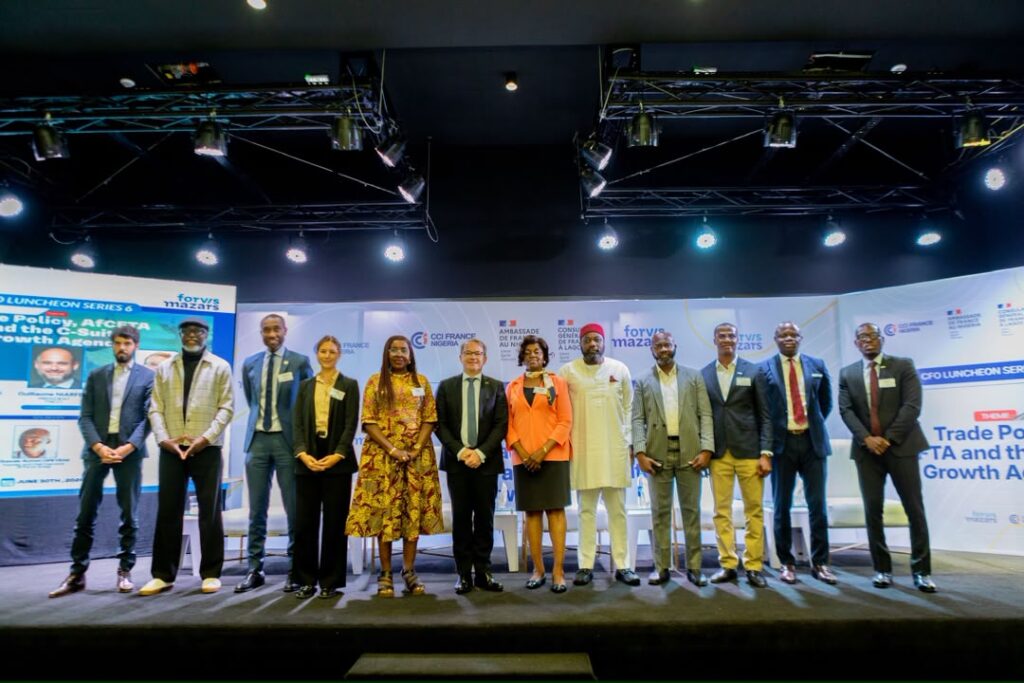
Welcoming participants, Uhabia Ojike, Country Leader of Forvis Mazars in Nigeria, acknowledged that businesses are operating in an environment shaped by currency pressures, fiscal reforms, regulatory changes and shifting global trade patterns.
Despite these challenges, he noted that the AfCFTA presents a significant opportunity to strengthen regional trade, deepen cross-border collaboration and create new pathways for sustainable economic growth.
Rather than reacting to change, Ojike urged organizations to build agile and resilient businorganisationsesses capable of adapting to uncertainty while positioning themselves to seize emerging opportunities. His message reflected a broader shift in corporate thinking: resilience is no longer simply a competitive advantage but an essential component of long-term business success.
Why Global Trade Shifts Are Reshaping African Business Strategy
The discussions also examined how developments beyond Africa’s borders are increasingly shaping business decisions across the continent.
Geopolitical tensions, including conflicts in Eastern Europe and shipping disruptions in the Middle East, continue to affect global trade routes, logistics networks and energy markets. One example highlighted during the event was the growing impact of disruptions around the Strait of Hormuz, which have contributed to rising energy costs, increased maritime insurance premiums and delays in international shipping.
For African businesses, these developments translate into higher operating costs, foreign exchange volatility and increased pressure on supply chains. As a result, organisations are placing greater emphasis on strengthening operational resilience and reducing their dependence on vulnerable global supply networks.
Despite these headwinds, African business leaders remain optimistic about the continent’s growth prospects.
According to the 2025 Forvis Mazars African C-Suite Barometer, 93% of African executives expect revenue growth over the coming year despite ongoing macroeconomic challenges. The report also found that 63% intend to expand into additional African markets, while 99% are integrating advanced technologies into their operations to improve efficiency and productivity.
These findings point to a business community that continues to invest in growth while adapting to a rapidly changing global environment.
AfCFTA Is Driving A New Industrial Agenda
Delivering the keynote address, John Ugochukwu Uwajumogu, Special Adviser to the President on Industry, Trade and Investment, urged corporate leaders and policymakers to build economic shock absorption into their business models and strengthen domestic value creation.

“Every global contestation brings a double-edged sword for Africa. We often see a temporary windfall in government revenues during global energy crises, but because of structural deficits, we give those gains right back by importing high-priced refined petroleum products. We are essentially importing foreign inflation due to low levels of domestic industrial capacity.”
Uwajumogu argued that maximising Nigeria’s opportunities under the AfCFTA requires stronger industrial linkages and greater domestic production.
He identified four pillars as essential to achieving sustainable economic growth: institutional capacity, infrastructure and logistics, public-private governance, and the knowledge economy. At the same time, he acknowledged that businesses continue to face significant barriers, including attracting large-scale investment, maintaining a predictable business environment and modernising ageing trade infrastructure.
Despite these challenges, he pointed to significant opportunities across Africa’s energy, finance and infrastructure sectors. He also highlighted Nigeria’s advantages, including a market of approximately 244 million people, preferential regional market access through the AfCFTA, dedicated co-investment platforms and the Federal Government’s commitment to sustaining regulatory reforms.
Turning AfCFTA Policy Into Business Growth
Beyond policy discussions, the luncheon focused on how businesses can translate opportunities created by the AfCFTA into practical growth strategies.
An interactive panel discussion featured Ugodre Obi-Chukwu, Founder and Chief Executive Officer of Nairametrics; Olawale Rotimi Opeyemi, Founder and Chief Executive Officer of JR Farms Ltd.; Osamudiame Adams, Partner at Forvis Mazars; and Peter Nwofia, Tax Partner at Forvis Mazars.
Moderated by Obianuju Irechukwu, Audit and Assurance Manager at Forvis Mazars, the session explored cross-border taxation, regional financing structures and the evolving role of Chief Financial Officers as strategic leaders driving expansion across African markets.
The discussion reinforced the importance of collaboration between governments, investors and the private sector in creating an environment that supports regional growth and sustainable investment.
The Future of Business Growth
Closing the event, Uhabia Ojike noted that the CFO Luncheon Series has evolved into a leading platform where finance leaders exchange ideas, build strategic partnerships and identify practical solutions to business challenges.
He reaffirmed Forvis Mazars’ commitment to advancing innovation, promoting regional integration and supporting sustainable economic development across Africa.
The conversations throughout the luncheon reflected a common understanding that Africa’s next phase of growth will require more than favourable policy. Businesses must remain agile, strengthen regional partnerships and invest in resilient operating models that can withstand economic uncertainty while capitalising on new opportunities.
As the AfCFTA continues to reshape trade and investment across the continent, Africa’s corporate leaders are increasingly focused on turning regional integration into measurable business growth. For finance executives, the challenge is no longer whether change is coming, but how quickly organisations can adapt to remain competitive in a rapidly evolving economic landscape.
Follow Amebopreneur for the latest on Nigeria’s tech ecosystem, startup funding opportunities, and the cross-border partnerships shaping Africa’s innovation future.
Related Posts

HP and UpSkill Universe Launch Free AI Training for 55,000 African SMEs
HP and UpSkill Universe are giving 55,000 African SMEs free AI training—helping entrepreneurs turn AI from hype into practical business growth.
Meta, 3MTT, NCAIR & RAIN Partner to Accelerate AI Skills and Innovation in Nigeria
Meta, 3MTT and RAIN launch AI Academy Nigeria to equip developers with AI skills, build startups and turn Nigeria’s growing AI talent into global innovation.

Nomba and Synafare Commit ₦2 Billion to Solar Financing for 300 Nigerian SMEs
Nomba and Synafare are committing ₦2 billion to solar financing, helping 300 Nigerian SMEs cut energy costs, boost productivity and power their growth.

Ghana’s Wobil Technologies Is Putting Solar to Work in Rice Farming, And Fighting Africa’s Post-Harvest Crisis
Ghana’s Wobil Technologies is using solar-powered machinery to cut rice losses, lower farming costs and help smallholder farmers keep more of every harvest.

Uber’s Exited Nigeria, Just Weeks After It Acquired ‘Delivery Hero’ (Glovo) for €13 Billion
Uber has exited Nigeria after 12 years, just weeks after launching a €13 billion bid for Delivery Hero, Glovo’s parent. One exit, one massive global gamble.