

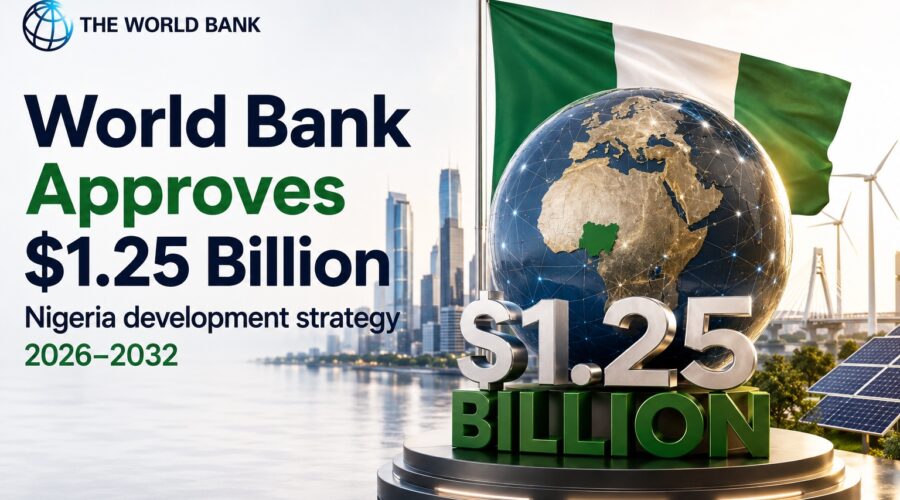
Breaking: The World Bank Group Approves A New 2026–2032 Fresh Financing For Nigeria Worth $1.25 billion
Partnership To Drive Jobs, Digital Growth, Energy Access And Agricultural Modernization
Nigeria has gained another significant vote of confidence from the international financial community, with the World Bank Group officially approving a new Country Partnership Framework (CPF) for 2026-2032, which is supported by an initial $1.25 billion funding package. The ambitious six-year strategy aims to accelerate Nigeria’s economic transformation by attracting private investment, increasing digital technologies, boosting energy availability, creating millions of jobs, and modernising agriculture.
The World Bank Group has approved a new Country Partnership Framework (CPF) for Nigeria from 2026 to 2032, outlining a plan for creating more and better jobs at scale by enabling private sector-led growth. As part of this larger support, the World Bank has approved the Nigeria Actions for Investment and Jobs Acceleration (NAIJA) Development Policy Financing (DPF) operation, which will help Nigeria shift to a more inclusive growth model that stimulates growth and creates jobs.
Building on recent macroeconomic reforms that have resulted in stronger growth, higher revenues, increased reserves, and improved investor confidence, the CPF supports Nigeria’s efforts to create more and better jobs by accelerating private sector growth, with a focus on mobilising private investment to supplement public resources. It aims to increase energy access to 32 million Nigerians, provide broadband connectivity to 58 million people, improve health and nutrition services for 40 million people, and assist 9.5 million farmers, all while strengthening human capital, increasing agricultural productivity, and expanding access to energy and data infrastructure.
The statement, issued following the World Bank Board’s approval on July 1, 2026, comes at a critical juncture for Africa’s largest economy, which is still undergoing broad economic reforms aimed at restoring macroeconomic stability and boosting inclusive and sustainable growth.
What Exactly Did The World Bank Approve?
The World Bank has approved two interrelated initiatives; The first is the Nigeria Country Partnership Framework (CPF) 2026-2032, which outlines the institution’s overall support plan for Nigeria for the following six years.
The second is a $1.25 billion funding package known as the Nigeria Actions for Investment and Jobs Acceleration Development Policy funding operation, which aims to support changes that improve the business environment and promote private-sector-led economic growth.
Rather than financing individual projects, the new framework aims to address Nigeria’s most pressing structural concerns by promoting changes that attract investment, increase productivity, strengthen institutions, and provide job opportunities across different sectors.
Despite optimistic signs of macroeconomic recovery following recent reforms, Nigeria still faces significant development hurdles. The World Bank notes that, while economic growth has gradually improved, millions of Nigerians continue to face widespread poverty, persistent inflation, unreliable electricity, poor digital connectivity, limited access to finance, insecurity in several regions, climate-related risks, and a rapidly growing young population looking for work.
Digital Technology, Private Sector Growth, Increasing Energy Access And Job Creation Becomes A Major Priorities
One of the most intriguing aspects of the cooperation is Nigeria’s digital development. The World Bank believes that digital infrastructure has emerged as one of the most powerful drivers of economic competitiveness. Under the new approach, reforms will focus on extending broadband infrastructure, strengthening digital regulation, supporting e-governance, and stimulating technological innovation.
The initiative intends to increase broadband connectivity to almost 58 million Nigerians, generating major prospects for startups, fintech companies, software developers, digital producers, online enterprises, and young entrepreneurs.
Also, unlike many earlier development programmes that relied mainly on governmental investment, the new framework prioritises the private sector as the engine of Nigeria’s future economic growth.
The World Bank argues that government expenditure alone will not lead to long-term prosperity. Instead, improving economic performance requires fostering an environment in which firms can invest confidence, grow operations, innovate, and hire more Nigerians.
To achieve this goal, changes will focus on strengthening capital markets, enhancing investment regulations, removing impediments to corporate operations, attracting domestic and foreign investment, and extending business financing options. According to the World Bank, unlocking private investment remains one of the most efficient methods to boost productivity, raise competitiveness, and alleviate poverty in the long run.
Furthermore, reliable power is one of Nigeria’s most significant economic obstacles. Poor power supply continues to have an impact on manufacturing, small enterprises, hospitals, schools, digital organisations, and families across the country.
The new alliance aims to significantly improve electricity access by promoting private investment, improving power infrastructure, and expanding electrification. The World Bank anticipates that the approach will enhance energy access to around 32 million Nigerians, allowing businesses to cut operational costs while increasing productivity and quality of life.
Moreover, the partnership’s primary goal is to create jobs. Every year, Nigeria’s rapidly rising population puts great pressure on the country to provide millions of high-quality jobs. Rather than providing transitory government employment programmes, the World Bank prefers changes that promote long-term job creation through private investment, agriculture, technology, manufacturing, infrastructure development, and increased productivity.
Finally, agriculture remains Nigeria’s largest employer, but productivity has remained low due to outmoded farming methods, limited mechanisation, inadequate infrastructure, climate shocks, poor market access, and insufficient investment.
The World Bank’s broader agricultural policy supplements the Country Partnership Framework with initiatives like the AGROW Project, which was approved earlier in 2026. The effort is expected to benefit around 9.5 million farmers by enhancing food security, increasing agricultural output, and creating new job possibilities in Nigeria’s rural economy.
Key Statement From The World Bank
Speaking on Nigeria’s agricultural transformation earlier this year, Mathew Verghis summarised the World Bank’s aim as follows:
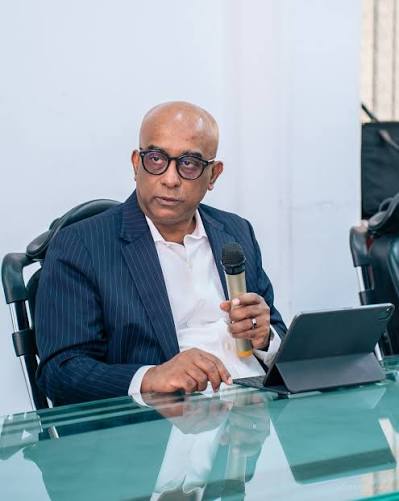
“AGROW is a transformative step for Nigeria’s agriculture—empowering smallholder farmers, unlocking private sector-led growth, and strengthening food security in a sustainable way.”
“Our new Country Partnership Framework provides the strategy for how the World Bank Group will support Nigeria over the coming years, with a strong focus on helping to create more and better jobs, particularly by enabling private sector-led growth.”
“The recent macroeconomic gains have been critical to help stabilise the economy. Translating improved macroeconomic conditions into better living standards will require addressing the structural constraints to spur private sector investment and job creation.”
Mathew Verghis
That similar principle supports the larger 2026-2032 Country Partnership Framework, which aims to generate broad-based economic possibilities through private investment, institutional changes, infrastructure development, and innovation.
The NAIJA DPF operation, totalling $1.25 billion, supports a series of government reforms aimed at strengthening the foundations for growth and competitiveness. These include deepening capital markets, modernising the regulatory framework for the digital economy and e-governance, accelerating electrification through power sector reforms, lowering trade barriers in line with Nigeria’s ECOWAS and AfCFTA commitments to help alleviate price pressures, improving access to quality agricultural seeds, and strengthening domestic revenue mobilisation.
“Nigeria’s reform progress is creating important opportunities for private investment, but risks remain for investors. MIGA’s role is to help manage these risks—through guarantees and political risk insurance—so that investors can step in with confidence,”
“Under the CPF, the World Bank Group Guarantee Platform housed within MIGA will scale our support in priority areas such as the financial sector and infrastructure to help unlock jobs and growth.”
Ed Mountfield


“Nigeria’s long-term growth potential will be shaped by the economy’s ability to attract investment, raise productivity, and unleash private sector job creation, building on the capital of a rapidly growing population.”
“Through this Country Partnership Framework, the World Bank Group will work alongside Nigeria to help unlock private investment, expand access to infrastructure and essential services, and create the enabling conditions for businesses to innovate and compete. Together, these efforts aim to translate reform momentum into broader economic opportunity and improved livelihoods.”
Dahlia Khalifa
Conclusion
The World Bank’s acceptance of the 2026-2032 Country Partnership Framework, along with its $1.25 billion financing package, is one of Nigeria’s most significant overseas development commitments in recent years. With a strong emphasis on digital technology, private-sector growth, energy access, job creation, and agricultural modernisation, the strategy offers significant potential to transform the country’s economic future.
For businesses, startups, technology companies, agribusinesses, manufacturers, and investors, the new collaboration represents tremendous prospects over the next six years.
Reforms that increase infrastructure, digital connection, energy access, agricultural productivity, and investment rules may make it simpler for firms to develop, enter new markets, adopt new technology, and secure financing.
Technology startups, renewable energy enterprises, agritech firms, logistics providers, fintech organisations, telecommunications operators, and manufacturers are projected to profit the most from the framework’s priority industries.
At the same time, the proposal comes amid valid concerns about mounting public debt and the value of open government. For many Nigerians, the true measure of success would be whether the finance package results in apparent improvements in everyday living, like reliable power, better jobs, contemporary infrastructure, stronger businesses, and inclusive economic growth.
The next six years will consequently be critical. If reforms are consistent and implemented effectively, this collaboration has the potential to become a watershed moment in Nigeria’s development, rather than just another international financial deal.
Follow Amebopreneur for the latest on Nigeria’s tech ecosystem, startup funding opportunities, and the cross-border partnerships shaping Africa’s innovation future.
Related Posts
NITDA Builders Festival 2026: Smart Way to Unlock Startup Opportunities
NITDA Builders Festival 2026 offers Nigerian startups a path to ₦3bn in potential investment and pilot contracts by connecting real solutions with institutions.

Nigeria’s Internet Traffic: The Essential Growth Drivers Behind a 168% Surge
Nigeria’s internet traffic surged 168% in three years. Discover the key drivers behind the growth and what it means for businesses, SMEs and entrepreneurs.

Konga And Defence Headquarters Launch Nationwide Discount Scheme for Serving, Retired And Veteran Military Personnel
Konga and Defence Headquarters launch a nationwide discount scheme giving serving, retired and veteran military personnel access to essential goods at reduced prices.

Askya Offers African AI Startups Up To $200,000 In Investment Through New Growth Platform
Askya Investment Partners has launched a six-week AI Growth Platform for 10 African startups, offering zero-equity participation, business support and potential investment of up to $200,000

Cabo Verde Telecom and DE-CIX Plan New South Atlantic Connectivity Corridor
DE-CIX and Cabo Verde Telecom have signed a non-binding Letter of Intent to explore a South Atlantic connectivity corridor linking Lisbon and São Paulo, strengthening direct digital infrastructure across Europe, Africa, and Latin America.