


Can AI Finally Solve Nigeria’s SME Record-Keeping Problem?
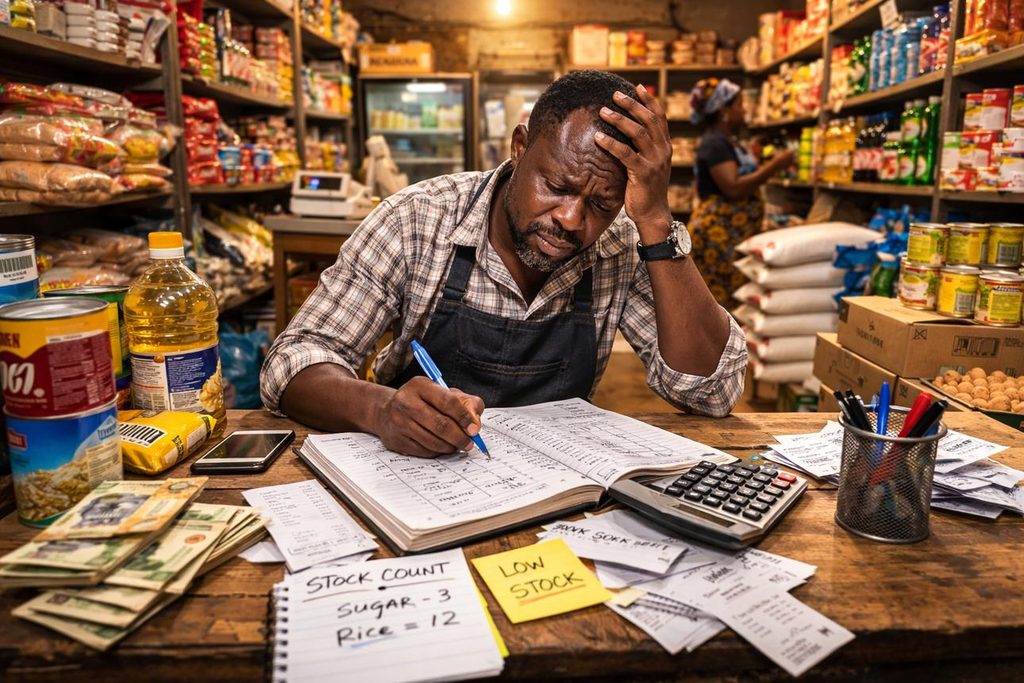
For millions of small businesses across Nigeria, keeping accurate financial records remains one of the most overlooked challenges of running a business. Sales happen everyday, customers purchase on credit, suppliers deliver new stock, and money moves between bank accounts and cash registers. Yet, when it is time to calculate actual profits, reconcile transactions or establish how much inventory remains, many business owners are forced to depend on handwritten notebooks, memory and scattered WhatsApp conversations.
This seemingly ordinary problem has serious consequences. Poor record-keeping makes it difficult to determine business profitability, monitor outstanding debts, identify inventory losses and demonstrate financial stability when applying for loans.
The Notebook Is Failing Nigeria’s Small Businesses
For millions of Nigerian traders, the accounting system is a worn notebook, a good memory, and a hundred unanswered WhatsApp chats. AI bookkeeping for Nigerian SMEs is finally being built for them, but the evidence that it works at scale is still thin.
The question in the headline deserves an honest answer rather than a hype-filled one.
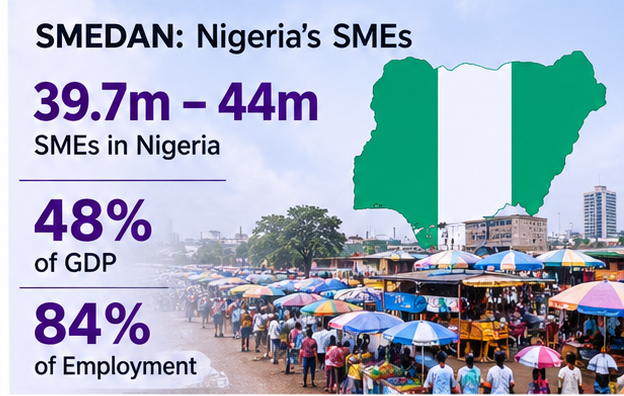
The stakes are high. According to the Small and Medium Enterprises Development Agency of Nigeria (SMEDAN), the country has between 39.7 million and 44 million micro, small and medium enterprises, which contribute about 48 percent of GDP.
A separate BusinessDay report also cites SMEDAN data, putting employment by SMEs at about 84 percent. A sector this large and this poorly documented is both an opportunity and a risk.
The Nigerian SME Record-Keeping Problem: Businesses Are Losing Money
Nigeria’s small business ecosystem has a significant digital adoption gap. While many entrepreneurs have embraced smartphones, social media and digital payments, the transition towards structured business management has been considerably slower.
For a typical neighbourhood supermarket, fashion retailer, food vendor or electronics dealer, daily business activities can involve several disconnected systems. Customer orders arrive through WhatsApp, payments come through bank transfers, inventory is monitored manually, and customer debts are recorded in notebooks.
These activities may appear manageable when a business is relatively small. However, as transaction volumes increase, the absence of organised records creates operational difficulties.
A business owner might receive 40 bank transfers in one day but struggle to identify which payments correspond to completed orders. Another might sell products on credit without maintaining an accurate record of outstanding balances. A retailer could also continue purchasing products from suppliers without knowing the actual value of existing inventory.
The consequences are potentially expensive. Unrecorded expenses can distort profit calculations, unpaid customer debts can weaken cash flow, and inaccurate stock records can create opportunities for theft, waste and unnecessary purchases.
The problem is not necessarily that Nigerian entrepreneurs do not understand the importance of accounting. In many cases, the challenge is the time, complexity, cost and discipline required to maintain consistent records.
A particularly revealing picture emerged from the October 2026 Blueprint for the Digital Transformation of MSMEs in Nigeria, published by Deutsche Gesellschaft für Internationale Zusammenarbeit (GIZ) on behalf of the Small and Medium Enterprises Development Agency of Nigeria (SMEDAN).
The research involved more than 1,600 MSMEs and supporting ecosystem organisations across nine states and the Federal Capital Territory.
Its findings showed that more than 62 per cent of surveyed MSMEs identified the cost of devices, data and digital tools as a major obstacle to further digital adoption. Another 59 per cent reported having no internet connection at their place of business.
Perhaps most importantly, only 13 per cent used operational digital tools such as accounting, inventory management and e-commerce systems, despite widespread adoption of social media and digital payments. The research also found that 39 per cent of respondents had low confidence in digital systems, citing fraud, unresolved scams and system failures.
These findings expose a significant opportunity for technology companies. Nigeria does not simply need more sophisticated business software. It needs affordable, accessible and trustworthy tools that entrepreneurs can realistically incorporate into their daily operations.
Weak Records Now Cost Real Money
Bad bookkeeping used to be an inconvenience. In 2026 it is becoming a legal problem. Section 31 of the Nigeria Tax Administration Act, which took full effect in 2026, requires every business, whether or not liable to pay tax, to keep books and records of accounts for at least six years.
Chartered accountant and tax adviser Olamide Olaniran put the problem plainly: “record-keeping is a compliance obligation whether tax is payable or not.”
There is a warns that weak bookkeeping is hurting SMEs beyond tax compliance, limiting their access to loans, investors and formal financial support.
Meanwhile, under the Nigeria Tax Act 2025, in force since 1 January 2026, small companies with turnover of up to ₦100 million and fixed assets of up to ₦250 million can pay 0% company income tax, excluding professional services firms. The reward for good records is real, and so is the penalty for having none.
WhatsApp Commerce – The Right Battlefield
WhatsApp has evolved beyond personal communication to become an important commercial channel for Nigerian entrepreneurs. From fashion businesses and food vendors to electronics retailers, distributors and service providers, many businesses use the platform to display products, communicate with customers, receive orders and coordinate deliveries.
Nigerian small businesses already sell, negotiate and chase payments on WhatsApp’s recent AI startup, Omata AI, its bet is that bookkeeping should happen in the same place. The company said it is focused on Nigeria for now but plans a gradual expansion into other African markets where WhatsApp is widely used for business.

Omata is not alone in this approach. SME360, a Lagos-based product, says users can message it on WhatsApp or in the app, and it records the money, sends invoices, tracks stock and reads the bank connection. Its website promises that connecting a bank is read-only.

According to PwC Nigeria’s 2024 MSME Survey, WhatsApp Business was the most commonly identified social and digital communication platform among surveyed MSMEs, accounting for 23 per cent of the reported technology and platform usage category. Facebook followed at 19 per cent, while Instagram accounted for 15 per cent.
The figures demonstrate why WhatsApp represents a potentially attractive entry point for SME technology adoption.
However, WhatsApp commerce and business accounting are not the same thing. A WhatsApp conversation does not automatically establish that a payment has been received, an order has been fulfilled or an inventory item has physically left the shop. For AI-powered business management to work reliably, the system must distinguish between customer enquiries, confirmed orders, completed sales, cancelled transactions and actual payments.
This distinction is be particularly important in Nigeria, where customers may send payment screenshots, promise transfers, pay in instalments or make payments from different bank accounts.
The opportunity is significant, but the underlying data must be accurate.
The Risks Nobody Should Ignore
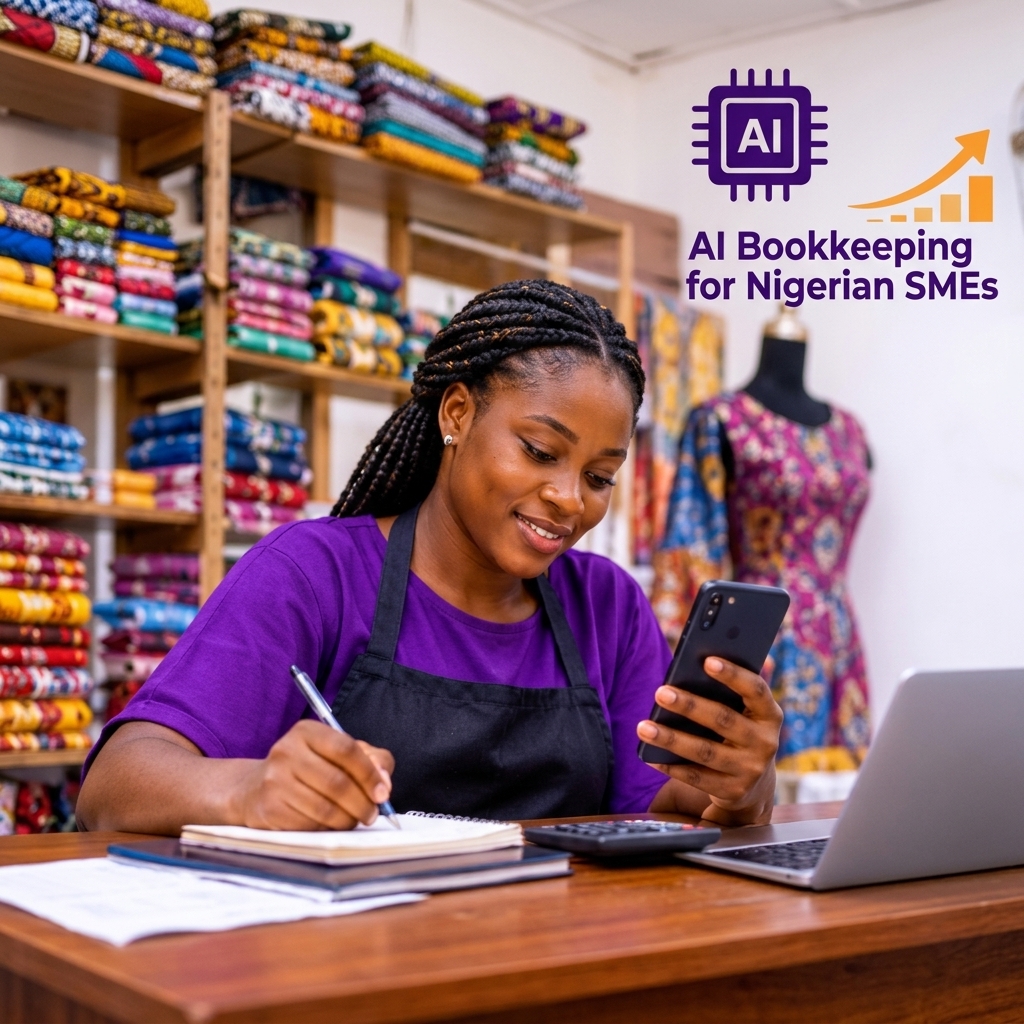
AI makes mistakes. A system that misreads “five thousand” as “fifty thousand” can corrupt a trader’s records, and that is exactly why the approval step matters. Chat-based records also depend on the trader’s phone, data access and discipline in sending messages.
Data privacy, backup and what happens if a startup shuts down are open questions for any early-stage product. Lenders and tax authorities may also want records in formats a chat log does not provide on its own.
None of these problems is unsolvable, but none has been shown to be solved yet.
Conclusion
So, can AI finally solve the record-keeping problem for Nigerian SMEs? The honest answer is that it now has a credible chance, but it hasn’t done so yet. Omata AI’s WhatsApp-first design attacks the real barrier, which is that traders won’t learn complicated software. Its human-approval rule shows sensible caution about AI errors.
But with 10 pilot merchants, no revenue and no announced pricing, it is a promising experiment rather than a proven fix. Meanwhile, tougher record-keeping rules, the 0% tax threshold and the lending gap give small businesses strong reasons to get organized now.
Start keeping digital records today, test any tool on a small scale, and insist on a human approval step for every financial entry.
Follow Amebopreneur for the latest on Nigeria’s tech ecosystem, startup funding opportunities, and the cross-border partnerships shaping Africa’s innovation future.
Related Posts

Is Port Harcourt Becoming a Difficult Market for Broadband Businesses? Inside Spectranet’s Exit and What It Means for Your Connection
Spectranet’s planned withdrawal from Port Harcourt by 2027 is raising questions about the profitability of Nigeria’s broadband industry. With rising infrastructure costs, growing competition from MTN, Airtel and Starlink, and increasing demand for reliable internet, is Port Harcourt becoming a difficult market for broadband businesses?

Borno Innovation Hub Opens in Maiduguri As Nigeria Targets Digital Skills, Youth Employment and Connectivity for 230,000 People
A Breakthrough Moment for Digital Skills in Northern Nigeria Commissioned on November 23, 2026, by…

Nigeria’s Data Localisation Deadline Puts Banks and Fintech Companies Under Pressure
Nigeria’s January 2027 data localisation deadline is closing in. Banks and fintechs face a costly migration challenge as the CBN tightens control over financial data.
France and Nigeria Strengthen Economic Ties with Landmark Energy and Agribusiness Agreements
France and Nigeria deepen economic ties as French Week 2026 delivers three landmark agribusiness agreements and a strategic energy roadmap to boost investment and industrial growth.

Nigeria Leads West Africa in M&A Deal Count in 2026, but Deal Values Slump
Nigeria leads West Africa in 2026 M&A deals, but an 88.9% value slump reveals a cautious market reshaped by fintech, energy and major corporate acquisitions.