

Cabo Verde Telecom and DE-CIX Plan New South Atlantic Connectivity Corridor
A Quiet Development With Potentially Big Implications for Africa’s Internet Infrastructure
Cabo Verde has moved into a potentially important new chapter in the development of Africa’s internet infrastructure, following a new connectivity agreement involving global Internet Exchange operator DE-CIX and Cabo Verde Telecom, commonly known as CVTelecom.
On 29 September 2026, DE-CIX and CVTelecom announced that they had signed a Letter of Intent (LOI) to explore the establishment of a new South Atlantic interconnection corridor connecting Lisbon, Portugal, with São Paulo, Brazil.
The proposal is designed to create more direct connectivity between Southern Europe, West Africa and Latin America, while reducing dependence on traditional internet traffic hubs farther north in Europe and North America. For Cabo Verde, the development could strengthen its emerging identity as a strategic digital gateway between Africa, Europe and the Americas.
What Exactly Was Announced?

The central development is a non-binding Letter of Intent between DE-CIX and Cabo Verde Telecom. The announcement does not mean that a new submarine cable has already been constructed, nor does it mean that the Lisbon-São Paulo corridor is already operational.
The letter is non-binding, and the scope, technical design, and commercial terms are still to be settled in a definitive agreement. The planned services remain subject to negotiations and the signing of a definitive agreement.
The companies have not announced a specific date for the corridor to become operational, and the final technical architecture and commercial terms have not yet been disclosed. Under the proposed arrangement, CVTelecom would provide transport capacity between Lisbon and São Paulo, while DE-CIX would provide access to its interconnection ecosystems and services at several important locations.
CVTelecom would gain access to DE-CIX services in Frankfurt, Madrid, Marseille, New York and São Paulo. In return, DE-CIX would gain access to dedicated transatlantic transport capacity between Lisbon and São Paulo. It is an attempt to connect transport infrastructure with internet interconnection infrastructure, creating a pathway through which networks, cloud providers, content companies and enterprises can exchange traffic more efficiently.
The Three Regions at the Centre of the Plan
The proposed South Atlantic connectivity corridor revolves around three major regions: Southern Europe, West Africa and Latin America. Lisbon provides the European side of the proposed corridor, while São Paulo represents a major connectivity and digital-services centre in Brazil.
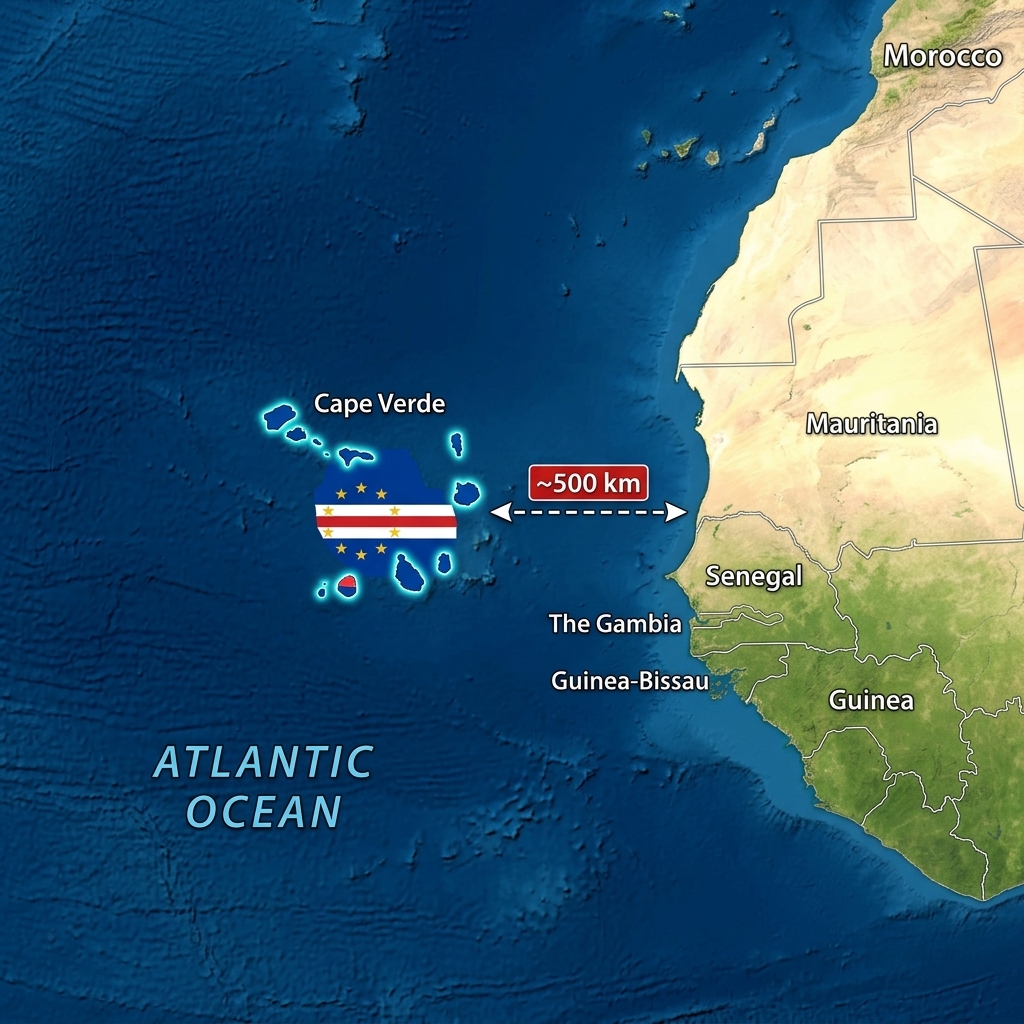
Cabo Verde sits geographically between these regions and has increasingly positioned its telecommunications infrastructure around this strategic location. The island nation sits in the Atlantic between the African continent, Europe and the Americas, making it naturally positioned along several international connectivity routes.
The companies say the proposed corridor would provide an additional route across the South Atlantic, allowing networks in the three regions to exchange data more directly and efficiently.
That could potentially reduce reliance on established traffic routes through northern European and North American hubs. DE-CIX described the objective as creating greater resilience, diversity and performance in international connectivity.
But geography alone does not create a digital hub. Cabo Verde has been building physical infrastructure around that geographic advantage, including international submarine cable connections and telecommunications facilities.
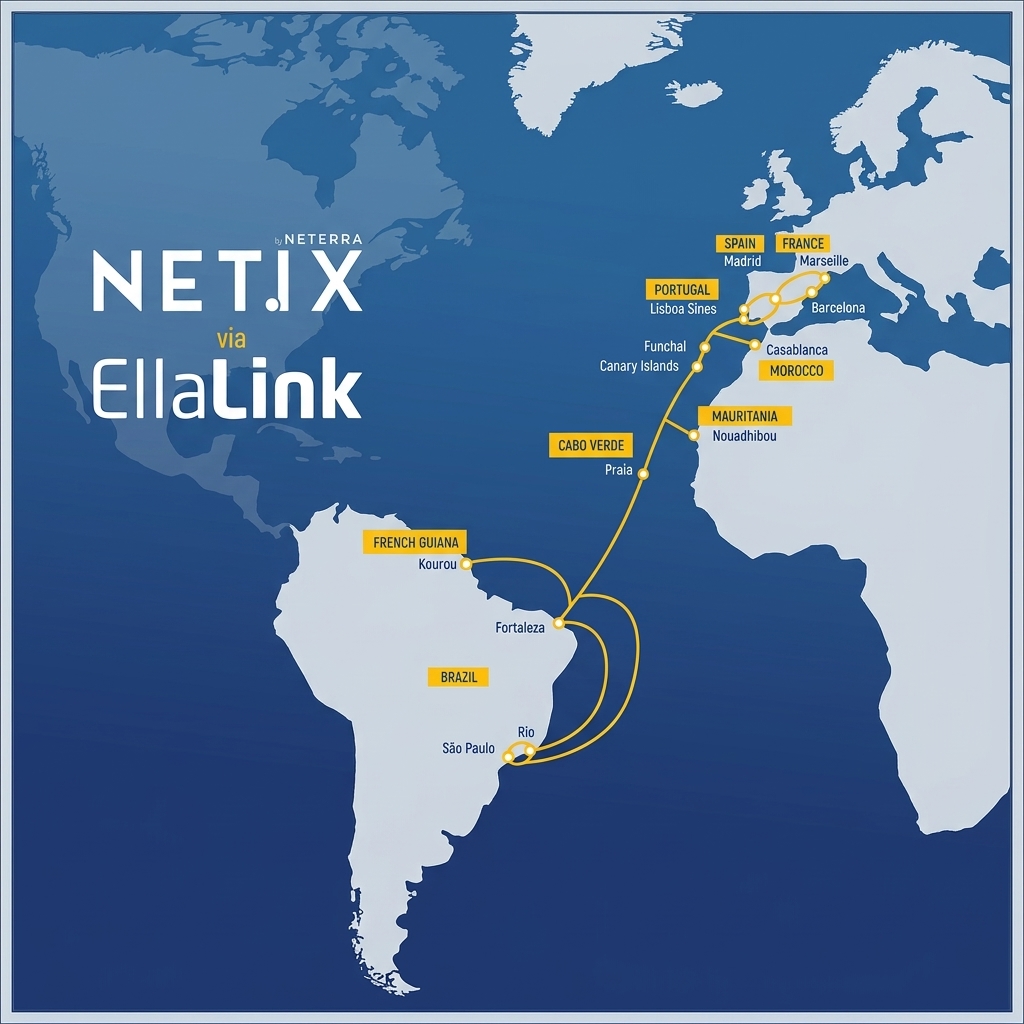
According to Cabo Verde Telecom’s own recent communications, three international subsea systems, WACS, EllaLink and SHARE, land in Praia, while the company says Cabo Verde has direct routes toward Lisbon, West Africa and Fortaleza in Brazil.
The ECOWAS Digital Observatory also identifies EllaLink and SHARE among the submarine cable systems serving Cabo Verde. It records the SHARE system as a roughly 720-kilometre connection between Dakar and Praia, with a stated design capacity of 16 Tb/s.
This existing infrastructure helps explain why Cabo Verde Telecom is seeking to position the country as more than simply an endpoint where cables come ashore.
The broader ambition is to make Cabo Verde part of the traffic, interconnection and transit ecosystem itself.
What DE-CIX Brings to the Partnership
DE-CIX is one of the world’s major Internet Exchange operators.
An Internet Exchange, or IX, allows different networks to exchange internet traffic directly rather than relying entirely on third-party networks or distant transit routes.
This can improve efficiency and, depending on the route and network architecture, reduce unnecessary traffic detours. DE-CIX operates interconnection services across multiple international markets. Its ecosystem includes network operators, Internet Service Providers, content providers, cloud companies and enterprises.
Its presence in locations such as Frankfurt, Madrid, Marseille, New York and São Paulo gives the proposed arrangement access to major digital ecosystems on both sides of the Atlantic.
The company has also been increasingly focused on connectivity between Europe, Africa and the Americas. In 2021, DE-CIX announced a strategic partnership with EllaLink aimed at promoting a low-latency route directly connecting Brazil and Southern Europe, with Lisbon serving as an entry point into DE-CIX’s European interconnection ecosystem.
Resilience Is Becoming More Important: What the Executives Are Saying
Theresa Bobis, Head of Emerging Wholesale Markets at DE-CIX, said the new collaboration reflects the changing demands of digital infrastructure.

“Digital growth increasingly depends on resilient, diverse and geographically distributed connectivity.”
Theresa Bobis
She further explained that the companies want to create a South Atlantic interconnection corridor that brings the digital ecosystems of Europe, Africa and Latin America closer together.
According to Bobis, more direct data routes can improve performance, strengthen infrastructure resilience and create new opportunities for businesses and network operators across the three regions.
On the CVTelecom side, Chief Marketing Officer Isa Neves offered an equally optimistic outlook, explaining that the deal represents an important step in strengthening Cape Verde’s position as a strategic digital gateway between Africa, Europe, and the Americas.
“By combining CVTelecom’s international connectivity capabilities with DE-CIX’s global interconnection ecosystem, we aim to enhance connectivity, resilience and access to digital services.”
Isa Neves

Neves also said the collaboration could create new value for customers while supporting the continued digital development of Cabo Verde and the wider West African region.
That framing positions tiny Cape Verde, an island nation of just over half a million people, as a surprisingly pivotal node in a much larger, ambitious global digital map. A country or region can have substantial international bandwidth while still being vulnerable if a large proportion of its traffic depends on a limited number of routes or cable systems.
In July 2026, reporting from Cabo Verde highlighted the company’s efforts to use its submarine cable infrastructure and international transit relationships to develop Cabo Verde’s role as a regional connectivity platform.
The AI Connection Is Also Becoming Important
The timing of the announcement is notable because the global internet infrastructure industry is undergoing another major transformation driven by artificial intelligence. AI workloads require enormous amounts of computing power, cloud infrastructure, data centres and network capacity.
DE-CIX itself has increasingly connected the discussion around Internet Exchanges with the infrastructure requirements of the AI economy. Its Atlantic Convergence 2026 event is taking place in Lisbon from 29 September to 1 October 2026, bringing together digital infrastructure companies, submarine cable operators, data-centre businesses, cloud providers, AI companies, investors and policymakers.
DE-CIX says the event is focused on sustainable and secure digital infrastructure for an AI-enabled future, with discussions covering AI infrastructure, cloud, data centres, subsea connectivity, digital sovereignty and cybersecurity.
The future internet is not only about smartphones and conventional web traffic. Increasingly, infrastructure is being designed around cloud computing, AI inference, data centres and huge international flows of data.
Conclusion
Africa’s digital growth increasingly depends on international connectivity. The continent is seeing rapid growth in cloud services, fintech, e-commerce, streaming, enterprise technology, artificial intelligence and digital public services.
All of these depend on reliable international networks. That makes submarine cables, Internet Exchanges, data centres and interconnection facilities increasingly strategic pieces of economic infrastructure.
Cabo Verde’s position in the Atlantic gives it an unusual opportunity. Instead of competing with larger African countries on domestic market size, it can potentially compete through geography, international connectivity and specialised digital infrastructure.
On 29 September 2026, the two companies signed a non-binding Letter of Intent to explore a South Atlantic interconnection corridor linking Lisbon and São Paulo, with CVTelecom expected to provide transport capacity and DE-CIX contributing access to its international interconnection ecosystem.

For Africa, that is the part worth watching. And in that increasingly strategic conversation, Cabo Verde is positioning itself to be much more than an island in the Atlantic.
Follow Amebopreneur for the latest on Nigeria’s tech ecosystem, startup funding opportunities, and the cross-border partnerships shaping Africa’s innovation future.
Related Posts

NITDA Builders Festival 2026: Smart Way to Unlock Startup Opportunities
NITDA Builders Festival 2026 offers Nigerian startups a path to ₦3bn in potential investment and pilot contracts by connecting real solutions with institutions.

Nigeria’s Internet Traffic: The Essential Growth Drivers Behind a 168% Surge
Nigeria’s internet traffic surged 168% in three years. Discover the key drivers behind the growth and what it means for businesses, SMEs and entrepreneurs.

Konga And Defence Headquarters Launch Nationwide Discount Scheme for Serving, Retired And Veteran Military Personnel
Konga and Defence Headquarters launch a nationwide discount scheme giving serving, retired and veteran military personnel access to essential goods at reduced prices.

Askya Offers African AI Startups Up To $200,000 In Investment Through New Growth Platform
Askya Investment Partners has launched a six-week AI Growth Platform for 10 African startups, offering zero-equity participation, business support and potential investment of up to $200,000
African Governments Are Now Training Their Civil Servants to Use AI as AfDB Launches Free Programme for Public Officials
The African Development Bank, UNDP, Google and Apolitical have launched free AI training for African public officials, covering AI skills, leadership, risks and government procurement.