


Nigeria To Launch DNEMIS On July 31 After Registering Over 32 Million Students
Nigeria is gearing up for one of the most important digital transitions in its education sector, with the formal launch of the Digital National Education Management Information System (DNEMIS) on July 31, 2026. The platform, which has already collected information on over 32 million students prior to its formal launch, is anticipated to transform how education data is collected, maintained, analysed, and used throughout the country.
The unveiling represents a significant milestone in the Federal Government’s efforts to modernise school administration through technology. Rather than relying on fragmented records, inconsistent reporting, and obsolete manual processes, Nigeria is transitioning to a centralised digital ecosystem capable of enabling evidence-based decisions at all levels of the education sector.
For years, people have claimed that one of the most significant barriers to improving education in Nigeria has been a lack of precise and reliable data. Without reliable information, governments struggled to plan efficiently, provide resources equally, evaluate school performance, and adapt promptly to new educational concerns. DNEMIS has been developed to fundamentally alter that narrative.
What Is DNEMIS?
The Digital National Education Management Information System (DNEMIS) is a centralised national database created by the Nigeria Education Data Infrastructure (NEDI) as part of the larger Nigeria Education Sector Renewal Initiative.
Its goal is ambitious but straightforward. It aims to combine data on students, instructors, schools, educational infrastructure, funding, learning results, and policy implementation into a single integrated digital platform.
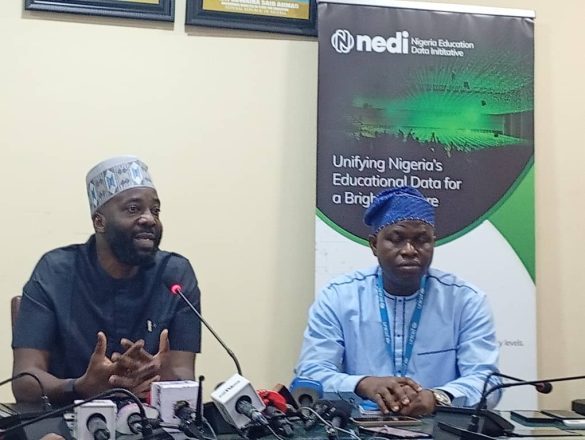
Instead of numerous databases in various organisations and states, DNEMIS establishes a uniform national system capable of recording educational information from a student’s first day of school until graduation. This marks a significant transition from reactive education planning to proactive, data-driven governance.
With More Than 32 Million Students Already Captured, Official Launch Date Is Confirmed
Even before the formal debut, the Ministry of Education stated that over 32 million Nigerian students had already registered in the system. This outstanding achievement highlights the project’s scope and offers government agencies an unmatched foundation for educational planning.
With millions of learner records already available, handlers will have rapid access to national enrolment figures, school attendance trends, demographic data, and other crucial indicators that traditionally took months or even years to gather manually. Early registration also allows Nigeria to generate real-time educational statistics as soon as the site is live.
The official launch of DNEMIS is set on Friday, July 31, 2026. The statement was made in Abuja by Mr Adebayo Onigbanjo, National Project Coordinator of the Federal Ministry of Education’s Special Programmes Operations and Implementation Unit.
According to him, DNEMIS is a vital component of Nigeria’s ongoing education reforms, addressing one of the country’s most chronic institutional deficiencies. During the announcement, Onigbanjo stated that the education sector has faced significant information challenges, including fragmented systems, inconsistent reporting, and limited access to reliable data.

“For many years, education planning and administration relied on fragmented systems, inconsistent reporting processes and limited access to reliable and timely data. These challenges constrained effective planning, weakened accountability and limited the sector’s ability to respond to emerging realities.”
“Data is no longer a back-office function. It is becoming the engine of education reform in Nigeria.”
Mr Adebayo Onigbanjo
He emphasised that education data is increasingly being used to drive national growth rather than just for administrative purposes.
Why Nigeria Needed DNEMIS
For decades, education management in Nigeria has faced major structural issues. Schools frequently sent paper reports through numerous administrative layers before reaching federal authorities. Various states commonly used different reporting standards, resulting in inconsistent numbers and missing datasets.
Many schools did not have up-to-date enrolment data, making it difficult to identify real student counts, teacher shortages, infrastructure needs, and financial priorities. These flaws influenced nearly every area of educational planning.
Budget allocations were sometimes based on obsolete figures. Infrastructure initiatives may not necessarily prioritise areas of highest need. There was frequently a shortage of precise workforce information when teachers were deployed. Policymakers struggled to assess learning outcomes and track progress toward national education goals.
DNEMIS aims to overcome these long-standing inefficiencies by establishing a centralised digital source of truth. The new system will standardise the way education data is collected across Nigeria. Information from schools will be electronically supplied to a single national platform, allowing education officials to continuously monitor developments rather than waiting for annual reports.
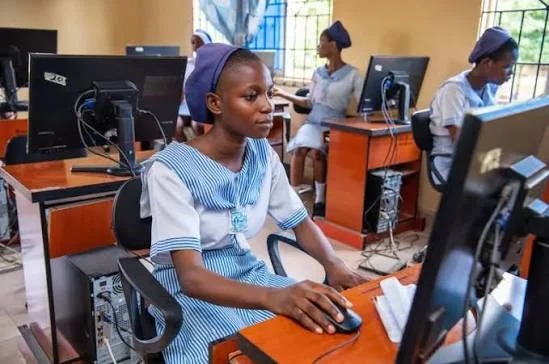
The platform will provide real-time support for planning, budgeting, monitoring, policy implementation, school administration, performance evaluation, and resource allocation. Officials believe that this will greatly increase openness, accountability, and operational efficiency in Nigeria’s education sector.
According to Ms Mojoyin Adebajo, Special Assistant to the Minister of Education for Digital Communications and E-Learning, chosen education statistics will be made available to the public.
She explained that this effort promotes transparency and broadens participation in educational growth.
“This represents an important step towards expanding access to information and encouraging broader participation in conversations that shape the future of education in Nigeria.” – Mojoyin Adebajo,
Researchers, journalists, development partners, civil society organisations, education analysts, investors, and business sector stakeholders will all have access to verified education data for analysis, policy discussions, and evidence-based decision-making. This improved transparency has the potential to boost public trust while also boosting collaboration within the school system.
Built With DHIS2 Technology
DNEMIS was created using District Health Information Software 2 (DHIS2), a globally recognised open-source technology that has already been successfully implemented in health systems across several nations.
DHIS2 has been specifically designed for use in Nigeria’s education sector. The adaptation enables authorities to monitor schools, students, teachers, and educational performance through an established digital infrastructure capable of securely and efficiently maintaining millions of pieces of information. Its versatility also allows for future development as more education databases are integrated.
Tracking every student from admission to graduation. Learner tracking is one of DNEMIS’ most transformational capabilities. The platform will track pupils’ academic progress from the moment they enter school until they graduate.
Also, officials argue that continual monitoring will make it easier to detect youngsters who drop out of school, relocate, transfer to another institution, or require intervention. The technology could be a valuable tool in Nigeria’s campaign to reduce the country’s enormous number of out-of-school youngsters.
Authorities can respond more quickly with targeted interventions if they notice dropout tendencies earlier. Although questions about digital privacy have naturally accompanied the implementation of such a massive national database. Government officials maintain that security was embedded into the system from the start.
Mr. Abubakar Isah, Coordinator of the Nigeria Education Data Infrastructure, stated that DNEMIS adheres to Nigeria’s data protection rules and includes safeguards to ensure the proper management of personal information. According to officials, protecting learner identities while preserving data veracity will remain a top focus throughout implementation.
UNICEF’s involvement in the project
UNICEF has also provided technical assistance to the initiative, specifically in the areas of education planning, monitoring, research, and data systems. Saka Ibraheem, UNICEF‘s Education Specialist for Planning, Monitoring, Data, and Research, said that additional integration work will take place over the next year.
“Before next year, we hope to have the Education Management Information System, Teacher Management Information System and individual learner records in one system. One system for education and one system for Nigeria.”
Saka Ibraheem

His words imply that DNEMIS is merely the first stage of a much bigger digital transformation; coupled with the use of unique learner identification numbers, it is a major breakthrough anticipated for DNEMIS, each student will be assigned an identity that will follow them throughout their academic career.
This will make it easier to track enrolment, verify student movement across schools, eliminate duplicate information, improve funding accuracy, and boost initiatives to prevent school dropouts.
The DNEMIS inauguration comes shortly after Nigeria’s National Learning Assessment Week, which took place from June 29 to July 3, 2026. The nationwide evaluation included all 36 states and the Federal Capital Territory, making it the largest learning assessment exercise ever done in Nigeria.
Officials claim the assessment’s findings will complement DNEMIS by giving useful data on student learning outcomes, allowing governments to establish more effective education policies and deploy resources where they are most needed.
Conclusion

The inauguration of the Digital National Education Management Information System on July 31, 2026, marks a watershed event in Nigeria’s transition to a contemporary, technology-driven education system. The federal government is laying the groundwork for a more transparent, efficient, and responsible education system by consolidating millions of student records, digitising school data collection, integrating teacher and learner information, and enabling real-time decision-making.
Accurate national data has the potential to improve educational planning, increase transparency, strengthen accountability, optimise teacher deployment, improve funding decisions, reduce administrative waste, identify vulnerable learners sooner, support educational research, improve policy formulation, and, ultimately, improve learning outcomes across the country.
The provision of credible statistics may also inspire increased investment from development partners and business sector organisations interested in assisting Nigeria’s educational system.
While considerable implementation obstacles exist, the potential provided by DNEMIS are both attractive and transformational. If the system is fully implemented across the federation and backed by constant investment, strong cybersecurity, and good stakeholder collaboration, it has the potential to become one of Nigeria’s most significant education reforms in decades.
Aside from strengthening governance, DNEMIS has the ability to strengthen educational planning, reduce the number of out-of-school children, improve learning outcomes, and ensure that future policy decisions are informed by accurate, reliable, and timely data. For millions of Nigerian students, teachers, schools, and policymakers, July 31, 2026, might signal the start of a smarter, more connected era in education.
Follow Amebopreneur for the latest on Nigeria’s tech ecosystem, startup funding opportunities, and the cross-border partnerships shaping Africa’s innovation future.
Related Posts
NITDA Builders Festival 2026: Smart Way to Unlock Startup Opportunities
NITDA Builders Festival 2026 offers Nigerian startups a path to ₦3bn in potential investment and pilot contracts by connecting real solutions with institutions.

Nigeria’s Internet Traffic: The Essential Growth Drivers Behind a 168% Surge
Nigeria’s internet traffic surged 168% in three years. Discover the key drivers behind the growth and what it means for businesses, SMEs and entrepreneurs.

Konga And Defence Headquarters Launch Nationwide Discount Scheme for Serving, Retired And Veteran Military Personnel
Konga and Defence Headquarters launch a nationwide discount scheme giving serving, retired and veteran military personnel access to essential goods at reduced prices.

Askya Offers African AI Startups Up To $200,000 In Investment Through New Growth Platform
Askya Investment Partners has launched a six-week AI Growth Platform for 10 African startups, offering zero-equity participation, business support and potential investment of up to $200,000

Cabo Verde Telecom and DE-CIX Plan New South Atlantic Connectivity Corridor
DE-CIX and Cabo Verde Telecom have signed a non-binding Letter of Intent to explore a South Atlantic connectivity corridor linking Lisbon and São Paulo, strengthening direct digital infrastructure across Europe, Africa, and Latin America.