


15 African AI Startups Graduate from Google for Startups Accelerator Africa 2026
The 2026 Google for Startups Accelerator Africa programme successfully graduated fifteen promising AI firms from throughout Africa, providing a huge boost to the continent’s rapidly developing artificial intelligence industry. The achievement demonstrates the expanding importance of African entrepreneurs using artificial intelligence to address crucial issues in banking, agriculture, healthcare, mobility, communications, and enterprise technology.
The graduating class, which represented eight African countries, completed the three-month hybrid accelerator programme from March to June 2026. Google hosted the initiative, which gave entrepreneurs world-class coaching, innovative technology tools, engineering knowledge, and strategic assistance to help firms scale more efficiently and compete globally.
The graduation ceremony was followed by a Close-out Week and Demo Day in Nairobi, Kenya, during which participating startups demonstrated ground-breaking AI-driven solutions targeted at revolutionising sectors and improving lives across Africa.
The most recent batch arrives at a critical juncture in history, as artificial intelligence emerges as one of the most potent drivers of global innovation, economic development, and digital change.
A Strong Indicator Of Africa’s Growing AI Economy
One of the most impressive accomplishments of the graduating startups is their financial performance. According to programme organisers, over 60% of the firms are currently successful, with an average monthly revenue of around $60,000.
This impressive result calls into question the long-held belief that African technology businesses struggle to achieve sustained development. Instead, it represents a huge shift toward developing growing revenue-generating firms capable of addressing local issues while adding economic value.
During the accelerator programme, the entrepreneurs raised around $1.1 million in total, strengthening investor confidence in Africa’s developing AI ecosystem. At a time when global venture capital funding has become more competitive and conservative, these businesses’ ability to obtain investment demonstrates the resilience and potential of African innovation.
During the Demo Day event, Alex Okosi, Google’s Managing Director for Africa, lauded the graduating entrepreneurs for their innovation and impact.
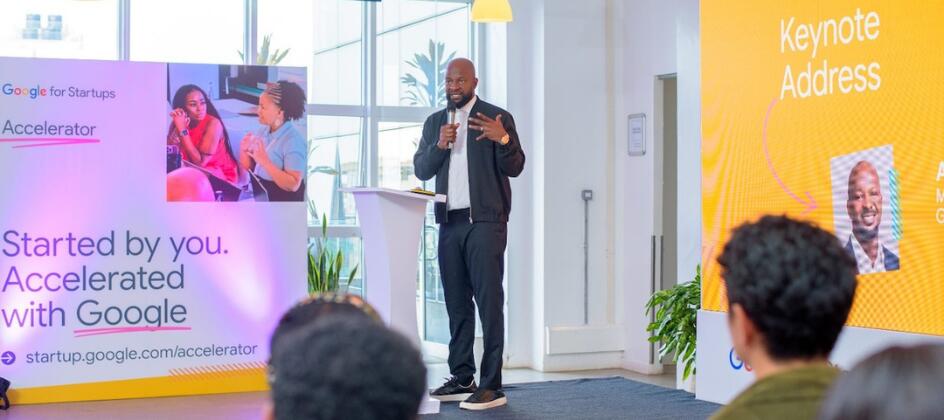
“We are proud to see how these startups are innovatively using AI to tackle real-world challenges across the continent.”
“Through our equity-free support and connection to Google services, we are providing founders with a blended model that offers the much-needed support and mentorship that founders need to thrive.”
Alex Okosi,
His remarks highlight Google’s broader objective of promoting entrepreneurship and technology-driven economic growth in Africa.
Unlike typical investment programmes, which require founders to give up ownership holdings, the Google for Startups Accelerator operates on an equity-free basis. This allows entrepreneurs to maintain control over their businesses while also accessing world-class resources and mentorship.
Artificial Intelligence Is At The Center Of African Innovation
This year’s accelerator programme focused primarily on artificial intelligence.
According to Folarin Aiyegbusi, Google’s Head of Startup Ecosystem for Africa, the initiative focused on AI and machine learning as transformative tools capable of addressing some of Africa’s most critical societal and economic concerns.

“This year’s edition placed particular emphasis on AI and machine learning as tools for addressing societal challenges while helping founders scale impact in their communities and unlock new opportunities for economic growth.”
Folarin Aiyegbusi
His comment reflects a growing consensus on how artificial intelligence may assist in bridging long-standing infrastructure gaps, increase efficiency, expand service access, and accelerate economic development across the continent.
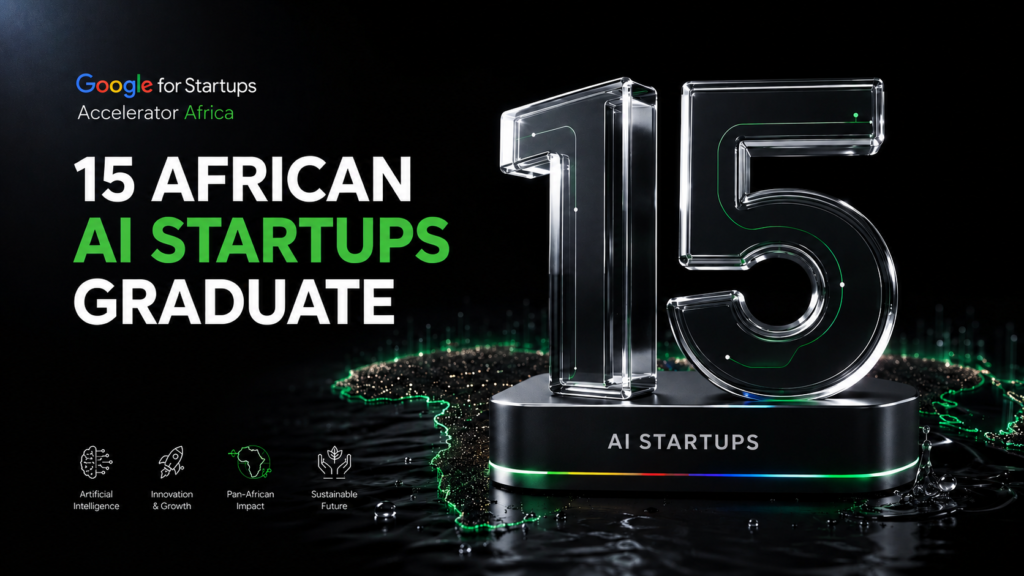
Graduations for 15 startups
Kenyan Startups Demonstrate Effective Solutions To Hidden Economic Challenges
Kenya emerged as one of the most well-represented nations in the graduating cohort, with four entrepreneurs addressing vital but frequently overlooked concerns.
- Coamana employs artificial intelligence to analyse and understand real-time data from informal food markets. By making previously invisible supply chains more transparent, the company assists governments, corporations, and politicians in making better decisions about food distribution and market management.
- Duck addresses one of the retail industry’s most chronic issues: supply shortage. The technology helps consumer brands manage inventories and minimise costly stockouts by providing real-time data analytics and greater visibility into retail operations.
- ReportsAI is changing the way businesses manage information by translating massive amounts of unstructured data into usable institutional knowledge and compliant reports. This feature is especially useful for development organisations, non-governmental organisations (NGOs), and impact-focused institutions, which frequently face difficult reporting obligations.
- VunaPay is addressing a long-standing issue in African agriculture: delayed payments to smallholder farmers. The company’s goal is to increase cash flow and financial inclusion in rural communities by developing specialised fintech infrastructure for agricultural cooperatives.
Their ideas show how artificial intelligence may be used not just as a technological curiosity, but also as a practical tool to address real-world economic inefficiencies.
- Tanzania’s Safiri Reinvents Travel And Transportation, representing Tanzania.
Nigerian Startups Take Centre Stage In Financial Innovation
Nigeria’s participation in the scheme showcases the country’s status as one of Africa’s premier technology hubs.
- Bani is establishing cross-border payment infrastructure to facilitate transactions across African marketplaces. In a continent where fragmented banking systems frequently create trade hurdles, initiatives like Bani have the potential to facilitate more regional economic integration.
- MasteryHive AI focuses on transaction reconciliation and financial operations automation. The startup uses artificial intelligence to assist businesses in decreasing errors, increasing productivity, and optimising financial management operations.
- Regxta solves one of Africa’s most persistent financial inclusion concerns by providing alternative credit scoring solutions for unbanked micro-businesses. Traditional financial institutions frequently struggle to assess creditworthiness in marginalised groups, creating lending hurdles. Regxta’s AI-powered technology has the ability to alter the industry.
- Termii, another Nigerian player, is developing AI-powered communications infrastructure to improve financial messaging and client engagement. As digital transactions spread across Africa, reliable communication infrastructures become increasingly important.
The substantial Nigerian involvement demonstrates the country’s expanding prominence in Africa’s AI and fintech sectors.
The Other Startups In Africa Showcase Diverse Innovation
Anda Africa from Angola is using AI-powered credit assessment algorithms to assist informal moto-taxi businesses, allowing workers to have access to financial services that have previously been out of reach.
Emaisha Pay in Uganda focuses on agricultural trade payments and embedded financing, with the goal of improving financial activities within agricultural value chains.
- South Africa’s Loop is building innovation in mobility and payment digitisation.
- Vambo AI is developing multilingual artificial intelligence infrastructure tailored to African languages. This latter innovation addresses one of the most serious barriers to AI development in Africa: the under-representation of local languages in global AI systems.
- Maad, based in Senegal, develops an AI-powered omnichannel platform that assists consumer companies in better managing sales and distribution.
- Meditect of Côte d’Ivoire is modernising pharmaceutical operations by implementing cloud-based software solutions that enable pharmacy digitisation and better healthcare administration.
The graduating class demonstrated the breadth of innovation happening across the continent. Collectively, these startups demonstrate the wide range of sectors where artificial intelligence can have a significant impact on African economies.
Google for Startups Accelerator: Africa’s Expanding Legacy
Since its inception in 2018, the Google for Startups Accelerator Africa programme has emerged as one of the continent’s most prominent startup development efforts.
Over the years, the project has helped over 190 businesses in 17 African nations. Alumni companies have raised more than $400 million in capital and employed over 3,500 people. Google has also committed around $11 million in equity-free capital and product credits, allowing founders to access critical tools and resources for scaling their firms.
These data reflect the programme’s rising impact on Africa’s entrepreneurial environment, as well as its role in developing the next generation of technology leaders.
The graduation of these fifteen AI firms is a strong indicator of Africa’s growing potential to create world-class technology companies capable of addressing local concerns while competing on a global scale.
Artificial intelligence is quickly becoming a basic technology that affects almost every sector. The entrepreneurs that come out of our accelerator are at the forefront of that shift, providing solutions for financial inclusion, agricultural production, healthcare modernisation, logistical efficiency, communication infrastructure, and language accessibility.
Their success mirrors a bigger change in Africa, where local entrepreneurs are increasingly driving innovation by understanding regional realities and creating solutions adapted to specific market conditions.
Conclusion
The successful graduation of fifteen AI-focused firms from the Google for Startups Accelerator Africa 2026 programme represents another significant milestone in Africa’s technological progress. With the majority of participants now generating money, attracting investment, and addressing critical social concerns, the cohort highlights Africa’s AI ecosystem’s enormous potential and growing maturity.
While financial limits, infrastructure shortages, and regulatory problems persist, the accomplishments of these entrepreneurs provide a positive and compelling vision for the future. With Google’s knowledge, guidance, and resources, these founders are developing revolutionary solutions that have the potential to revolutionise sectors, generate jobs, extend financial inclusion, and accelerate economic growth throughout the continent.
As artificial intelligence continues to transform the global economy, African innovators are demonstrating that they are more than just players in the AI revolution; they are shaping its destiny.
Related Posts

Political Dynamics, Global Realignment: What Tola Adeyemi Told CEOs at FNCCI-KPMG Luncheon Series 6
As Nigeria heads toward the 2027 election, KPMG’s Tola Adeyemi urges businesses to prepare for multiple outcomes, policy shifts and new opportunities.
NITDA Builders Festival 2026: Smart Way to Unlock Startup Opportunities
NITDA Builders Festival 2026 offers Nigerian startups a path to ₦3bn in potential investment and pilot contracts by connecting real solutions with institutions.
Nigeria’s Internet Traffic: The Essential Growth Drivers Behind a 168% Surge
Nigeria’s internet traffic surged 168% in three years. Discover the key drivers behind the growth and what it means for businesses, SMEs and entrepreneurs.

Konga And Defence Headquarters Launch Nationwide Discount Scheme for Serving, Retired And Veteran Military Personnel
Konga and Defence Headquarters launch a nationwide discount scheme giving serving, retired and veteran military personnel access to essential goods at reduced prices.
Askya Offers African AI Startups Up To $200,000 In Investment Through New Growth Platform
Askya Investment Partners has launched a six-week AI Growth Platform for 10 African startups, offering zero-equity participation, business support and potential investment of up to $200,000