


Paga And Sui Enters Crypto Partnership To Bring SuiDollar To Africa With Blockchain Network
A New Era For African Fintech
Paga Group, Africa’s leading payments infrastructure company, has announced a partnership with Sui, a high-performance blockchain designed to move money as freely as messages. The partnership will integrate Sui Dollar (USDsui), Sui’s native stablecoin, and adopt Sui as the primary blockchain across Paga’s ecosystem.
Tayo Oviosu, Founder and Group CEO of Paga Group, announced the announcement live on stage at Sui Live in Miami Beach on May 7, 2026. The event was held during the week of Consensus Miami, the world’s premier blockchain and digital finance conference.
Paga Group, which processed more than $11 billion in payments and facilitated 169 million transactions in 2025 across its three business lines: Paga Engine (B2B infrastructure), Paga (consumer payments app), and Doroki (retail merchant platform), will integrate Sui Dollar to provide stablecoin-native payment rails to its 300+ enterprise clients and millions of consumer users across the continent.
Sui Dollar (USDsui) is the Sui blockchain’s native stablecoin, established in March 2026. It has a 1:1 peg to the US dollar and is backed by US Treasury-grade liquid assets.
The agreement places Paga at the core of Africa’s fast-expanding stablecoin economy, cross-border payments industry, and tokenised asset revolution. According to industry analysts, this strategic cooperation has the potential to drastically change how Africans save, invest, transfer money, and access global financial opportunities in an era of inflation, currency volatility, and expensive remittance systems.
All About Sui And Paga Group
Sui, a next-generation Layer 1 blockchain designed for scalable finance and worldwide payments, allows money to move freely alongside messages. Sui was founded by the core team behind Meta’s stablecoin proposal and is powered by an object-centric approach. It allows you to program and own assets, rights, and user data. Sui’s primitives provide everything a developer needs to design high-performance payments and financial apps, including rapid agentic payments.
Meanwhile, Paga Group, established in 2009, is one of Africa’s pioneering fintech startups. The company operates three platforms: Paga Engine, a payments infrastructure used by over 300 firms, including Meta, LemFi, Qatar Airways, and Verto; Paga, a consumer digital wallet; and Doroki, a retail and SME management platform. In 2025, Paga Group processed 169 million transactions totalling over ₦17 trillion (US$11 billion).
Massive Partnership Deal
For years, Paga has been regarded as one of Nigeria’s most successful fintech innovators. Tayo Oviosu founded the company in 2009, and it has earned a reputation for facilitating digital payments and financial access for millions of Africans. The fintech firm presently processes roughly $1.5 billion per month and will handle over $11 billion in transactions in 2025 alone, with a historical transaction volume of more than $42 billion.
Its recent collaboration with Sui is a strong indication that blockchain technology is no longer regarded as experimental in Africa’s mainstream financial sector. Instead, it is increasingly integrated into real-world financial infrastructure.
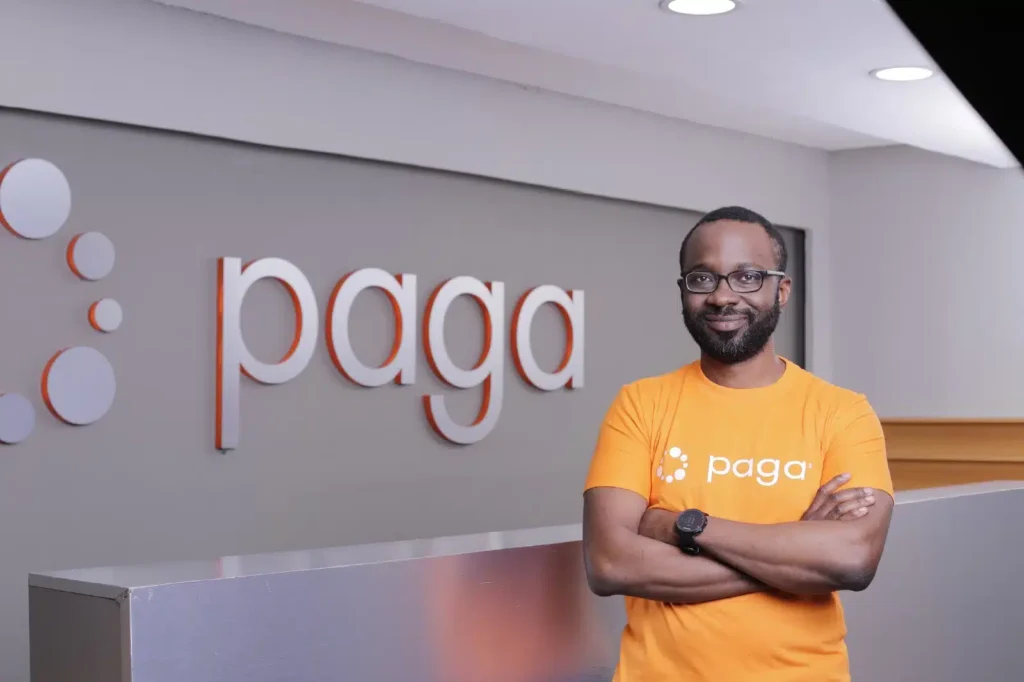
“We chose Sui because it is built from the ground up for the scalability, throughput, programmability, and privacy requirements needed for the future of money movement by both humans and agents.”
“It also helped that both of our companies have a strong shared vision of providing financial freedom to Africans.”
Through this collaboration, Paga and Sui are working towards a day when Africans may work globally, invest globally, and bring their creativity to life for”
“Sui is built to make money move as freely as messages and is committed to empowering high-growth, developer-rich regions by providing high-performance blockchain technology”,
Tayo Oviosu
“Paga has spent seventeen years earning Africa’s trust at $11 billion in annual volume, and together, we are deploying the payment infrastructure this continent has been building toward. Africa has a vibrant developer ecosystem, entrepreneurial drive, and increased interest in blockchain technology. This partnership is ready to meet that demand.”
Adeniyi Abiodun

The move is particularly significant because African fintech companies have historically been wary of cryptocurrency due to regulatory uncertainty and government scrutiny. However, rising stablecoin adoption, increasing demand for faster remittances, and persistent local currency depreciation are now forcing fintech companies to rethink traditional banking rails.
What Exactly Will Paga And Sui Build?
Under the agreement, Paga and Sui intend to build a new generation of blockchain-powered financial services geared toward Africans on the continent and in the diaspora.
One of the most widely discussed items is the introduction of high-yield US dollar accounts powered by USDsui, Sui’s yield-bearing stablecoin. Unlike traditional savings products, which frequently struggle with inflation and currency devaluation in many African nations, these stablecoin-powered accounts are intended to help users conserve value while receiving a passive dividend.
The cooperation also includes crypto on-ramp and off-ramp infrastructure, allowing users to smoothly change native African currencies into digital assets and vice versa without relying on correspondent banks or traditional financial intermediaries. Analysts believe that this might drastically lower cross-border payment costs and settlement times.
Another groundbreaking component of the collaboration is the focus on tokenised real-world assets. This means that Africans may ultimately invest digitally in assets like bonds, real estate, and even solar projects using blockchain-powered platforms.
According to sources, the businesses are also developing on developer infrastructure and financial rails that might help fintech builders across Africa, resulting in a larger Web3 financial ecosystem centred on the Sui blockchain.
Stablecoins Are becoming Africa’s Financial Lifeline.
One of the main reasons for this partnership’s popularity is because stablecoins are becoming increasingly significant in Africa.
Stablecoins have emerged as a feasible alternative for preserving buying power in nations such as Nigeria, where inflation and currency volatility continue to put financial pressure on the economy. Many Nigerians already utilise USDT and USDC unofficially for overseas transfers, remote labour earnings, business settlements, and savings.
Tayo Oviosu emphasised this growing demand during conversations about the cooperation, stating that many Africans continue to confront significant impediments to global trade, reliable savings systems, and reasonable cross-border transfers. According to one surprising statistic cited in reports, 95% of polled Nigerians would prefer to receive stablecoins over naira in certain transaction scenarios. This data demonstrates a growing scepticism of unpredictable local currencies and an increasing interest in dollar-denominated digital assets.
This rapid increase in stablecoin acceptance is part of a larger worldwide trend. Major fintech organisations throughout the world are becoming interested in blockchain infrastructure because stablecoins may significantly lower transaction fees, eliminate settlement bottlenecks, and improve access to global financial institutions.
Tayo Oviosu’s Vision Of Financial Freedom In Africa
Tayo Oviosu’s strong vision is driving much of the excitement around this alliance.
During the introduction, Oviosu portrayed Africa’s financial limits as “walls of the cage”, claiming that millions of Africans are still confined by delayed banking systems, expensive remittance networks, and limited access to global markets.
He reportedly said: “These are the walls of the cage.”
He also stated that true financial freedom in Africa necessitates infrastructure capable of moving money worldwide, affordably, and instantly for more than one billion people. According to Oviosu, blockchain technology could help Africans avoid some of the costly inefficiencies inherent in traditional banking institutions. He noted that importing goods into Nigeria can still take several days for payments to be settled, while firms lose significant money due to FX charges and intermediaries.
His concept is firmly aligned with the larger Web3 movement, which encourages decentralised financial systems that are speedier and more transparent than traditional banking infrastructure.
Why Sui Was Chosen
Sui has actively positioned itself as a blockchain network designed for scalable financial applications and real-world transactions. Sui, developed by Mysten Labs in the United States, has recently gained substantial traction in the cryptocurrency industry. According to reports, SUI token prices rose following the news of the Paga alliance, owing in part to investor optimism about real-world utility and African expansion potential.
The blockchain network just debuted USDsui, a stablecoin with a dividend that is supposedly backed by liquid assets of the United States Treasury. Industry observers say Sui now has a competitive advantage in luring fintech integrations focused on payments and savings infrastructure.
The collaboration also represents a growing trend among fintech companies: they favour blockchain networks that can offer scalable, low-cost, and developer-friendly payment solutions.
The potential advantages of this collaboration are considerable. The agreement might provide millions of Africans with easier access to dollar-denominated savings products, faster transfers, fewer transaction fees, and hitherto unavailable investment options.
Cross-border payments in Africa remain painfully fragmented and expensive. Many African firms continue to rely on antiquated correspondent banking systems, which cause delays, high fees, and settlement issues. Blockchain-powered trains could greatly simplify this procedure.
Crypto payment rails may also provide Africa’s thriving freelance and remote labour sector with easier access to global cash streams without imposing unnecessary banking limitations.
Risks, Criticism, and Regulatory Concerns
Despite the excitement, the relationship is not without controversy and risk. Crypto legislation in Nigeria and throughout Africa is ambiguous and continuously changing. Governments and authorities are concerned about money laundering, capital flight, fraud, and financial instability linked to digital assets.
Although Nigeria’s stance on cryptocurrency has eased since prior years, regulatory structures are still being built. This raises uncertainty for finance companies joining the blockchain space. Critics further contend that stablecoins create new types of reliance on US dollar systems and external financial infrastructure. Others are concerned about security threats, frauds, volatility in cryptocurrency ecosystems, and the likelihood of regulatory crackdowns stifling growth.
Tayo Oviosu addressed some of these concerns by stating that elements of the effort would be run through Paga’s UK and US structures, but transactions entering Nigeria would still be subject to existing remittance and Central Bank reporting regulations.
Still, analysts believe the partnership’s long-term success will be significantly reliant on regulation, execution quality, user trust, and the capacity to grow blockchain services beyond crypto aficionados and into general everyday use.
The Paga-Sui agreement is part of a much wider revolution in African fintech; people believe that Africa’s fintech industry is quietly entering the blockchain era, as Flutterwave and Paystack are apparently looking into blockchain infrastructure, stablecoin settlements, and new financial technologies. This trend implies that Africa’s fintech executives are increasingly viewing blockchain as a practical infrastructure capable of solving real-world economic challenges, rather than a speculative cryptocurrency.
As inflationary pressures persist, remittance demand rises, and digital commerce expands, blockchain-powered payment rails could provide a significant competitive edge to African fintech enterprises.
Conclusion
Paga’s entry into cryptocurrency through a strategic cooperation with Sui may one day be hailed as a big moment in Africa’s digital financial history. The collaboration brings together one of Africa’s most reputable finance brands with a fast-expanding blockchain ecosystem at a time when stablecoin use is increasing in emerging regions. It is a daring, disruptive, and perhaps transformative attempt to use blockchain technology to address some of Africa’s most pressing financial challenges.
While significant legislative and operational challenges remain, the collaboration demonstrates the unstoppable trend for stablecoins, decentralised finance, and tokenised assets in Africa’s fintech future.
Africa’s fintech sector is believed to no longer be observing the crypto economy from a distance. It is actively building within it.
Related Posts
Marque Technologies: Building World-Class Solutions And Changing The Rules Of Digital Innovation In Africa
Marque Technologies is helping Nigerian businesses grow through AI, enterprise software, NFC digital identity, and smart digital solutions built for Africa.
Bosun Tijani Foundation Opens Applications for Second Cohort of Generative AI Fellowship
The Bosun Tijani Foundation has opened its six-month Generative AI Fellowship, offering young Nigerians hands-on…

CBN Maintains Cautious Monetary Stance Ahead of July 2026 Monetary Policy Committee MPC Meeting
As the July 2026 MPC meeting nears, all eyes are on the CBN. Will interest rates stay put, or will fresh signals reshape Nigeria’s economic outlook?
NITDA Hands Over Digital Identity Security Public Key Infrastructure To NIMC
Nigeria just strengthened its digital future as NITDA hands PKI to NIMC, paving the way for safer digital identities, stronger cybersecurity and trust.

World’s Fourth-Largest Cocoa Producer, Nigeria, Bans The Export Of Raw Cocoa Beans
Nigeria has banned raw cocoa bean exports, pushing local processing to boost jobs, industrial growth, and value creation in the world’s fourth-largest cocoa producer.