

Digital Economy And Sovereignty Battle: Nigeria Targets 30% Growth in .ng Domain Adoption Amid Reforms
Nigeria is approaching a critical and potentially transformational moment in its digital economy, as the country ramps up attempts to encourage usage of the native “.ng” domain. The push isn’t just about website URLs or online branding. It is part of a broader national plan aimed at digital sovereignty, data ownership, cybersecurity, economic retention, and more control over Nigeria’s online identity.
Stakeholders within the Nigerian technology ecosystem, especially the Nigeria Internet Registration Association, widely known as NiRA, believe that Nigeria’s reliance on foreign domains such as “.com”, “.org”, and “.net” has created a dangerous digital imbalance that weakens the country’s technological independence. The push for local domain adoption is gaining traction as government agencies, policymakers, digital economy specialists, and corporate sector leaders see digital infrastructure as a question of national security and economic power, rather than just an internet utility.
Global statistics revealed a close link between strong economies and robust local domains. In Germany, the .de domain has more than 17 million registrations, with roughly one in every five citizens holding one. China’s .cn domain is the largest ccTLD, with over 20 million registrations due to official directives and a coordinated digital strategy.
Globally, there are more than 368 million domain names. Across borders, the local domain is not a second option. It’s the default choice. They recognise that a ccTLD is a strategic tool for establishing digital sovereignty. Experts believe that Nigeria must bridge the ccTLD gap in order to achieve its objective of a $1 trillion economy by 2030.
The country cannot claim digital leadership if 80% of its online identity is hosted elsewhere.
Understanding What .ng Domain Means For Nigeria
The “.ng” domain is Nigeria’s official country code top-level domain, similar to how the United Kingdom uses “.uk” and South Africa uses “.za”. It was launched in 1995 and is maintained locally by NiRA under the supervision of Nigeria’s internet governance organisations.
For years, however, many Nigerian businesses, startups, government institutions, media corporations, and organisations favoured foreign domains over “.ng”. This produced a troubling dichotomy. Nigeria became one of Africa’s fastest-growing digital economies, yet much of its digital identity relied on foreign-controlled internet infrastructure.
Many now see this as a fundamental flaw in Nigeria’s digital transformation efforts.

According to NiRA President Adesola Akinsanya, many Nigerian companies are
“building on rented digital land.”
Adesola Akinsanya
That dramatic declaration has become one of the cornerstones of the country’s digital sovereignty effort. The message of the sentence is simple but scary. Nigerian enterprises may create value locally, employ Nigerians, and make cash within Nigeria, but the basic digital systems that underpin those businesses frequently exist outside of Nigeria’s legal and economic sovereignty.
At a media advocacy and capacity building workshop held by NiRA in Lagos, a member of the NiRA Board of Trustees, Biyi Oladipo, stated that one domain generates several opportunities. He stated that the chain is clear; the .ng domain leads to a website, which enables business, creates transactions, generates jobs and taxes, and, ultimately, increases the national GDP.
Currently, there are over 240,000.ng domains. While this is increasing, it still represents a fraction of the potential in a country with over 35 million MSMEs.
Oladipo observed that while journalists celebrate the “house”, the next fintech unicorn or AI firm, they frequently overlook the “land”, the fundamental digital identity on which these enterprises are based. According to him, the media plays four important roles in the ecosystem: educators, who teach that digital identity equals economic power; It also serves as an amplifier, highlighting success stories of growing enterprises .ng. They are also trust builders, ensuring the credibility of local domains.
They are also agenda-setters. Oladipo stated that they are expected to shape the discourse surrounding digital sovereignty.
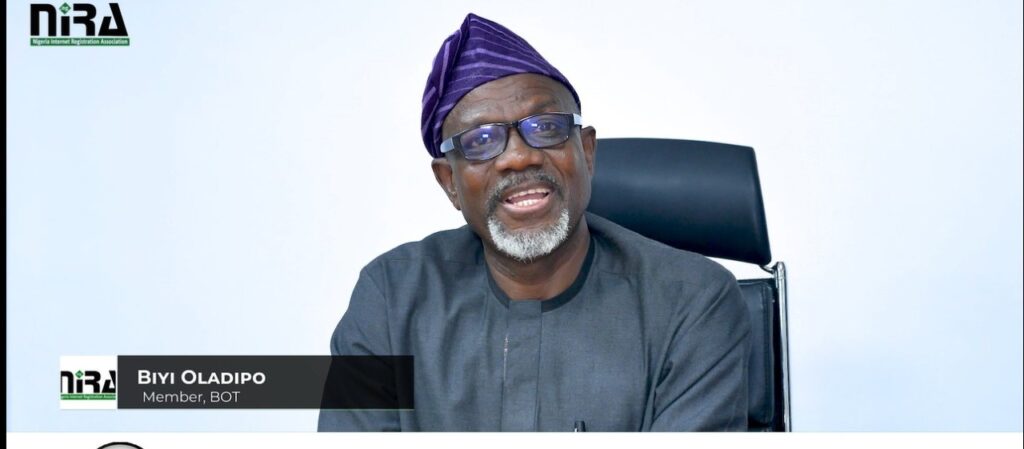
“Without media advocacy, .ng remains a technical subject for IT professionals. With media support, it becomes a national economic movement.”
Biyi Oladipo
Renting Vs Owning
Akinsanya stated that the tale of Nigeria’s Internet is still being written and that the country is at a crossroads:
“We can continue to be observers in a digital world governed by others, or we can be active participants in shaping our own trajectory.” Adesola Akinsanya
The CEO of NiRA stated that choosing .ng is an act of digital patriotism. He described it as a statement that Nigerian firms are proud, verified, and here to stay and that it is the difference between renting a digital future and owning it.
Oladipo, on his part, claimed that the media has the ability to evaluate if Nigerians grasp this choice.
“It is time to spotlight the land, not just the house, and build a digital Nigeria that is truly Nigerian,” Biyi Oladipo
Generally, it was emphasised that for enterprises, the .ng indicates authenticity, a verified local presence. There’s also visibility, which increases local search relevance. It also assures security, local government, and faster dispute settlement, as well as leaving a legacy that contributes to the expansion of Nigeria’s digital economy.
Reason For A Quick Massive Growth In .ng Adoption?
Nigeria’s increased campaign for local domain adoption is closely related to the concept of digital sovereignty. Digital sovereignty refers to a country’s ability to manage its own digital infrastructure, online identity, data systems, cybersecurity framework, and internet governance without relying heavily on foreign sources.
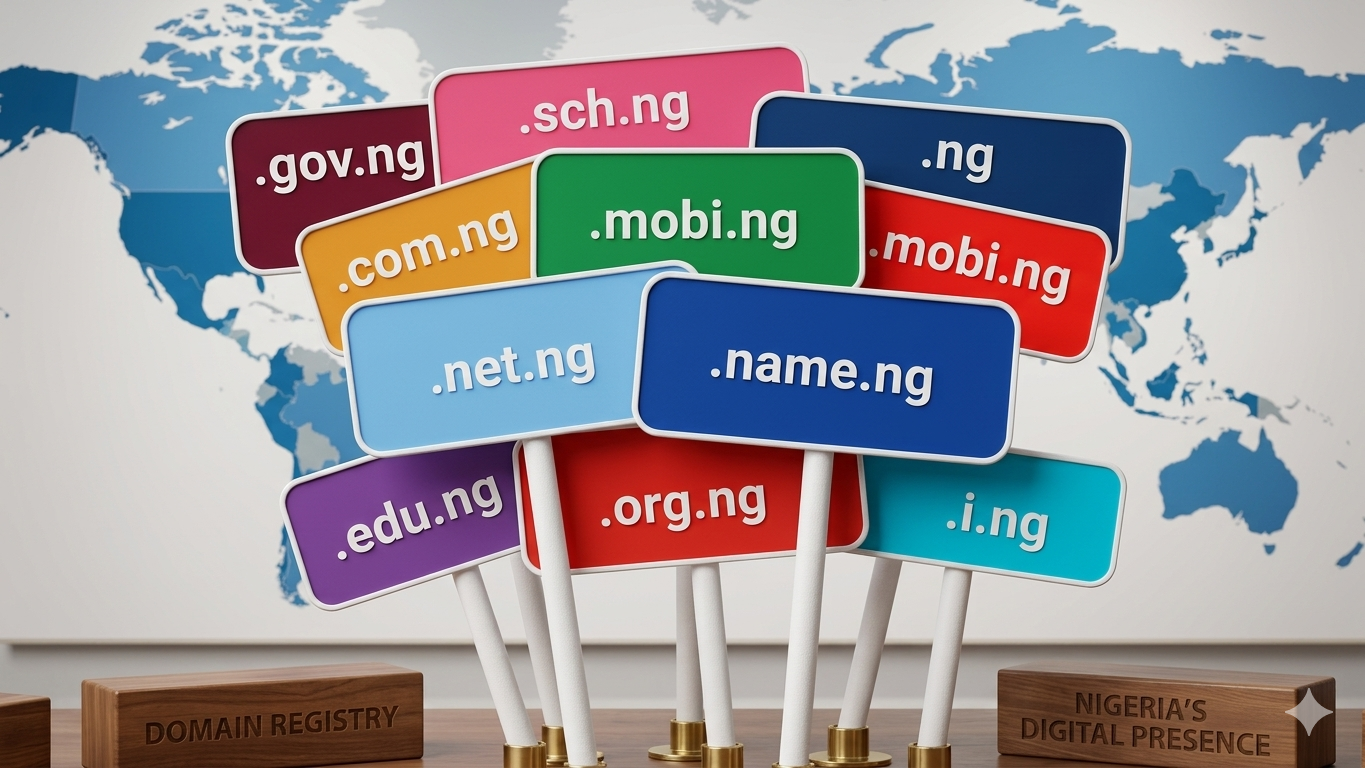
This topic has grown in importance as cyber threats, global data conflicts, online fraud, and geopolitical technological tensions escalate around the world. Supporters of the .ng campaign say that local domain adoption provides various strategic benefits.
One of the most compelling justifications is economic retention. When Nigerian firms register international domains, a large chunk of the registration fees, hosting profits, and other digital service payments leave Nigeria for overseas economies.
Experts believe that it’s increasing. ng popularity will help Nigeria keep more digital riches while also benefiting local registrars, developers, hosting providers, marketers, cybersecurity businesses, and cloud infrastructure companies.
Data security is also an important consideration. The government’s broader digital sovereignty agenda prioritises local hosting and ownership of internet infrastructure. Policymakers feel that Nigerian data should increasingly be kept within Nigerian-controlled systems rather than relying largely on foreign platforms and servers.
The push also meshes with Nigeria’s larger goal of developing a stronger indigenous digital economy capable of competing worldwide.
The Significant Role Of The Nigeria First Policy
The Nigeria First Policy, which went into effect in 2025, was a major motivator for this movement. The policy encourages local content, local hosting, local ownership, and increased national engagement in key sectors of the economy. In the digital arena, the policy has become a significant driver of .ng advocacy.
Under this system, government ministries, departments, and agencies are anticipated to switch to .ng domains for official communication and online operations. The policy also promotes increased local data hosting requirements and indigenous digital infrastructure development.
NiRA and digital experts, although mentioned technology like DNS Security Extensions, often known as DNSSEC, as part of efforts to improve the security of the .ng ecosystem.
The premise is that when users see a .ng website, they automatically equate it with Nigerian presence and accountability. This can boost trust in digital transactions, especially in industries like fintech, e-commerce, education, media, and government services.
Supporters believe that a greater trust signal will eventually reduce fraudulent activity and provide a safer digital environment for customers.
SEO And Branding Advantages For Nigerian Businesses
The programme is positioned as a valuable SEO and branding opportunity for Nigerian firms. According to digital marketing professionals, local domains typically boost geographic relevance in search engine rankings. A .ng website aimed at Nigerian audiences may fare higher for local search queries since search engines recognise the domain as locally relevant.
Small firms, startups, creators, and local service providers may gain a major competitive advantage.
The branding impact is equally essential. Advocates claim that .ng strengthens Nigerian identity online, just as the country’s telephone number “+234” or the Naira sign does offline.
As Nigeria’s digital economy grows, supporters feel that holding a .ng domain would become an important mark of trustworthiness, patriotism, and local relevance.
Sovereignty is defined by its borders, flag, and the terrain beneath its residents’ feet. But in the twenty-first century, a new region has formed, one that is unseen but more powerful than any physical landscape: the digital ecosystem.
The “.ng” domain, which represents Nigeria’s country code top-level domain (ccTLD), is central to this. While it may appear to be only a technical suffix, the .ng domain serves as the foundation for Nigeria’s digital identity.
Adesola Akinsanya, president of the Nigeria Internet Registration Association (NiRA), has wondered,
“Who truly owns Nigeria’s digital identity?”
“If we continue to build our digital houses on foreign land, that is, using .com, .net or .org, we are not owners; we are merely tenants renting our digital future,” Adesola Akinsanya
A digital public infrastructure (DPI) expert, George Adekunle, described a hypothetical scenario: picture creating a multi-billion naira media headquarters in Lagos only to discover that the land title is owned in Virginia or California. He claimed that when paying rent to a foreign landlord, one’s security is protected by their laws.
“If their gates close, your building disappears. This is the reality for thousands of Nigerian businesses currently operating on foreign domains.” George Adekunle
The Negative Side
Despite its gaining momentum, the .ng campaign still confronts significant challenges. One significant difficulty is perception. Many businesses continue to feel that foreign names, such as ‘.com’, are more global, prestigious, and internationally credible than local domains. This perception has hindered adoption for several years.
Another challenge is raising awareness. Many Nigerians are unaware of the economic and geopolitical implications of local domains. Smaller enterprises frequently perceive domain selection as a technical decision rather than a national economic issue.
There are also issues regarding the execution. Critics warn that policy announcements alone may not be effective unless the government offers robust implementation frameworks, incentives, and institutional cooperation. Some experts believe that forcing adoption without improving infrastructure quality, pricing, hosting reliability, and cybersecurity standards may result in frustration rather than success.
Others are concerned about overcentralisation and the prospect of bureaucratic inefficiencies delaying innovation. These considerations demonstrate that, while the goal for .ng adoption is compelling, success will be strongly reliant on execution, trust-building, infrastructure investment, and public education.
Conclusion
Nigeria’s campaign for increased .ng domain adoption is one of the most significant digital economy talks taking place in Africa today. In an increasingly competitive global internet economy, ownership, sovereignty, cybersecurity, economic power, digital trust, and national identity are all important considerations.
The movement expresses a bold and ambitious vision in which Nigeria is no longer only a consumer in the global digital economy but rather a stronger owner and controller of its own digital future.
However, the path will require more than just patriotic chants. It will require constant policy implementation, dependable infrastructure, public awareness, institutional cooperation, and ongoing trust-building activities.
The next few years will likely determine whether Nigeria can transform .ng from a struggling local alternative to a dominant symbol of African digital sovereignty and technology independence.
Related Posts

Political Dynamics, Global Realignment: What Tola Adeyemi Told CEOs at FNCCI-KPMG Luncheon Series 6
As Nigeria heads toward the 2027 election, KPMG’s Tola Adeyemi urges businesses to prepare for multiple outcomes, policy shifts and new opportunities.
NITDA Builders Festival 2026: Smart Way to Unlock Startup Opportunities
NITDA Builders Festival 2026 offers Nigerian startups a path to ₦3bn in potential investment and pilot contracts by connecting real solutions with institutions.
Nigeria’s Internet Traffic: The Essential Growth Drivers Behind a 168% Surge
Nigeria’s internet traffic surged 168% in three years. Discover the key drivers behind the growth and what it means for businesses, SMEs and entrepreneurs.
Konga And Defence Headquarters Launch Nationwide Discount Scheme for Serving, Retired And Veteran Military Personnel
Konga and Defence Headquarters launch a nationwide discount scheme giving serving, retired and veteran military personnel access to essential goods at reduced prices.
Askya Offers African AI Startups Up To $200,000 In Investment Through New Growth Platform
Askya Investment Partners has launched a six-week AI Growth Platform for 10 African startups, offering zero-equity participation, business support and potential investment of up to $200,000