

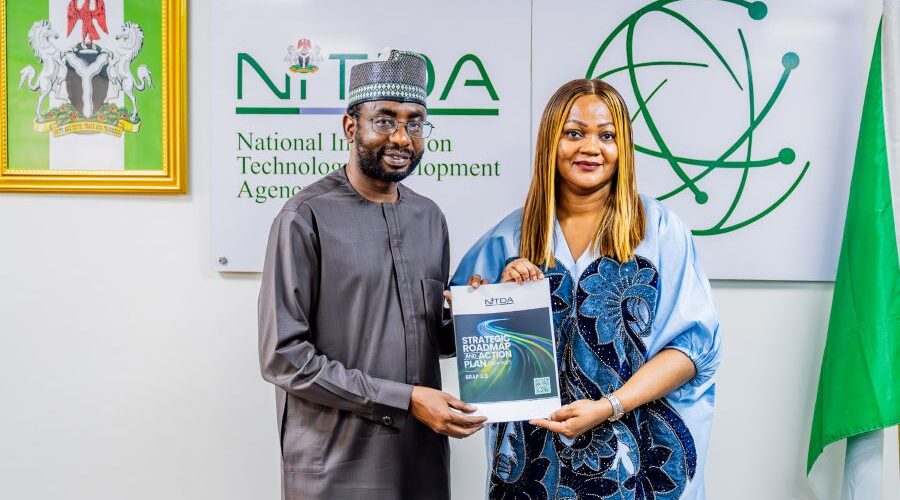
NITDA Hands Over Digital Identity Security Public Key Infrastructure To NIMC
Nigeria has taken another significant step toward creating a safer, smarter, and more trustworthy digital economy with the official transfer of the country’s Public Key Infrastructure (PKI) from the National Information Technology Development Agency to the National Identity Management Commission.
During a strategic meeting in Abuja, NITDA‘s Director General, Kashifu Inuwa, formally transferred the agency’s Public Key Infrastructure framework, supporting technologies, operational duties, and related assets to NIMC.
The July 17, 2026 announcement represents a far greater technological transfer. It marks the start of a new era in Nigeria’s digital identity journey, with one institution overseeing both national identity management and the cryptographic security systems that protect millions of Nigerians’ digital identities. The move is widely viewed as a significant milestone in implementing the recently enacted National Identity Management Commission Act 2026, which expands NIMC’s legal authority over digital identity, Digital Public Infrastructure, and Public Key Infrastructure.
The transfer is intended to strengthen the security foundation for Nigeria’s fast-developing digital identity ecosystem while also guaranteeing that the agency legally responsible for managing people’s identities has authority over the underlying security architecture that authenticates those identities.
Rather than maintaining multiple digital identification systems across government institutions, Nigeria is transitioning to a unified approach in which identity management, authentication, and digital trust are coordinated under a single authority.
What exactly is PKI (Public Key Infrastructure)?
Although Public Key Infrastructure may sound technical, it serves an unseen but vital role in practically every secure digital transaction.
PKI is a cybersecurity system that combines encryption and digital certificates to validate identities, safeguard sensitive data, authenticate users, encrypt communications, and prevent electronic documents from being altered without discovery. It also supports non-repudiation, which means that a person cannot subsequently deny signing or approving a digital transaction.
NITDA’s Nigeria Public Key Infrastructure was created to provide reliable Certification Authority services, such as granting digital certificates for websites, software, electronic documents, email communications, government portals, and other secure online services. These certificates support authentication, encryption, digital signatures, and secure electronic communications in both the public and private sectors.
Without public key infrastructure, many digital government services, online banking systems, tax platforms, healthcare portals, e-passports, and electronic signatures would be substantially more vulnerable to fraud and cyberattacks.
Speaking at the meeting, NITDA Director-General Kashifu Inuwa Abdullahi stated that better collaboration between the two organisations is critical to provide secure and citizen-focused digital services.

“This is about moving beyond theoretical policy into immediate, practical execution.”
“Aligning regulation and infrastructure is critical to delivering reliable, citizen-centric digital services.”
“As Nigeria’s apex IT regulator, our responsibility is to ensure that every Nigerian is empowered to adopt and benefit from technology. We will continue to support NIMC and every institution working to digitise public services,”
Kashifu Inuwa Abdullahi
The NITDA director emphasised the agency’s commitment to advancing national technology adoption, pointing out that its role goes beyond legislation to support innovation, facilitate collaboration, and promote equitable digital transformation.
Why did NITDA transfer the PKI to the NIMC?
The National Identity Management Commission Act 2026, which President Bola Ahmed Tinubu recently signed into law, is the primary driver of the transfer. The Act converts NIMC from an identity registration agency to an institution in charge of securing digital identities throughout Nigeria’s public digital ecosystem.
The law also gives NIMC control over Public Key Infrastructure, Digital Public Infrastructure, digital identity verification systems, and other security functions that enable trusted digital interactions between individuals, corporations, and government organisations. According to NIMC, the Act creates ‘a modern, forward-looking legal framework that aligns Nigeria’s identity ecosystem with global best practices, emerging technologies and the demands of a rapidly evolving digital economy’.
The new legislation radically alters NIMC’s obligations by expanding its mandate beyond the issuance of National Identification Numbers (NINs). The new law establishes NIMC as Nigeria’s statutory digital trust authority, in charge of administering digital identities, digital public infrastructure, and the country’s public key infrastructure.
Because PKI is the cryptographic underpinning that protects digital identities, transferring it to NIMC assures that the agency in charge of identity verification also owns the technology used to validate those identities. This unification is intended to decrease institutional redundancy, improve governance, increase accountability, and simplify future digital identification services.
Kashifu Inuwa’s Vision of Digital Trust

During the transfer, NITDA Director General Kashifu Inuwa emphasised that digital identity should be more than just a database of names and numbers but also a reliable infrastructure capable of supporting Nigeria’s digital economy for decades.
His message is consistent with NITDA’s Strategic Roadmap and Action Plan (SRAP 2.0), which identifies digital trust, cybersecurity, innovation, and digital inclusion as critical components of Nigeria’s technology agenda.
Taking control of Nigeria’s PKI considerably improves NIMC’s ability to administer trusted digital IDs. Instead of depending on external organisations for cryptographic verification, NIMC may now directly incorporate secure authentication into identity verification services, digital credentials, government platforms, and future digital public services.
This single framework is projected to increase the reliability of identity verification while also enhancing interoperability among ministries, financial institutions, telecommunications corporations, healthcare providers, educational institutions, and other organisations that rely on verified digital identities.
Conclusion

One of the most important features of this advancement is its cybersecurity implications. As cybercrime evolves globally, governments must develop stronger methods of validating identities while protecting sensitive citizen information.
Public Key Infrastructure offers several layers of cryptographic security to help prevent impersonation, document forgery, unauthorised system access, and data manipulation.
In Nigeria, where digital services are quickly developing in banking, fintech, healthcare, telecommunications, and public administration, a centralised PKI maintained by the country’s identity authority could boost overall national cyber resilience. At the same time, any deficiencies in execution, cybersecurity, or data governance may jeopardise public trust. The task now is to turn this ambitious reform into practical benefits that every Nigerian may enjoy in their daily digital life.
Follow Amebopreneur for the latest on Nigeria’s tech ecosystem, startup funding opportunities, and the cross-border partnerships shaping Africa’s innovation future.
Related Posts

NITDA Builders Festival 2026: Smart Way to Unlock Startup Opportunities
NITDA Builders Festival 2026 offers Nigerian startups a path to ₦3bn in potential investment and pilot contracts by connecting real solutions with institutions.

Nigeria’s Internet Traffic: The Essential Growth Drivers Behind a 168% Surge
Nigeria’s internet traffic surged 168% in three years. Discover the key drivers behind the growth and what it means for businesses, SMEs and entrepreneurs.

Konga And Defence Headquarters Launch Nationwide Discount Scheme for Serving, Retired And Veteran Military Personnel
Konga and Defence Headquarters launch a nationwide discount scheme giving serving, retired and veteran military personnel access to essential goods at reduced prices.

Askya Offers African AI Startups Up To $200,000 In Investment Through New Growth Platform
Askya Investment Partners has launched a six-week AI Growth Platform for 10 African startups, offering zero-equity participation, business support and potential investment of up to $200,000

Cabo Verde Telecom and DE-CIX Plan New South Atlantic Connectivity Corridor
DE-CIX and Cabo Verde Telecom have signed a non-binding Letter of Intent to explore a South Atlantic connectivity corridor linking Lisbon and São Paulo, strengthening direct digital infrastructure across Europe, Africa, and Latin America.