

France And Nigeria Launch Joint Agribusiness Club To Drive Investment And Food Security
A new initiative housed under FNCCI aims to connect 500+ industry leaders, leveraging digital platforms and institutional partnerships to address data gaps and post-harvest losses.
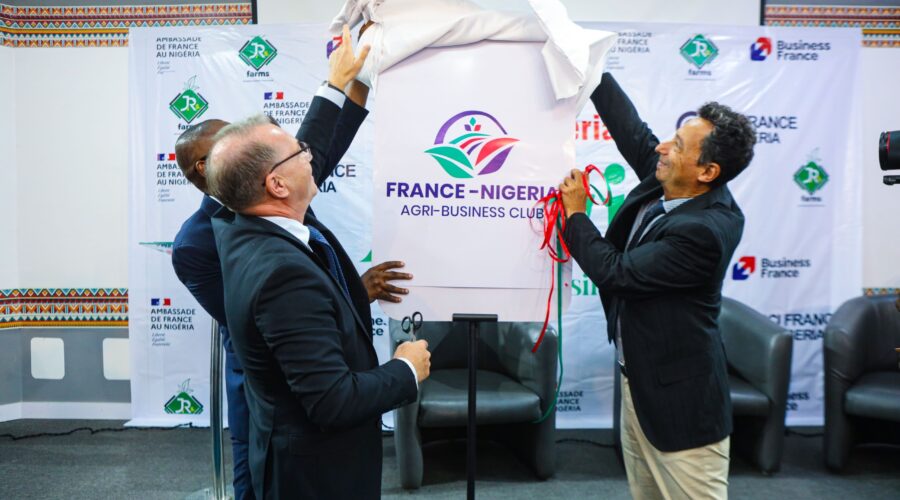
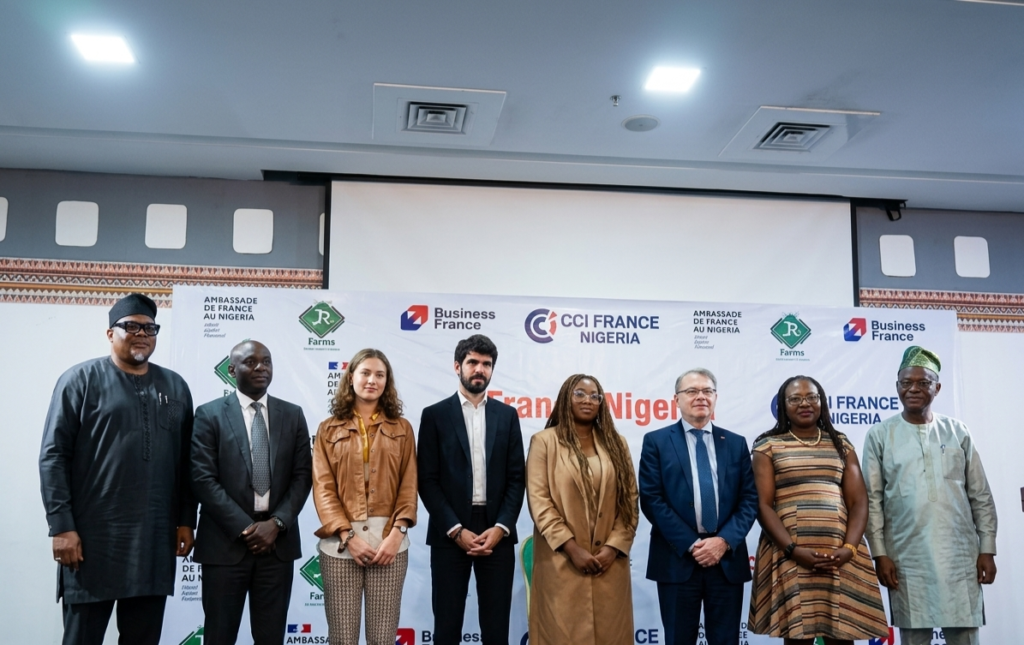
On the 9th of July, 2026, The Consul General of France in Lagos, Laurent Favier, officially unveiled the France-Nigeria Agribusiness Club (FNABC) during the inaugural France-Nigeria Agribusiness Series 1, organised in partnership with JR Farms and Lagos Business School (LBS), this initiative is established to create a structured ecosystem to scale investments, transfer knowledge, and trade bilaterally in order to make Nigeria a regional food hub and beyond.
Housed within the Franco-Nigerian Chamber of Commerce and Industry (FNCCI) ecosystem, the club is jointly patronised and managed by Business France, the agricultural sector of the French Embassy in Nigeria, JR Farms, and the French Consulate in Nigeria. The initiative aims to onboard more than 500 members spanning agricultural industries, financial institutions, and government bodies.
“We decided to organise, to structure an organisation that we have decided to call the France-Nigeria Agribusiness Club.”
“Nigeria has the potential of becoming one of the biggest hubs of agri-food.”
Laurent Favier

Favier highlighted that the launch coincides with broader French commitments to continental agriculture, including a €27 billion pledge under the Food and Agriculture Resilience Mission (FARM) programme, which features a €300 million facility dedicated to strengthening regional agricultural value chains. Favier went ahead, pointing to the market access provided by the African Continental Free Trade Area (AfCFTA), which connects over 1 billion consumers.
Professor Olayinka David-West, Dean of Lagos Business School, emphasised that structural deficiencies rather than capital scarcity remain the primary bottleneck for Nigerian agriculture.

“The distance between the high-altitude promise and the ground-level reality of Nigerian agriculture is not primarily a distance of resources. It’s a distance of information, institutions, and partnerships.”
David-West provided critical context on the scale and challenges of the sector, noting that while Nigeria possesses over 70 million hectares of agricultural land, a domestic market of over 220 million people, and a sector that drives a quarter of the national GDP and employs more than a third of the workforce, systemic vulnerabilities persist. She cited World Food Programme (WFP) data indicating that post-harvest losses are between 40 and 50% for certain crops, contributing to acute food insecurity for approximately 35 million Nigerians, which is the highest nominal figure globally.
The FNABC will utilise a technology-driven membership and management ecosystem for an effective operational structure. A dedicated web platform will be designed to automate registration, facilitate direct business-to-business (B2B) matchmaking, host information repositories, and streamline networking among French and Nigerian agribusiness operators.
The operational and governance blueprint of the FNABC is structured into three distinct tiers to ensure institutional continuity and strategic execution:
The operational workflows includes automated digital matchmaking via the web platform, quarterly hybrid industry forums, and annual bilateral trade missions which are to improve commercial agreements between French technical partners and Nigerian agricultural enterprises.
Follow Amebopreneur for the latest on Nigeria’s tech ecosystem, startup funding opportunities, and the cross-border partnerships shaping Africa’s innovation future.
Related Posts

NITDA Builders Festival 2026: Smart Way to Unlock Startup Opportunities
NITDA Builders Festival 2026 offers Nigerian startups a path to ₦3bn in potential investment and pilot contracts by connecting real solutions with institutions.

Nigeria’s Internet Traffic: The Essential Growth Drivers Behind a 168% Surge
Nigeria’s internet traffic surged 168% in three years. Discover the key drivers behind the growth and what it means for businesses, SMEs and entrepreneurs.

Konga And Defence Headquarters Launch Nationwide Discount Scheme for Serving, Retired And Veteran Military Personnel
Konga and Defence Headquarters launch a nationwide discount scheme giving serving, retired and veteran military personnel access to essential goods at reduced prices.

Askya Offers African AI Startups Up To $200,000 In Investment Through New Growth Platform
Askya Investment Partners has launched a six-week AI Growth Platform for 10 African startups, offering zero-equity participation, business support and potential investment of up to $200,000

Cabo Verde Telecom and DE-CIX Plan New South Atlantic Connectivity Corridor
DE-CIX and Cabo Verde Telecom have signed a non-binding Letter of Intent to explore a South Atlantic connectivity corridor linking Lisbon and São Paulo, strengthening direct digital infrastructure across Europe, Africa, and Latin America.