

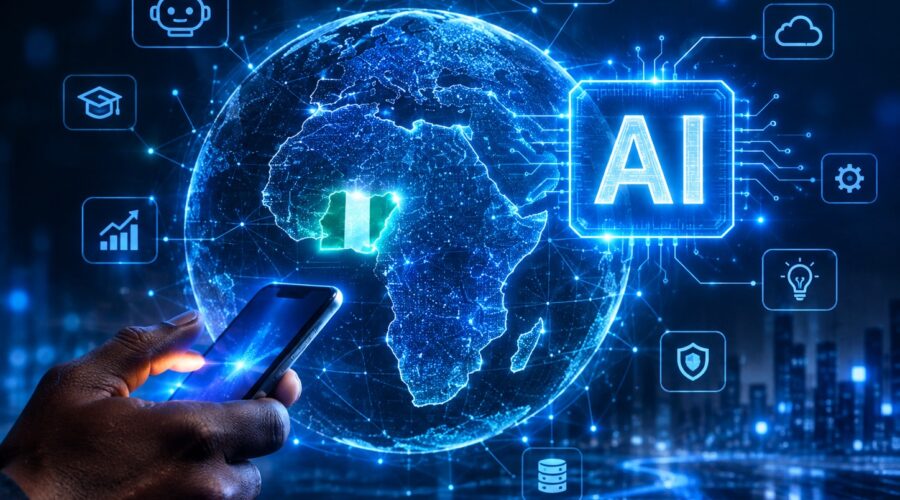
Nigeria’s AI Usage Hits Extraordinary Levels As 91% of Nigerian Respondents Surveyed Now Use AI Weekly In 2026
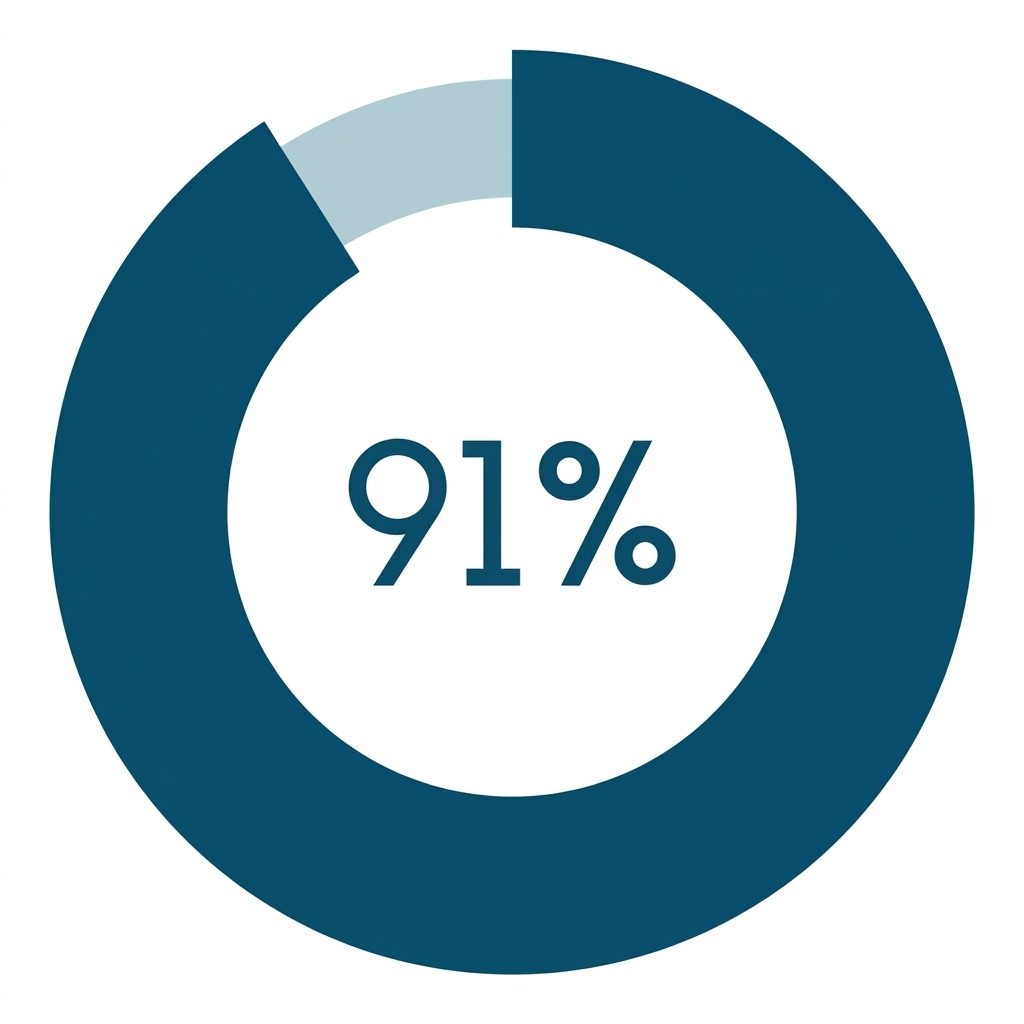
Nigeria is emerging as a remarkable AI market, with 91% of Nigerian respondents surveyed saying they use artificial intelligence at least once a week.
The figure places Nigeria at the highest reported level of weekly AI usage among the 44 countries covered in Boston Consulting Group’s (BCG) latest Digital Government Citizen Survey. The figure does not mean that 91% of Nigeria’s entire population uses AI every week. It represents the responses of Nigerians who participated in BCG’s survey.
Even with that distinction, the results is hugely significant and mindblowing. The global average in the same survey was 64%, meaning Nigeria’s reported weekly AI usage was 27 percentage points higher than the global figure.
For a country already recognised for its rapidly expanding technology and startup ecosystem, the finding points to an increasingly AI-aware population and a potentially powerful market for AI-powered products, services and businesses.
Nigeria Leads The Survey
BCG published its 2026 Digital Government Citizen Survey recently under the title Citizens Are Open to Public AI Services. Governments Must Seize the Opportunity. The research surveyed 48,500 people across 44 countries, covering approximately 70% of the world’s population and Nigeria stood out dramatically.
According to the findings, 91% of Nigerian respondents reported using AI weekly, compared with 64% globally.
Olayinka Majekodunmi, Managing Director and Partner at BCG Lagos, described the Nigerian result as an “extraordinary” level of engagement, adding that the figure was the highest rate recorded among the markets surveyed and substantially above the 64% global average.

“Nigerians are among the most active users of AI with an extraordinary 91% of respondents using AI weekly,”
Olayinka Majekodunmi
He added that Nigeria continues to stand out as one of the world’s most digitally engaged societies, and that Nigerians are among the most active users of AI globally. Her remarks tie the AI figure to a companion finding in the same report: Nigeria’s adoption rate for digital government services now sits at fifty percent, a dramatic climb compared to the global average, which BCG measured at a far lower level.
Nigeria’s AI Story Goes Beyond Frequency Of Use
BCG found that 80% of Nigerian respondents described themselves as AI proficient, compared with a global average of 63%. That suggests that a significant proportion of the surveyed Nigerian population does not merely recognise artificial intelligence as a technology. They believe they have the ability to use it.
This could become increasingly important for businesses. As AI moves deeper into everyday activities such as research, writing, education, customer service, data analysis and productivity, a population that is already comfortable with the technology could become a major driver of adoption across the private sector.

For Nigerian startups and SMEs, this could create opportunities to develop AI-powered products specifically designed around local needs, and for established businesses, it could accelerate pressure to rethink how they deliver services and interact with customers.
The enthusiasm surrounding AI does not mean Nigerians are blind to its risks. BCG found that 61% of Nigerian respondents believe the benefits of AI outweigh its risks. That is a majority, but the other side of the equation is important.
Among Nigerian respondents, 46% identified job losses as a concern about government use of AI. Another 33% were concerned about individual capability, while 32% cited the accuracy of AI-generated decisions. Nigerians appear highly willing to use AI, yet concerns about employment and the reliability of AI systems remain substantial. The implication for businesses and policymakers is clear, adoption alone will not be enough. Trust will matter.
How This Compares to Other Recent AI Adoption Data
Several different surveys with different methodologies have circulated recently separately from the BCG study, a Google and Ipsos report published around January 2026, titled “Our Life with AI: Helpfulness in the Hands of More People,“ found that eighty-eight percent of Nigerian adults had used an AI chatbot at least once in the prior year, an eighteen-point jump from 2024 and also the highest rate recorded among the countries Google surveyed.
That same Google-commissioned study found that ninety-three percent of Nigerian users relied on AI to learn new skills or grasp complex topics, ninety-one percent used it to support their work, and eighty percent had used it to explore a new business idea or career path, nearly double the global average of forty-two percent.
Taiwo Kola-Ogunlade, Google’s communications and public affairs manager for West Africa, said the findings showed how Nigerians are creatively and purposefully using AI to unlock new opportunities for learning, growth, and economic empowerment. These are two distinct, credible pieces of research arriving at perfect similar headline conclusions through different survey designs, and that convergence, rather than either number in isolation, is the strongest evidence that something extraordinary is genuinely happening with AI adoption across Nigeria.
Nigerians Also Want Human Oversight

The public’s willingness to use AI does not translate into a desire for completely autonomous government. BCG’s research found strong support for safeguards around government use of artificial intelligence.
In Nigeria, 39% of respondents identified public performance reporting as a preferred safeguard. Concerns about human review, independent oversight and the accuracy of AI decisions also featured prominently. This suggests that Nigerians may be comfortable allowing AI to perform useful tasks while still expecting humans and institutions to remain accountable for important decisions.
For government agencies considering AI-powered public services, this could become a critical design principle. AI may be fast, AI may be scalable, but citizens still want to know who is responsible when something goes wrong.
The 91% figure could have major implications for the Nigerian business ecosystem. SMEs could use AI to reduce repetitive workloads, analyse information, generate content and improve customer interactions. Larger companies may increasingly integrate AI into operations, marketing, research, compliance and decision-making.
But there is a major difference between using AI and creating value with AI. The next phase of Nigeria’s AI story will likely depend on whether companies can move beyond experimentation and turn artificial intelligence into measurable improvements in productivity, revenue, customer experience and service delivery.
Conclusion
Nigeria’s AI adoption story is moving at an impressive pace.
Nigeria’s position at the top of BCG’s weekly AI usage comparison is certainly remarkable. With 91% of surveyed Nigerian respondents reporting weekly AI usage, the country recorded the highest rate in BCG’s 44-country Digital Government Citizen Survey. The 80% self-reported AI proficiency rate and 61% who said AI’s benefits outweigh its risks further demonstrate the depth of engagement revealed by the survey.
The survey’s 48,500 respondents across 44 countries provide a broad international comparison, while Nigeria’s result puts the country well above the 64% global average.

Nigeria therefore faces an unusual moment: the appetite for AI is already enormous, but the systems needed to turn that appetite into inclusive and sustainable value still have to keep developing. Concerns about job losses, AI accuracy and human capability show that Nigerians are not simply demanding more technology. They are also demanding that the technology work responsibly. For businesses, this represents an enormous opportunity, for government, it represents an equally important responsibility, and for entrepreneurs, the message may be even clearer.
At the same time, the findings reveal a population that is both enthusiastic and cautious. Nigerians surveyed are using AI frequently and reporting high levels of proficiency, but many are also concerned about job losses, capability gaps and the accuracy of AI decisions.
Follow Amebopreneur for the latest on Nigeria’s tech ecosystem, startup funding opportunities, and the cross-border partnerships shaping Africa’s innovation future.
Related Posts
NITDA Builders Festival 2026: Smart Way to Unlock Startup Opportunities
NITDA Builders Festival 2026 offers Nigerian startups a path to ₦3bn in potential investment and pilot contracts by connecting real solutions with institutions.

Nigeria’s Internet Traffic: The Essential Growth Drivers Behind a 168% Surge
Nigeria’s internet traffic surged 168% in three years. Discover the key drivers behind the growth and what it means for businesses, SMEs and entrepreneurs.

Konga And Defence Headquarters Launch Nationwide Discount Scheme for Serving, Retired And Veteran Military Personnel
Konga and Defence Headquarters launch a nationwide discount scheme giving serving, retired and veteran military personnel access to essential goods at reduced prices.
Askya Offers African AI Startups Up To $200,000 In Investment Through New Growth Platform
Askya Investment Partners has launched a six-week AI Growth Platform for 10 African startups, offering zero-equity participation, business support and potential investment of up to $200,000

Cabo Verde Telecom and DE-CIX Plan New South Atlantic Connectivity Corridor
DE-CIX and Cabo Verde Telecom have signed a non-binding Letter of Intent to explore a South Atlantic connectivity corridor linking Lisbon and São Paulo, strengthening direct digital infrastructure across Europe, Africa, and Latin America.