

Who Gets the Money? Inside AfDB’s $102 Million Bet on Nigerian Businesses and Farmers
For many Nigerian business owners, the hardest part of growing is not finding customers but finding affordable, long-term money. A new $102 million package from the African Development Bank Group (AfDB) is meant to ease that problem. It channels funds through Sterling Bank Nigeria Limited to small and medium-sized enterprises (SMEs), women- and youth-led businesses and smallholder farmers.
The financing was announced on November 17, 2026. It aims to support at least 200 businesses, create up to 6,000 jobs and assist more than 5,000 smallholder farmers, especially those affected by insecurity, displacement and climate-related challenges.
Rather than a single loan, the package blends four instruments, each aimed at a different gap in Nigeria’s private sector. According to the AfDB, it reflects the need to give businesses financing arrangements suited to their individual needs. Behind the headline figure sits a simple question: who will it reach, and how?
Four Tools for Four Different Needs
The package has four parts: a $50 million line of credit, a $20 million sustainable loan, a $2 million concessional loan under the AfDB’s Agri-Food SME Catalytic Financing Mechanism (ACFM), and a $30 million Trade Finance Transaction Guarantee.
The credit line is the largest piece. It lets Sterling Bank offer competitively priced, long-term loans to businesses in priority sectors such as healthcare, education, agriculture, renewable energy and transportation. Access to affordable, long-term capital remains a challenge for many Nigerian enterprises, which makes this component central to the whole initiative.
The $20 million sustainable loan will back qualifying green and social projects under Sterling Bank’s Sustainable Financing Framework. It is also intended to help build sustainable financing opportunities within the Nigerian business environment.
Reserving Space for Women, Young Entrepreneurs And Farmers
To make sure the credit line reaches women- and youth-led businesses, at least 30 per cent of it, equal to $15 million, is set aside for eligible women-owned, women-led and youth-owned enterprises.
This reserved share makes these entrepreneurs a built-in priority rather than an afterthought.
The smallest part of the package may carry the most human weight. The $2 million concessional loan targets agricultural businesses and vulnerable farming communities through Sterling Bank’s Sterling Affordable Microlending Programme (STAMP).
STAMP is being implemented with the Office of the United Nations High Commissioner for Refugees (UNHCR). It is expected to reach more than 5,000 smallholder farmers and agricultural enterprises in communities hit by displacement, insecurity and climate-related shocks. The goal is to help them rebuild their livelihoods, sustain farming activity and strengthen their economic resilience.
Agriculture is important to Nigeria’s food production and wider economic development, yet farmers and small businesses continue to face limited financing and difficult operating conditions.
Opening the Door to Trade
The $30 million Trade Finance Transaction Guarantee is expected to facilitate up to $150 million in trade transactions. It is designed to improve businesses’ access to trade financing and help Nigerian enterprises participate more effectively in regional and international markets.
For firms that have products and buyers but lack the financing to complete cross-border deals, the guarantee could ease a major constraint.
What AfDB and Sterling Bank Are Saying
Dr. Abdul Kamara, the AfDB’s Acting Vice President for Regional Development, Integration and Business Delivery and Director General for Nigeria, said a vibrant private sector is critical to Nigeria’s economic transformation. He noted that businesses face different financing challenges and that there is no one-size-fits-all solution, as the package reflects the bank’s understanding.
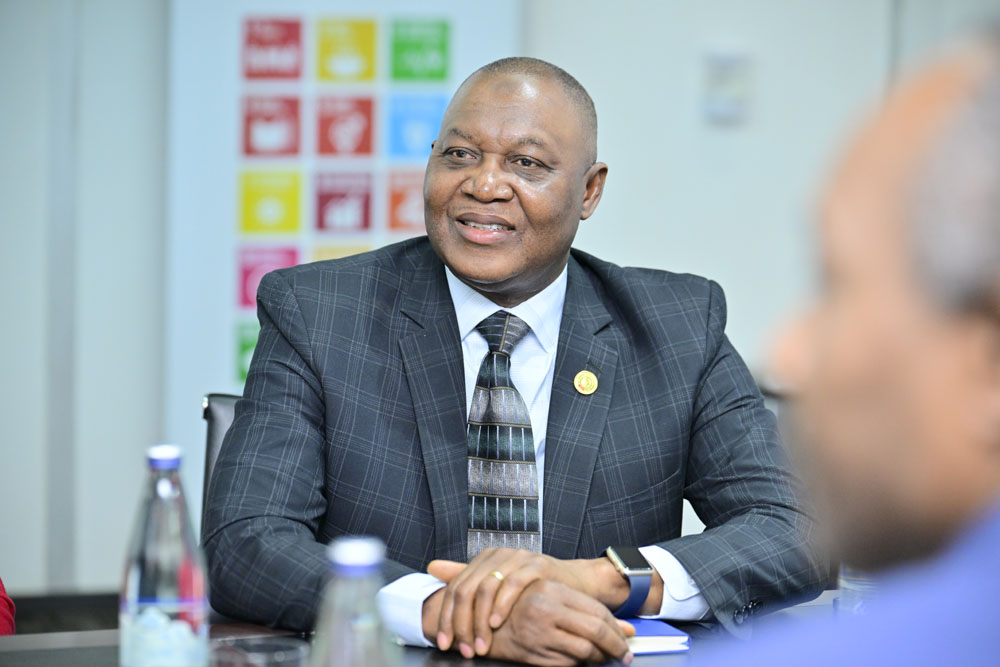
According to Kamara, combining support for SMEs, women- and youth-led enterprises, vulnerable farming communities, sustainable investments and trade will help more Nigerian businesses get the capital they need to expand and create jobs.
He added that the initiative supports two of the bank’s Four Cardinal Points: harnessing demographic transformation for economic development, and mobilising capital for inclusive and sustainable growth.
Abubakar Suleiman, Managing Director and Chief Executive Officer of Sterling Bank, said Nigeria’s long-term growth will depend on the ability to strengthen the productive capacity of local businesses and to make sure financing reaches the sectors best placed to create jobs and improve livelihoods.

He said the partnership will strengthen Sterling Bank’s capacity to address financing gaps affecting SMEs, women, young entrepreneurs and underserved communities.
The Sterling Bank package is part of the AfDB’s wider effort to improve access to finance for Nigerian enterprises through local financial institutions. Earlier in 2026, the bank approved $61 million for the Development Bank of Nigeria to support women-led businesses and $200 million for the Bank of Industry to strengthen enterprise growth and industrial development. The new $102 million commitment extends this approach to other segments of the private sector.
Conclusion
The $102 million package is another attempt to close the funding gap facing Nigerian SMEs, agricultural enterprises and other productive businesses. Its design uses different instruments for different needs, with a clear share set aside for women- and youth-led businesses.
Even so, approval is only the first step. The programme’s success will depend on how effectively the money reaches its intended beneficiaries and becomes funding that businesses can actually use.
If the targets of at least 200 businesses supported, more than 5,000 farmers reached, and up to 6,000 jobs created are met, the initiative could strengthen enterprise development, support agricultural livelihoods and improve access to trade finance. For Nigerian entrepreneurs, especially women and young people, the real measure will be the capital they secure and how far it helps them grow.
Follow Amebopreneur for the latest on Nigeria’s tech ecosystem, startup funding opportunities, and the cross-border partnerships shaping Africa’s innovation future.
Related Posts

Nigeria’s Largest Listed Firms Increase Capital Spending by 42.48% to ₦3.41 Trillion as Investment Expands
Nigeria’s biggest listed companies raised capital spending by 42.48% to ₦3.41 trillion, signalling a major investment push across telecoms, cement and energy.

PEBEC Intensifies Drive to Eliminate Bottlenecks in Nigeria’s Business Sector
PEBEC is stepping up reforms to cut bureaucracy, eliminate business bottlenecks and make operating in Nigeria faster, easier and less costly.

Economics of an Election Year: Why the Parallel Market Gap Matters More Than the Official Rate
Nigeria’s widening dollar gap may be signalling more than currency pressure. Discover why election spending, investor confidence and political uncertainty could test naira stability.

Airtel Foundation ₦100 million Technology Scholarship For Undergraduates: Everything Nigerian Students Must Know Before December 24
Airtel Foundation opens its ₦100 million tech scholarship for Nigerian undergraduates. See who qualifies, what you get, and the December 3, 2026 deadline.
UAC Nigeria’s Revenue Jumps 228% to ₦523bn as C.H.I. Acquisition Expands Business
UAC Nigeria’s revenue surged 228% to ₦523bn as the C.H.I. acquisition boosts growth, strengthens its food portfolio and reshapes its business.