

Nigeria’s Largest Listed Firms Increase Capital Spending by 42.48% to ₦3.41 Trillion as Investment Expands
The largest listed Nigerian companies increased their capital expenditure by 42.48 per cent to ₦3.41 trillion in the first nine months of 2026, compared with ₦2.39 trillion recorded during the corresponding period of 2025, as businesses across telecommunications, cement and energy sectors stepped up investments in productive assets.
The increase reflects stronger spending on property, plant and equipment (PPE), including machinery, production facilities, telecommunications infrastructure and other assets required to expand business operations.
Data compiled by MoneyCentral showed that several major companies recorded higher capital spending between January and September 2026, although the pace of investment varied across industries.
The development comes amid gradual improvements in Nigeria’s economic performance and changing monetary conditions, with some businesses continuing to invest in operational capacity despite high production costs, financing challenges and pressure on consumer spending.
Cement and Telecommunications Companies Lead Investment Growth
The cement and telecommunications industries accounted for significant portions of the reported capital expenditure during the period, reflecting continued investments in production capacity, network infrastructure and operational improvements.
Dangote Cement Plc, BUA Cement Plc and HBM Nigeria Plc collectively spent ₦929.24 billion on property, plant and equipment in the first nine months of 2026, representing a 56.21 per cent increase from ₦594.83 billion recorded in the corresponding period of 2025.
The investment reflects the capital-intensive nature of cement production, where companies require substantial spending on manufacturing facilities, machinery, energy systems and distribution infrastructure to maintain and expand production.
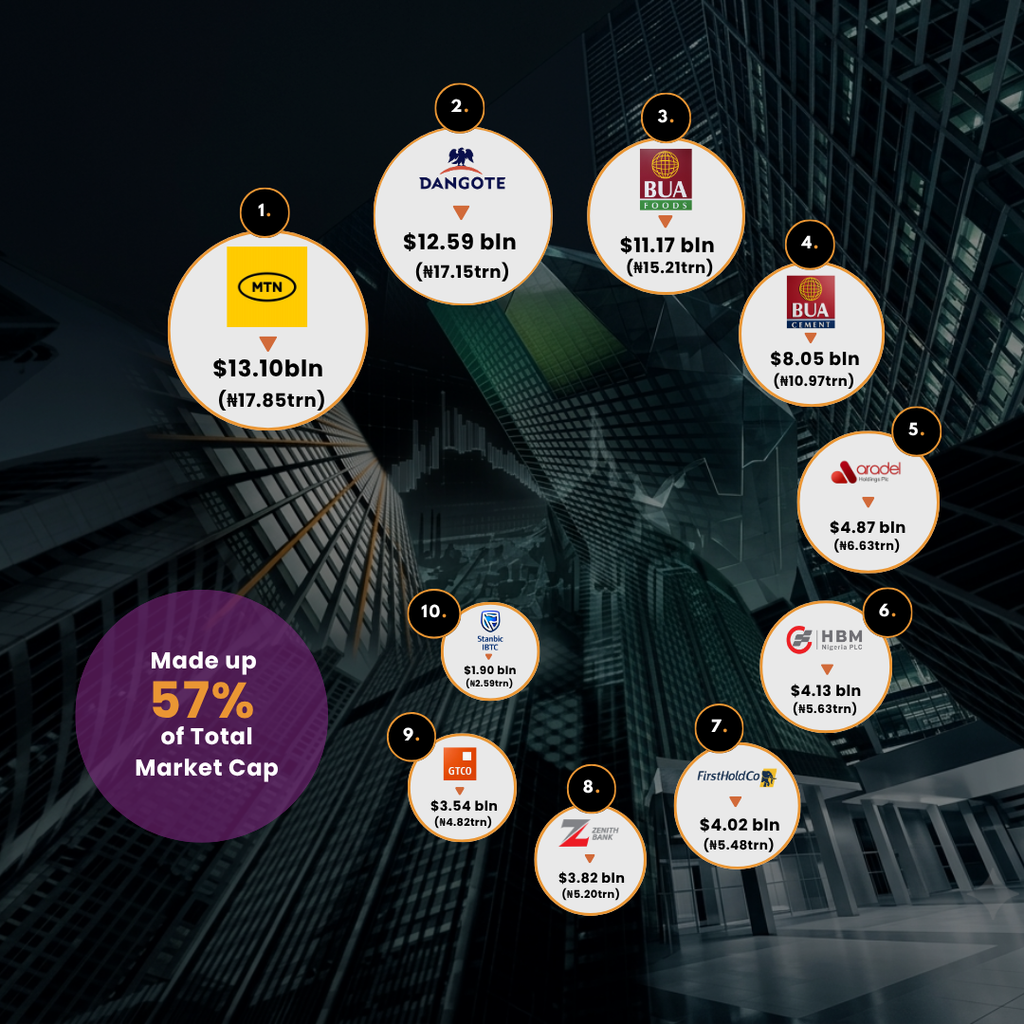
In the telecommunications industry, MTN Nigeria Plc increased its capital expenditure by 14.2 per cent to ₦864.80 billion during the period. The company’s spending supported its 2026 network expansion programme, including improvements in network coverage, capacity and service quality, as well as efforts to support growth in home broadband services.
Airtel Africa Plc, which reports in US dollars and has a financial year ending in March, more than doubled its group capital expenditure to 657 million US dollars in the six months to September 2026, from 318 million US dollars a year earlier, reflecting investments aimed at expanding its mobile services business and meeting growing demand for connectivity and data services.
In its half-year report released on 30 October 2026, the company said the higher spending reflected its commitment to “accelerate capex spend to reinforce our market position” and support sustainable and profitable growth.
The increased spending by telecommunications operators highlights the importance of continued infrastructure investment as data consumption and demand for reliable digital services grow across Nigeria.
Energy Companies Record Different Investment Patterns
The energy sector also contributed to the increase in corporate capital expenditure, although spending patterns differed among companies.
Aradel Holdings Plc recorded a 385.65 per cent increase in capital expenditure to ₦570.64 billion in the first nine months of 2026, making it one of the companies with the highest percentage growth in investment during the period.
The increase reflects the company’s expanded investment activities as it develops its operations and production capacity, following the full consolidation of ND Western and Renaissance, which enlarged its asset base. Aradel’s Chief Executive Officer, Adegbite Falade, said:

The company reported a 154.3 per cent increase in consolidated pre-tax profit to ₦764.71 billion for the nine months ended September 30, 2026.
Seplat Energy Plc, however, recorded a 3.87 per cent decline in capital expenditure to ₦236.10 billion as of September 2026. Seplat reports in US dollars, so year-on-year changes in naira terms can also reflect exchange-rate movements. Its capital spending is weighted to the second half of the year, and it lowered its 2026 capital expenditure guidance to 280 million to 340 million US dollars, mainly because of the late arrival of an offshore rig.
The difference between the two companies indicates that increased investment was not uniform across the energy industry, with individual spending decisions influenced by operational priorities, project schedules and business strategies.
For indigenous energy companies, investment in production facilities and operational infrastructure remains important to strengthening domestic energy supply and supporting the development of Nigeria’s oil and gas industry.
MTN’s Network Investment Highlights Growing Demand for Digital Infrastructure
The telecommunications sector provides another indication of how Nigerian companies are responding to changing market demands through capital investment.

In a recent interview, MTN Nigeria’s Chief Financial Officer, Modupe Kadri, said that cumulative network investment since January 2025 had reached approximately ₦1.6 trillion.
He has also said that much of the company’s expansion is funded through operational cash flow. The investment highlights the scale of resources required to maintain and expand telecommunications infrastructure in a market where reliable connectivity has become increasingly important to businesses and consumers.
For telecommunications operators, continued spending on network infrastructure is necessary to improve service delivery, accommodate rising data consumption and support the expansion of digital services.
The development also demonstrates how capital expenditure can support wider economic activities by providing the infrastructure required for financial technology, e-commerce, digital communication and other technology-driven businesses.
Consumer Goods Companies Remain More Cautious
Despite the broader increase in corporate investment, companies operating in the consumer goods sector recorded relatively modest growth in capital expenditure.
The largest consumer goods companies increased their combined capital spending by 3.27 per cent to ₦311.55 billion in the first nine months of 2026, compared with ₦301.67 billion recorded in the corresponding period of the previous year.
The slower growth suggests that manufacturers serving the consumer market remain cautious about committing substantial resources to expansion. Inflationary pressures, higher operating expenses and reduced consumer purchasing power have continued to affect demand for several household products, creating uncertainty around investment decisions.
For manufacturers, expanding production capacity requires confidence that additional output can be absorbed by the market. When consumers reduce spending or shift towards cheaper alternatives, companies may delay new projects or limit investments in additional production facilities.
The difference between the investment growth recorded by telecommunications, cement and energy companies and the relatively modest increase among consumer goods manufacturers shows that economic conditions continue to affect industries differently.
Economic Conditions and the Outlook for Business Investment
The increase in capital expenditure comes against the backdrop of improving economic activity and changes in monetary policy.
Nigeria’s economy grew by 4.43 per cent year-on-year in the second quarter of 2026, compared with 3.89 per cent in the first quarter, according to the National Bureau of Statistics.
The growth was supported by stronger activity in both the oil and non-oil sectors, indicating an improvement in economic performance during the period. Industrial growth, however, slowed to 3.96 per cent from 7.46 per cent in the second quarter of 2025.

Monetary policy developments have also influenced the investment environment. The Central Bank of Nigeria reduced its benchmark interest rate from 26.5 per cent to 23 per cent on 22 September 2026, after holding it at 26.5 per cent in July. The cut therefore came too late to account for most of the spending recorded in the period, although it is potentially improving financing conditions for businesses seeking funds for expansion.
Lower benchmark interest rates can support investment by reducing borrowing costs over time. However, the actual cost of obtaining credit will continue to depend on commercial banks’ lending rates, business risk assessments and other financing conditions.
Government infrastructure spending could also create additional opportunities for private-sector investment, particularly in industries supplying construction materials, industrial equipment and telecommunications services.
Nevertheless, the increase in capital expenditure should not be interpreted as evidence that all businesses are experiencing stronger investment conditions. The relatively slow growth among consumer goods manufacturers shows that demand constraints and operating costs remain important considerations.
Conclusion
The increase in the largest listed Nigerian companies’ capital expenditure to ₦3.41 trillion in the first nine months of 2026 points to stronger investment activity among major businesses, particularly in telecommunications, cement and energy.
Investments in production facilities, network infrastructure and other productive assets could strengthen operational capacity, improve efficiency and support business expansion over time.
However, the sustainability of this growth will depend on companies’ ability to manage operating costs, respond to market demand and generate sufficient returns from their investments.
For Nigeria’s wider economy, the more important question is whether increased corporate spending will translate into higher production, improved infrastructure, employment opportunities and stronger industrial output. As businesses continue to expand their investments, the performance of these projects will help determine whether the current increase in capital expenditure can support more sustainable private-sector growth.
Follow Amebopreneur for the latest on Nigeria’s tech ecosystem, startup funding opportunities, and the cross-border partnerships shaping Africa’s innovation future.
Related Posts
Who Gets the Money? Inside AfDB’s $102 Million Bet on Nigerian Businesses and Farmers
AfDB’s $102 million funding package targets 200 Nigerian businesses, 5,000 farmers and 6,000 jobs. Find out who qualifies and where the money goes.

PEBEC Intensifies Drive to Eliminate Bottlenecks in Nigeria’s Business Sector
PEBEC is stepping up reforms to cut bureaucracy, eliminate business bottlenecks and make operating in Nigeria faster, easier and less costly.

Economics of an Election Year: Why the Parallel Market Gap Matters More Than the Official Rate
Nigeria’s widening dollar gap may be signalling more than currency pressure. Discover why election spending, investor confidence and political uncertainty could test naira stability.

Airtel Foundation ₦100 million Technology Scholarship For Undergraduates: Everything Nigerian Students Must Know Before December 24
Airtel Foundation opens its ₦100 million tech scholarship for Nigerian undergraduates. See who qualifies, what you get, and the December 3, 2026 deadline.
UAC Nigeria’s Revenue Jumps 228% to ₦523bn as C.H.I. Acquisition Expands Business
UAC Nigeria’s revenue surged 228% to ₦523bn as the C.H.I. acquisition boosts growth, strengthens its food portfolio and reshapes its business.