

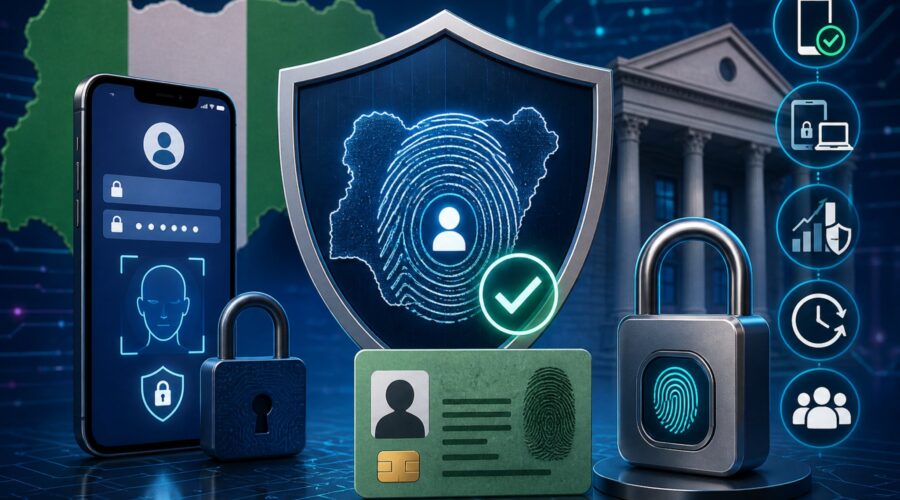
Breaking: CBN BVN Regulations 2026 Introduce Strong Anti-Fraud Measures for Nigerian Bank Users
Nigeria’s financial sector has entered a critical, high-stakes age when the Central Bank of Nigeria (CBN) implements comprehensive new Bank Verification Number (BVN) laws on May 1, 2026. These improvements are bold, forceful, and indisputably significant, addressing fraud, identity theft, and unauthorised access across digital banking and fintech systems.
The BVN, which was implemented in 2014, remains a core identity framework for Nigeria’s banking sector, and with nearly 69 million Nigerians relying on the BVN system, these initiatives are parts of a larger push to improve security in Nigeria’s digital payments ecosystem, with mobile numbers serving as a vital layer for verification, transaction notifications, and account recovery.
An Effective Anti-Fraud Strategy
The CBN’s recent step is motivated by a single goal: to combat the growing wave of fraud, particularly SIM swap assaults and identity manipulation. Mobile numbers have become the ultimate access key to bank accounts, serving as OTPs, alerts, and account recovery.
For years, fraudsters have exploited this vulnerability, hijacking accounts using social engineering and telecom vulnerabilities. The new laws are intended to eliminate these dangerous gaps decisively, even if it means imposing stronger, often inconvenient, controls on users.
The following are the 5 key changes users must strictly adhere to:
- One-Time Phone Number Change: The High-Risk, High-Stakes Rule
Perhaps the most contentious and emotionally charged update is the “one-time phone number change” regulation. According to the new regulations, Nigerians can only change the phone number associated with their BVN once in their lifetime.
The directive plainly states: “Amendments to phone numbers linked to a BVN shall be allowed only once.”
This is an effective but harsh precaution. On the plus side, it dramatically lowers fraudulent chances, particularly SIM swap schemes. However, the disadvantage is just as substantial and alarming. Users who lose access to their phone number due to theft, inactivity, or technical difficulties may suffer annoying, inflexible, and sometimes disruptive repercussions. This rule effectively converts your phone number into a permanent financial identity. - Single-Device Policy: A Tight Control and Reduced Flexibility
Another significant change is the adoption of a single-device banking policy.
Users can now access their banking apps from only one device at a time. Logging into a new device instantly logs out of the prior one. This is a significant security feature that prevents unauthorised multi-device access. The system enforces what regulators refer to as “device binding”, which provides tighter control over account access. - Transaction Limits for New Devices: A Protective But Frustrating Barrier
Switching devices now has a temporary but considerable constraint.
For the first 24 hours after logging into a new device, users are limited to ₦20,000 transactions. This rule serves as a protection buffer, limiting potential losses if a fraudster gains access during device setup. An although, while this is a logical defence strategy, it may feel cumbersome and limiting to legitimate users who require quick full access. - The 24-hour Fraud Watchlist: A Smart But Intrusive Safeguard
One of the most effective features is a 24-hour fraud watchlist system.
Banks are now obligated to flag questionable BVNs and add them to a temporary watchlist for up to 24 hours. During this time, transactions may be stopped or restricted as the bank checks the activity with the consumer. This system implements a real-time fraud intervention mechanism, which is a significant security improvement.
However, it raises worries about false alerts, delays, and potential disruptions, particularly for customers undertaking critical transactions. - Age Requirements: A Clear Legal Alignment
The new rule establishes a mandatory minimum age of 18 for independent BVN registration.
This connects BVN ownership with legal age, removing ambiguities surrounding identification and financial accountability. While this is a rational and structured improvement, it restricts minors’ access, forcing them to rely on guardian-linked arrangements.
Additional Security Measures: Stronger, More Controlled Banking
Aside from the headline modifications, the Central Bank of Nigeria has implemented many additional high-impact security measures.
- Access to BVN data is now restricted to only regulated financial institutions, decreasing exposure to unauthorised third parties.
- Additionally, BVN services are only available through authorised channels, thereby removing hazardous intermediaries and uncontrolled agents.
These methods together result in a more secure yet tightly controlled system in which every action is watched and regulated.
According to the Nigeria Inter-Bank Settlement System (NIBSS), social engineering is still the most common fraud tactic in Nigeria, with SIM-swap fraud, account compromise, and phishing listed as rapidly growing schemes throughout the financial system. SIM-swap fraud, in particular, where fraudsters use a victim’s phone number to intercept OTPs and drain accounts, is a critical weakness that the new CBN order directly addresses.
Fraud prevention becomes substantially more effective, particularly against SIM swap attacks and identity theft. User identities become more stable and difficult to alter. Financial institutions now have improved tools to detect and prevent suspicious conduct in real time, and overall, the system improves resilience, intelligence, and security.
Conclusion
The new CBN BVN regulations represent a bold, strategic, and transformative step toward making sure Nigeria’s fast-developing digital banking environment is secure.
They include robust safeguards that might significantly reduce fraud and restore trust in financial institutions. At the same time, they impose severe, often uncomfortable, limits that require users to be more cautious and thoughtful about their banking identities.
Simply put, Nigeria’s financial system is no longer only digital; it is now highly secure, closely managed, and entirely identity-driven. Whether these adjustments are viewed as smart safeguards or oppressive restrictions will be determined by how successfully they are implemented and how well people adjust to this new reality.
Related Posts

HP and UpSkill Universe Launch Free AI Training for 55,000 African SMEs
HP and UpSkill Universe are giving 55,000 African SMEs free AI training—helping entrepreneurs turn AI from hype into practical business growth.

Meta, 3MTT, NCAIR & RAIN Partner to Accelerate AI Skills and Innovation in Nigeria
Meta, 3MTT and RAIN launch AI Academy Nigeria to equip developers with AI skills, build startups and turn Nigeria’s growing AI talent into global innovation.
Nomba and Synafare Commit ₦2 Billion to Solar Financing for 300 Nigerian SMEs
Nomba and Synafare are committing ₦2 billion to solar financing, helping 300 Nigerian SMEs cut energy costs, boost productivity and power their growth.

Ghana’s Wobil Technologies Is Putting Solar to Work in Rice Farming, And Fighting Africa’s Post-Harvest Crisis
Ghana’s Wobil Technologies is using solar-powered machinery to cut rice losses, lower farming costs and help smallholder farmers keep more of every harvest.

Uber’s Exited Nigeria, Just Weeks After It Acquired ‘Delivery Hero’ (Glovo) for €13 Billion
Uber has exited Nigeria after 12 years, just weeks after launching a €13 billion bid for Delivery Hero, Glovo’s parent. One exit, one massive global gamble.