

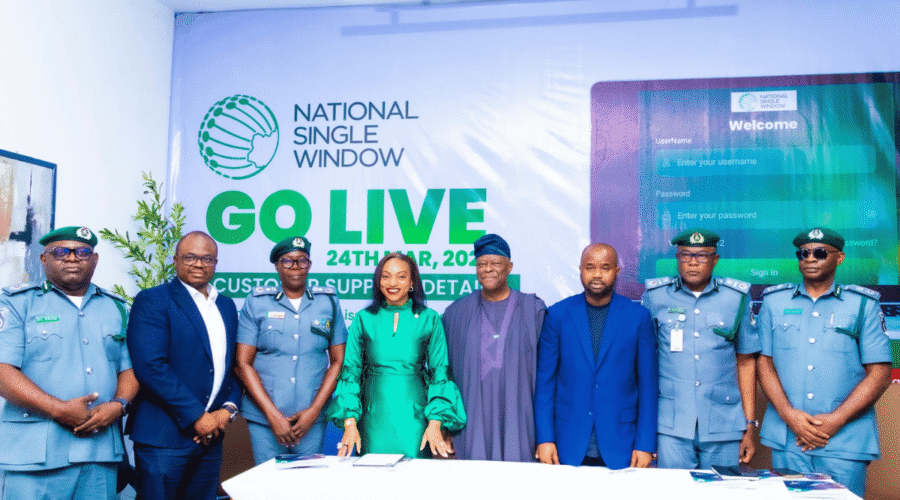
Nigeria Launches National Single Window Digital Trade Platform: The Ultimate Trade Upgrade
Nigeria has entered a transformational digital trade era, launching the National Single Window (NSW) digital trade platform, a game-changing initiative to modernise import and export processes, eliminate manual inefficiencies, and integrate the country into the global trade ecosystem. At its core, Nigeria’s National Single Window is a centralised digital platform that allows importers and exporters to submit all trade-related papers through a single interface, instead of navigating various government departments.
The system, which went online in Lagos on March 24, 2026, is intended to digitise import/export operations, automate approvals, and ensure a smooth flow of information across authorities. It represents a fundamental reworking of Nigeria’s commercial infrastructure. The government of President Bola Tinubu frames it as follows:
“It will replace fragmentation with coordination with transparency and delay with efficiency.”
For decades, Nigeria’s ports and commerce environment have been pegged back by lengthy paperwork, various agency clearances, administrative bottlenecks, and high expenses. Traders, investors, and logistics businesses frequently experienced lengthy delays, sometimes weeks or even months, simply because documentation was distributed across multiple government departments. This inefficiency not only harmed firms, but it also discouraged foreign investors, hindered economic growth, and raised the cost of doing business significantly higher than in neighbouring countries.
This approach intends to fix this hassle.
What the platform does in clear, simple terms
At its foundation, the National Single Window is a centralised electronic trade platform that brings together government agencies, freight forwarding agents, traders, and regulators in a single digital process. Previously, an importer might have had to go through many systems chaired by different authorities, from customs to regulatory bodies, each with backlogs of data and repeated submissions.
With the NSW: All documents are submitted once. The information is shared concurrently with all relevant agencies. Decisions and approvals happen faster. Processing is transparent. Delays are significantly reduced. It significantly improves trade facilitation, accelerates cargo clearance, and reinforces regulatory compliance. Also, it eliminates the need for a “middle man” and promotes efficient trading, lowering the likelihood of corruption and unnecessary delays.
A Government Statement: The Promise of Efficiency
At a media event in Apapa, Lagos, Wale Edun, Minister of Finance and Coordinating Minister of the Economy, spoke during the event, painting a dramatic vision of progress.

He characterised the programme as a “shift from fragmented and inefficient trade processes to a more coordinated and technology-driven system”.
Wale Edun
According to Mr Edun, the platform aims to reduce trade process delays by up to 73% by focusing on the most time-consuming and costly aspects of cargo dwell time, such as documentation, customs processing, and multi-agency approvals.
Also speaking, Jumoke Oduwole, Minister of Industry, Trade, and Investment, stated that the new approach would simplify trading procedures, decrease duplication of documents, and boost investor trust.
“In simple terms, it is one portal, one submission, one coordinated process.”
She explained, adding that the reform will boost Nigeria’s competitiveness in regional and international commerce.

Tola Fakolade, Director and Project Head of the National Single Window Secretariat, stated that the platform would go online on March 27, 2026, with a gradual rollout.

“The rollout of the NSW Platform will follow a phased approach designed to deliver value early while ensuring a smooth transition to full implementation. Phase 1 go-live date is March 27, 2026,” Fakolade said.
“The rollout of the NSW Platform will follow a phased approach designed to deliver value early while ensuring a smooth transition to full implementation. Phase 1 go-live date is March 27, 2026,” he continued.
He explained that Phase 1 would cover the processing of import licences, certificates, and permits for key regulatory agencies, including the National Agency for Food and Drug Administration and Control, the Standard Organization of Nigeria, Nigeria Agricultural Quarantine Service, and the National Environmental Standards and Regulations Enforcement Agency, as well as centralised risk management tools and manifest submission by shipping lines and airlines
He stated that a pilot phase for cargo manifest submissions would begin with a few shipping lines and air freight operators, with complete integration planned by May 1, 2026.
“Phase 1 of the NSW implementation will introduce streamlined licences and permit processing, reduced manual documentation, improved transparency, centralised risk management, and faster processing timelines through a single online platform. Users will benefit from centralised submissions, improved tracking of applications, and enhanced coordination among participating agencies,” he noted.
He clarified that the NSW would work alongside the Nigeria Customs Service’s B’Odogwu platform, describing them as complimentary systems.
“B’Odogwu is the Customs Management System, which will continue to be used for customs processes such as valuation and risk management, while NSW is the single-entry platform for importers, exporters, or their representatives to submit documents and applications for approval,” the official stated
Fakolade also stated that harmonisation of HS codes across regulatory agencies would be addressed in Phase 2, which is expected to take place between the second and third quarters of 2026 and will include export processes such as NXP and IDEC, as well as data analysis and dashboards, with Phase 3 scheduled for the first quarter of 2027.
Zacch Adedeji, Chairman of the National Revenue Service, praised the partnership between government agencies and private sector stakeholders for making the project possible.
At a stakeholder engagement session held by the Lagos Chamber of Commerce and Industry, President Leye Kupoluyi praised the project as a game changer for Nigeria’s trading environment.
“The National Single Window represents a paradigm shift from fragmented, paper-based processes to a fully integrated, digital, transparent, and efficient trade facilitation system,” Kupoluyi told reporters.

He stated that inefficiencies in Nigeria’s trade systems had raised costs for firms and undermined competitiveness.
“For Nigeria, it offers the potential to reduce cargo clearance time by up to 50 per cent, enhance revenue collection, curb leakages, and strengthen regulatory coordination across agencies,” the minister said.
He also advocated for agency-wide capacity building as well as a robust, secure, and user-friendly platform to maintain trust in the system.
Stakeholders were asked to use the platform and collaborate to ensure its success, with officials revealing intentions to expand the system to include export processes and other agencies in future phases.
Realities and challenges
No change is without its hurdles, and the National Single Window is no exception. Stakeholders believe that effective systems require a strong legal framework that prioritises data protection, procedural accountability, and inter-agency cooperation. Experts emphasised the need for formal regulatory backing and industry cooperation to smooth the project’s rollout and usage.
Digital platforms cannot function in a vacuum; they require training, stakeholder adaptation, dependable infrastructure, and unshakeable political resolve to overcome teething problems in the early stages. Critics caution that without unambiguous enforcement of standards and interoperability among agencies, bureaucratic bottlenecks may re-emerge under various names.
Previous reform initiatives in the ports sector have been derailed by fragmented agency mandates, poor coordination, and entrenched rent-seeking.
Even as much, infrastructure constraints remain binding. Apapa and Tin Can Island, which account for the majority of Nigeria’s seaborne trade, were established decades ago and have failed to keep up with increased cargo volumes, larger boats, and chronic congestion on access roads.
The government has acquired foreign funds to assist renovations such as quay rehabilitation, channel dredging, and new cargo-handling equipment, which are likely to take several years. Officials predict the combined improvements could reduce cargo dwell times to less than seven days by 2026, bringing Nigeria closer to regional counterparts like Ghana and Benin, where clearance is much faster.
The stakes are high. Nigeria’s ports serve as the principal gateway for more than 80% of its international trade, and inefficiencies have historically sent goods to neighbouring nations with more predictable systems.
The African Continental Free Trade Area (AfCFTA) is anticipated to boost intra-African trade, but its success is mainly reliant on improvements in logistics and border operations, areas where Nigeria has lagged.
Conclusion
Nigeria’s inauguration of the National Single Window digital commerce platform brings together invention and necessity, addressing long-standing issues while paving the way for a more transparent, efficient, and competitive trade future.
Nigeria is digitising not only paperwork, but also trust, speed, and opportunity for a new era of wealth.
Related Posts

Political Dynamics, Global Realignment: What Tola Adeyemi Told CEOs at FNCCI-KPMG Luncheon Series 6
As Nigeria heads toward the 2027 election, KPMG’s Tola Adeyemi urges businesses to prepare for multiple outcomes, policy shifts and new opportunities.

NITDA Builders Festival 2026: Smart Way to Unlock Startup Opportunities
NITDA Builders Festival 2026 offers Nigerian startups a path to ₦3bn in potential investment and pilot contracts by connecting real solutions with institutions.

Nigeria’s Internet Traffic: The Essential Growth Drivers Behind a 168% Surge
Nigeria’s internet traffic surged 168% in three years. Discover the key drivers behind the growth and what it means for businesses, SMEs and entrepreneurs.

Konga And Defence Headquarters Launch Nationwide Discount Scheme for Serving, Retired And Veteran Military Personnel
Konga and Defence Headquarters launch a nationwide discount scheme giving serving, retired and veteran military personnel access to essential goods at reduced prices.

Askya Offers African AI Startups Up To $200,000 In Investment Through New Growth Platform
Askya Investment Partners has launched a six-week AI Growth Platform for 10 African startups, offering zero-equity participation, business support and potential investment of up to $200,000