

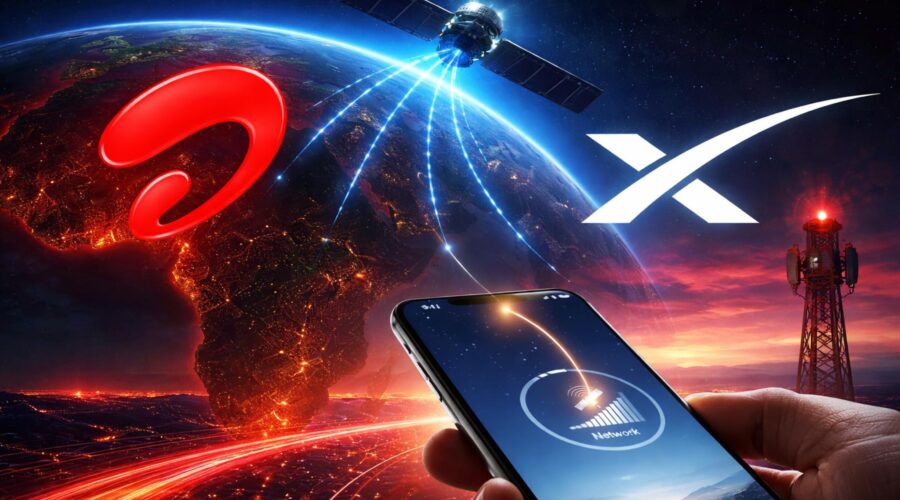
Airtel Partners with Starlink to Launch Direct-To-Cell Satellite
Huge growth, hidden gaps, and the game-changing future of connectivity
Nigeria is entering a strong new era of connection, one that is quietly but drastically changing the way telecom networks operate. The coming together of satellite internet and traditional telecom infrastructure is no longer a theoretical possibility; it is happening right now, thanks to partnerships, technological push, and a national orientation to erase connectivity inequity.
At the centre of this revolution is a groundbreaking collaboration between Airtel Africa and SpaceX’s Starlink. This collaboration represents a radical shift in the way mobile networks operate.
Satellite internet, formerly considered a backup solution, is now becoming a key, revolutionary force in Nigeria‘s digital future.
Airtel, Starlink, and the birth of direct-to-cell connectivity

Airtel plans to launch direct-to-cell satellite communication in 2026, allowing regular smartphones to connect directly to satellites rather than the well-known traditional cell towers.
This innovation has already progressed beyond theory. Airtel Africa has announced the successful testing of data and messaging services using Starlink Mobile technology in Kenya. The trial, undertaken in collaboration with SpaceX, took place in areas without terrestrial network coverage, showcasing satellite technology’s potential to bridge connectivity gaps in remote locales.
During the test, regular 4G-enabled smartphones effortlessly connected to over 650 low-Earth orbit satellites, allowing for texting, app usage, and even financial services in places with no terrestrial coverage in the absence of traditional mobile signals.
It was stated that the test supported light data applications such as WhatsApp calls and messaging, GPS services, Facebook Messenger, and financial transactions via the Airtel app.
Sunil Taldar, Chief Executive Officer of Airtel Africa, described the development as a significant milestone in the company’s connectivity strategy.

“We are excited to move from an announcement to actionable activities with our SpaceX partners. This testing phase in Kenya demonstrates our commitment to expanding global access,” he stated.
“By integrating Starlink Mobile’s technology, we are ensuring that our customers remain connected even when they travel beyond our terrestrial network,” he continued.
For the first time in Nigeria’s telecom history, customers in remote villages, roads, and “dead zones” can get mobile services without relying on surrounding infrastructure. This provides limitless connectivity.
Low Earth Orbit satellites vs. fibre-optic cables
For years, fibre-optic infrastructure has been considered the gold standard for broadband. However, in Nigeria, fibre growth has encountered significant structural hurdles, including high deployment costs, challenging terrain, and unreliable power supply.
Now, satellite technology is now stepping in as the ultimate workaround. Low-Earth Orbit (LEO) satellites form the foundation of this transformation. Unlike typical geostationary satellites, LEO satellites orbit closer to the Earth, providing lower latency, faster speeds, and greater coverage.
Direct-to-cell technology cancels out that need for expensive towers; LEO satellites provide backhaul connectivity for telecom operators in underserved areas. This is especially important in rural and semi-urban areas, where installing fibre or building towers can cost millions of naira per location. Instead of forcing infrastructure into difficult environments, satellite networks simply bypass the problem entirely.
Nigeria is increasingly emerging as a competitive battleground for LEO suppliers. Starlink presently dominates visibility, but new entrants are coming quickly. The Nigerian Communications Commission has already licensed significant companies such as Amazon’s Project Kuiper and BeetleSat, opening the door for increased competition and innovation.
Challenges: Regulation, Costs, and Market Tensions
Despite the hope, this shift does come with its hurdles.
Regulatory approval remains a major bottleneck. Satellite-to-cell services must conform with national telecom rules, and rollout schedules are significantly reliant on government approval.
There are also issues with affordability. While satellite technology lowers infrastructure costs, end-user pricing models will determine whether mass adoption can happen or remains limited to premium users.
Furthermore, the rise of global satellite firms poses a competitive threat to local ISPs and traditional telecom players, possibly changing the market environment in disruptive ways. This convergence is sure powerful, but it is also highly competitive and politically sensitive.
Conclusion
The convergence of satellite internet and telecom networks in Nigeria is one of the most significant and underappreciated technological shifts of the decade.
On one hand, it represents a revolutionary leap: removing dead zones, increasing digital access, and enabling large-scale economic growth. It’s bold and, yes, full of promise.
On the other hand, it adds new difficulties like regulatory barriers, price challenges, and increased competition, all of which have the potential to change the telecom industry in unpredicted ways. Just like Airtel Africa had stated that findings from the Kenya trial would influence the service’s planned deployment across its 14 operating markets, subject to regulatory approval in each nation.
However, one thing is clear: Nigeria is no longer waiting for connectivity to match its objectives.
With satellite-powered telecom convergence, the government is creating a future in which every device, everywhere, is linked, not through cables, but through the sky.
Related Posts

Political Dynamics, Global Realignment: What Tola Adeyemi Told CEOs at FNCCI-KPMG Luncheon Series 6
As Nigeria heads toward the 2027 election, KPMG’s Tola Adeyemi urges businesses to prepare for multiple outcomes, policy shifts and new opportunities.
Askya Offers African AI Startups Up To $200,000 In Investment Through New Growth Platform
Askya Investment Partners has launched a six-week AI Growth Platform for 10 African startups, offering zero-equity participation, business support and potential investment of up to $200,000
African Governments Are Now Training Their Civil Servants to Use AI as AfDB Launches Free Programme for Public Officials
The African Development Bank, UNDP, Google and Apolitical have launched free AI training for African public officials, covering AI skills, leadership, risks and government procurement.

Access Bank $500 Million Eurobond Repayment: An Essential Lesson in Financial Planning
Access Bank’s $500m Eurobond repayment offers a powerful lesson in liquidity planning, foreign-currency risk and smart financial management for Nigerian businesses.

Funding is Available, But Are Nigerian Small Businesses Ready for It?
Funding exists for Nigerian small businesses, but access remains a challenge. Discover what SMEs need to become funding-ready and turn capital into sustainable growth.