

Historic Breakthrough: Nigeria Secures Its Cultural Legacy in the Arctic Vault Archive with 2,000-Year Technology
Nigeria has quietly taken one of the most innovative steps in global digital preservation, combining technology, culture, and long-term national identity into a single, historic gesture. Under the frozen highlands of the Arctic, far from West Africa, the country has deposited pieces of its memories in what many now refer to as humanity’s “backup drive”.
The historic breakthrough: Nigeria enters the world’s deepest archives.
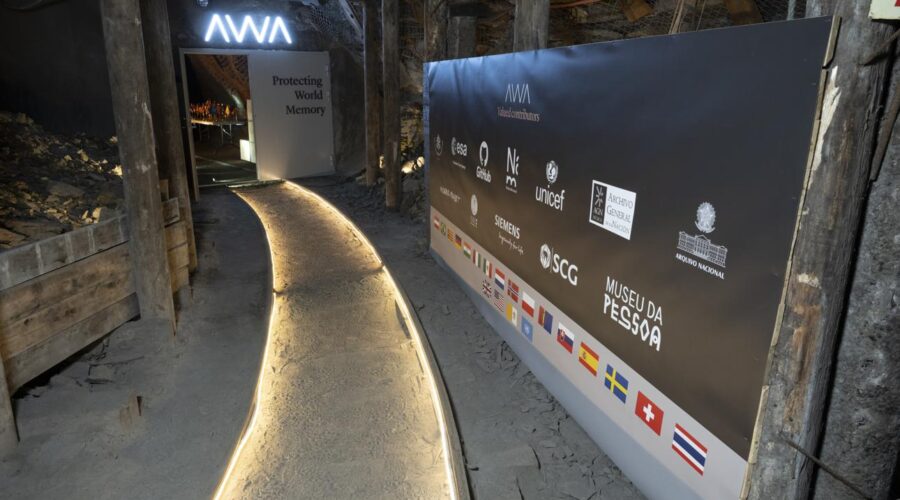
Nigeria became the first African nation to store her national and cultural archives in the Arctic World Archive (AWA), a highly secure data vault buried deep beneath a mountain in Svalbard, Norway, on February 27, 2026.
The facility itself is fascinating. It is built inside a decommissioned coal mine about 300 metres beneath Arctic permafrost and is intended to withstand natural disasters, cyber attacks, and even geopolitical instability. It already has collections from over 30 countries, including the Vatican Library and GitHub’s open-source codebase.
This is cultural preservation, other than just storage.
What exactly did Nigeria store, what technology was used, and why the strategic Arctic location?
Nigeria’s deposit is not restricted to government files or official documents alone; instead, it reflects a larger, more deliberate attempt to maintain identity, culture, and history in their richest forms.
Nigerian records stored are a mix of social and cultural history, as well as archives from the country’s creative industries, gathered from 12 Nigerian institutions, including private art foundations, museums, and libraries.
Contributors include the Olusegun Obasanjo Presidential Library, Bloom Art Gallery, the Asaba Monument Trust, which commemorates the 1967 Asaba massacre, and the Umuchieze Community Legacy Deposit, a cultural project dedicated to preserving Indigenous knowledge and history efforts preserving Indigenous knowledge and precolonial histories.
This move is linked to Nigeria’s historic challenges with data preservation and archival systems. Many public records in Nigeria have been lost, damaged, or poorly maintained over the years due to underfunded institutions and reliance on fragile paper-based systems.
Some experts stated that a significant portion of records from post-independence Nigeria are simply missing today.
Dr Chima Korieh, an expert in West African social and economic history at Marquette University in Wisconsin, US, spearheaded a project to assist the Umuchieze community in Imo State, south-east Nigeria, in preserving their stories, accounts of their cultural practices and rites of passage to adulthood, and records from precolonial Nigeria. Its AWA deposits contained manuscripts detailing the Umuchieze people’s history as well as information on the community’s legal and political systems.
“I can tell you, from 1960 onwards most of the public records that should be in the archives in Nigeria are not there,” remarks Korieh.
“Some of the materials you have in the Nigerian archives today are in danger of being lost because they are not well preserved.”
When historian Nze Ed Emeka Keazor was named chair of Piql’s first Africa office in Lagos in 2022, he began approaching Nigerian cultural institutions to encourage them to preserve their documents.
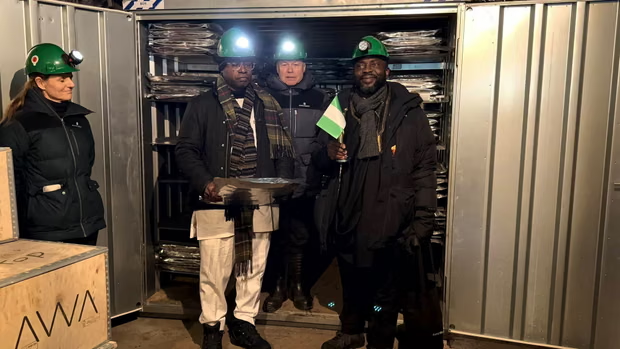
“It took me a year and a half of going to Abeokuta in Ogun state to speak with the head of archives at the Olusegun Obasanjo Presidential Library,” says Keazor, who flew to Svalbard with colleague Esona Onuoha to give over the records.
“It is important to me that Nigeria is remembered because my work is about developing cultural infrastructure,” says Ugoma Ebilah, the creator of Bloom Art.
“Nigeria has produced some of the world’s most brilliant and creative individuals. It’s no coincidence that the Grammys finally decided to recognise Fela Anikulapo Kuti’s accomplishments [by awarding him a Lifetime Achievement Award] in the same year that this archival deposit is made.”
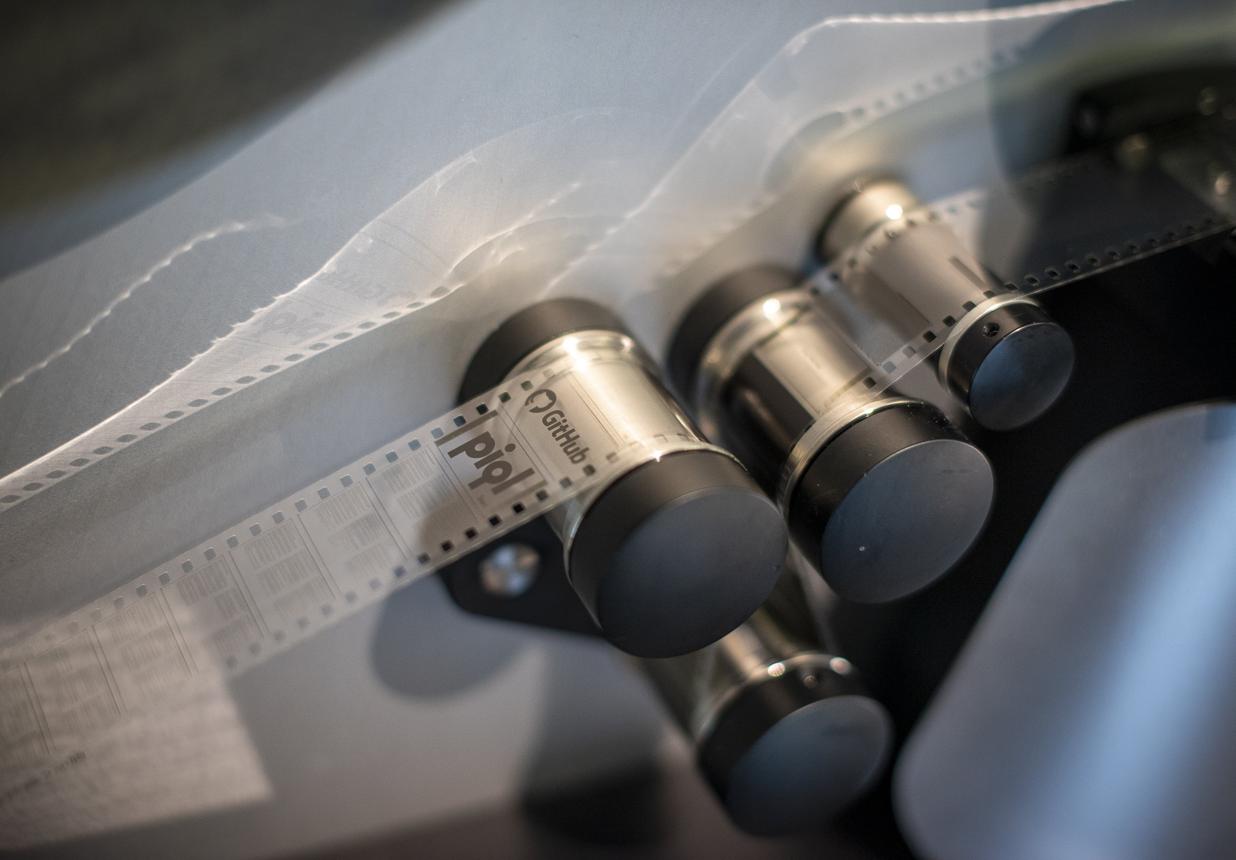
Nigeria’s data is stored on Piql film, a specially engineered photosensitive film designed for extreme longevity, rather than on servers, cloud systems, or hard drives, all of which degrade over time.
Under ideal conditions, the film can last 500 to 2,000 years, making it one of the most durable storage solutions ever developed. The data is visually encoded, allowing future generations to read it without the use of modern software systems. Instructions, similar to a “Rosetta Stone”, are also included to assist in decoding the information centuries later.
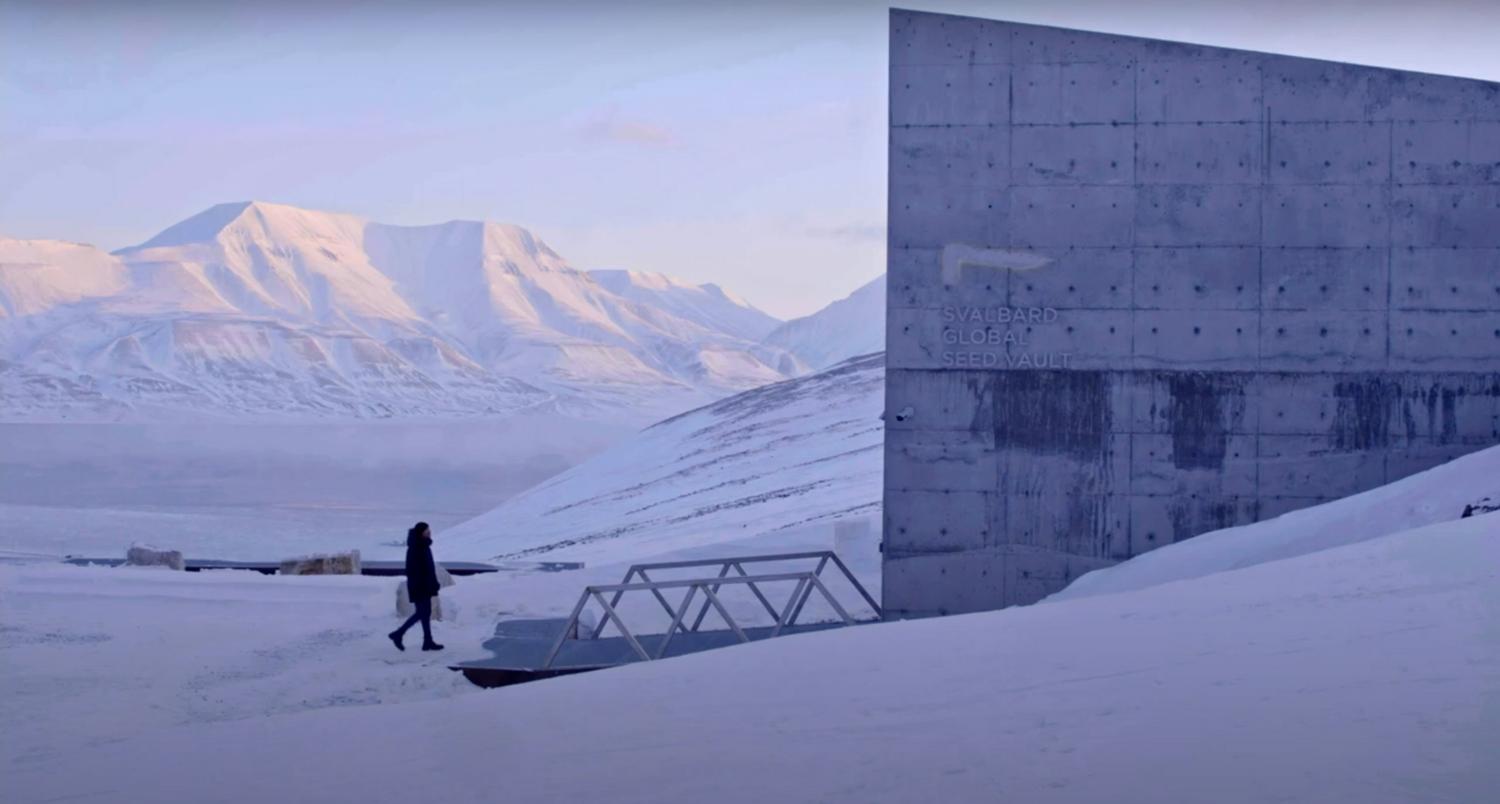
The Arctic World Archive being situated on the Svalbard archipelago, which is one of the most geopolitically secure and environmentally stable places on Earth, with its extreme cold, dryness, and low oxygen levels, naturally slows the degradation process. Even if power fails, the permafrost keeps temperatures below freezing, ensuring that the stored data is safe indefinitely.
The concept is similar to the nearby Svalbard Global Seed Vault, which stores plant seeds as a backup for humanity.
Cultural Power and Narrative Control
Aside from preservation, this initiative is about narrative ownership.
External institutions have frequently documented, interpreted, or even controlled African histories over the last decades. By actively preserving its own records in a global archive, Nigeria asserts control over how its history is told and remembered.
The National Commission for Monuments and Museums and the National Council for Arts and Culture both made deposits, including reports on Nigeria’s creative economy, which includes the music and film sectors.
“One of the key things that has affected Africa is memory. It is oftentimes not properly recognised or stated because we have not been deliberate about protecting and projecting our narrative,” says Obi Asika, director-general of the National Council for Arts and Culture. “So when the opportunity came to partake and be part of the first in Africa to publish there, it was good to be part of history. We’re proud to be part of that.”
Written history is in danger of disappearing. According to a 2024 Pew Research Center survey, 38% of webpages between 2013 and 2023 no longer exist, implying that a wealth of information and history has just vanished. AWA arose from a research endeavour aimed at discovering a secure solution to preserve data indefinitely. “The world is getting more and more aware of how fragile data storage is – each time you need to migrate it, it can change,” explains AWA co-founder Katrine Loen.
This is more of a cultural sovereignty than just a storage.
Conclusion: A Nation Thinking in Centuries.
Nigeria’s decision to store its archives in the Arctic World Archive is both a technological milestone and a philosophical one. It represents a transition from short-term thinking to long-term strategy, fragile systems to enduring memory, and passive history to actively preserved identity.
Nigeria has chosen permanence in a world where digital information is disappearing faster than ever before: websites vanish, servers fail, and formats become obsolete.
However, at €9,000 (£7,773) per reel, Piql film is a pricey investment for budget-conscious universities. In response, AWA changed its status from a commercial organisation to a non-profit in 2025, allowing monies to be used to subsidise organisations that require financial assistance to participate. This year, it collaborated with Unesco to archive the organisation’s Memory of the World Register, an archive of significant heritage papers and records of world heritage sites, which would be stored as digital 3D scans.
It is a bold declaration that its culture, people, and history are not fleeting. They are intended to last.
Related Posts

Political Dynamics, Global Realignment: What Tola Adeyemi Told CEOs at FNCCI-KPMG Luncheon Series 6
As Nigeria heads toward the 2027 election, KPMG’s Tola Adeyemi urges businesses to prepare for multiple outcomes, policy shifts and new opportunities.

NITDA Builders Festival 2026: Smart Way to Unlock Startup Opportunities
NITDA Builders Festival 2026 offers Nigerian startups a path to ₦3bn in potential investment and pilot contracts by connecting real solutions with institutions.

Konga And Defence Headquarters Launch Nationwide Discount Scheme for Serving, Retired And Veteran Military Personnel
Konga and Defence Headquarters launch a nationwide discount scheme giving serving, retired and veteran military personnel access to essential goods at reduced prices.

Access Bank $500 Million Eurobond Repayment: An Essential Lesson in Financial Planning
Access Bank’s $500m Eurobond repayment offers a powerful lesson in liquidity planning, foreign-currency risk and smart financial management for Nigerian businesses.
Funding is Available, But Are Nigerian Small Businesses Ready for It?
Funding exists for Nigerian small businesses, but access remains a challenge. Discover what SMEs need to become funding-ready and turn capital into sustainable growth.