

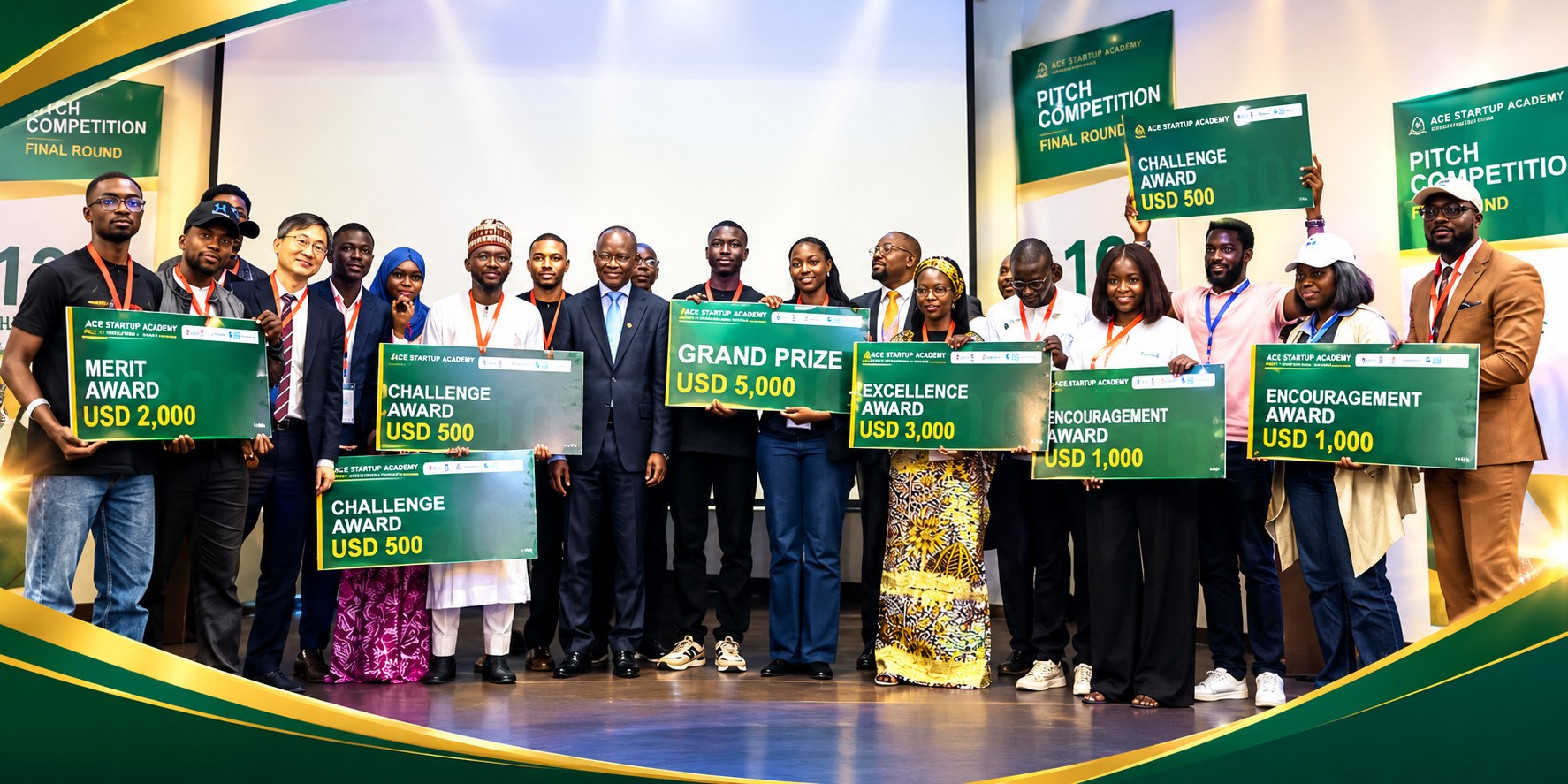
10 Young Nigerian Startups Win ₦21 Million In Grants: Meet The Entrepreneurs Behind The Ideas
A Historic Win for Nigerian Startups: Grant Worth ₦21 Million
Ten Nigerian startups have emerged winners of a combined ₦21 million in grants following the final pitch competition of the Start-up Innovation Academy Project, an entrepreneurship development initiative designed to strengthen Nigeria’s startup ecosystem.
The competition took place on Thursday, 15 October 2026, at the Public Service Institute of Nigeria in Abuja. The initiative, also known as the Abuja Centre for Entrepreneurship (ACE), is a partnership between the Small and Medium Enterprises Development Agency of Nigeria (SMEDAN) and the Korea International Cooperation Agency (KOICA), according to a Blueprint report published on October 18, 2026.
The prize was more than cash, because the same report says the winners also earned an all-expenses-paid trip to South Korea. That is a thrilling reward for founders who, like many Nigerian entrepreneurs, usually build in the face of harsh funding gaps.
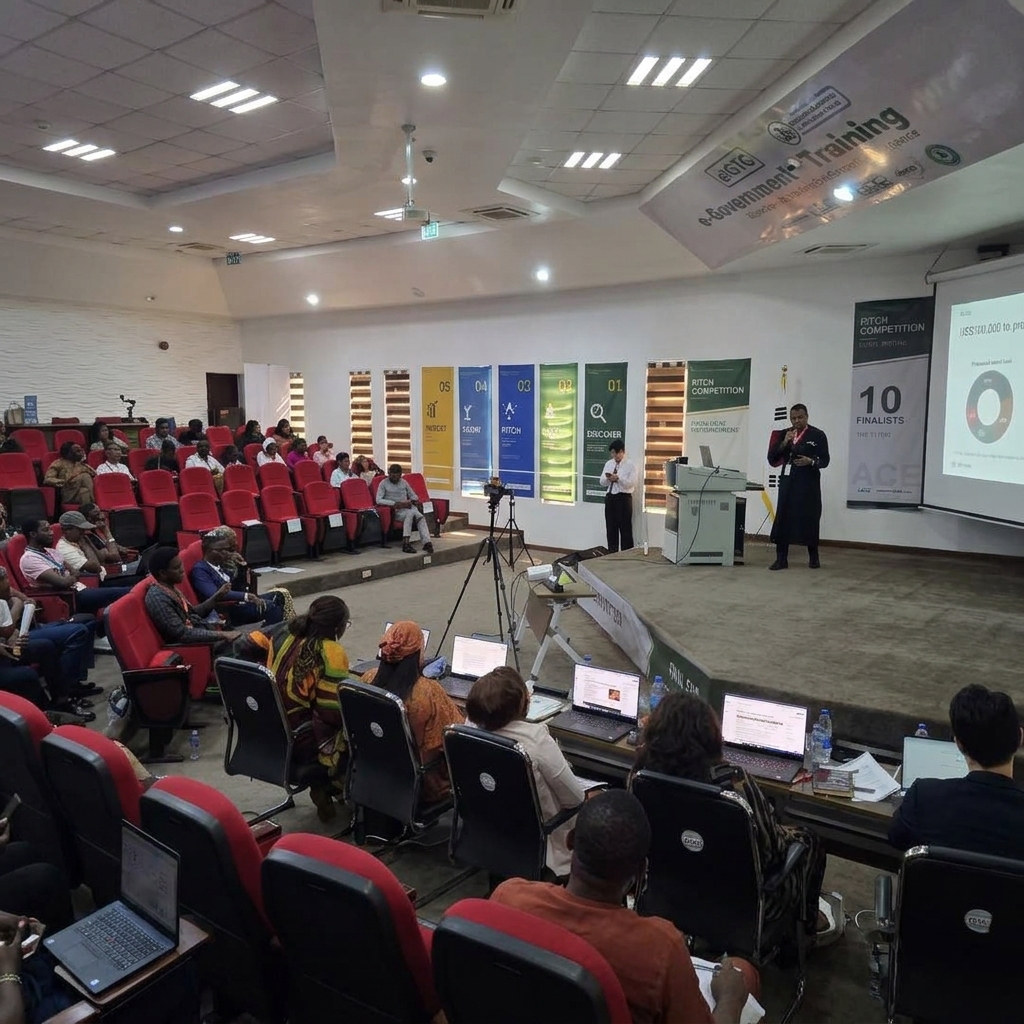
The competition belongs to the Abuja Centre for Entrepreneurship project, known as ACE. The Head of the Corporate Affairs Unit at SMEDAN, Prince Moshood Lawal, disclosed the winners in a statement in Abuja, saying the project is a partnership between SMEDAN and the Korea International Cooperation Agency (KOICA).
Who Is Behind the ACE Startup Academy?
The Start-up Innovation Academy Project brings together Nigerian small-business support and South Korean development cooperation.
SMEDAN, the Small and Medium Enterprises Development Agency of Nigeria, is the Nigerian partner in the initiative. Its broader role includes supporting micro, small and medium-sized enterprises through programmes intended to improve business capacity, productivity and development.
KOICA, the Korea International Cooperation Agency, supports the project as part of the partnership between Nigeria and South Korea. Soongsil University, Maincontents and Eduniety Lab form the implementation consortium described in the detailed competition report. Professor Gee Hyun Hwang of Soongsil University serves as the ACE Project Director.
The final competition was attended by several officials and stakeholders, including South Korea’s Ambassador to Nigeria, H.E. Jung Yo-an; Senator John Owan Enoh, Minister of State for Industry, Trade and Investment; Blessed Chirimuta, Deputy Resident Representative of UNDP Nigeria; Charles O. Odii, Director-General and Chief Executive Officer of SMEDAN; and Kim Eun-seop, Country Director of the KOICA Nigeria Office.
At the event, the officials’ remarks emphasised the importance of entrepreneurship development, innovation and practical support for businesses. The programme is intended to strengthen the capacity of young Nigerian entrepreneurs while connecting them with knowledge, mentoring and opportunities beyond the local market.
From 3,856 Applicants to 10 Finalists
The final pitch competition was the culmination of a selection and training process that began with 3,856 applications for the first cohort of the ACE Startup Academy.
According to the detailed competition report published by Trust Radio on 19 October 2026, 120 teams were selected to participate in the training programme. Participants completed courses covering business modelling, digital capabilities and artificial intelligence. Forty-five teams subsequently advanced to the preliminary competition, held on 7 and 8 October, before the final 10 teams were selected to pitch their ideas in Abuja on 15 October.

At the final stage, each team presented its business idea and responded to questions from a five-member judging panel. The panel was chaired by Ifeanyi Iloh of Ventures Park, alongside two judges from SMEDAN, one from Steady Anchor Limited and one from the KOICA Nigeria Office.
The competition was held under the project titled “Project for Establishing a Startup Digital Innovation Academy to Support Youth and SME Innovation Growth in Nigeria.” Its implementation consortium comprises Soongsil University, Maincontents and Eduniety Lab, working with KOICA and SMEDAN.
The programme’s approach combines entrepreneurship education with a competitive assessment of business ideas. Instead of ending at classroom training, participants are expected to demonstrate their understanding of customer problems, product development and the commercial potential of their proposed solutions.
This distinction matters in a business environment where aspiring founders may have promising ideas but lack the resources, technical expertise, mentorship or investor connections needed to develop them into sustainable companies.
Meet the 10 Nigerian Startups Behind the Winning Ideas
The winning teams were recognised across four award categories: the Grand Prize, Excellence Award, Merit Award, Encouragement Awards and Challenge Awards. Together, their products demonstrate the different ways early-stage entrepreneurs are applying technology to practical problems.
Loghema: Using Artificial Intelligence to Make Sermons Easier to Follow

Loghema won the competition’s Grand Prize of US$5,000 for an artificial intelligence service that identifies Bible scripture references spoken during a sermon and displays the corresponding verses on a screen within seconds.
The product addresses a familiar challenge for churches that display scripture during services. A media operator may need to locate a Bible passage, select the appropriate translation and project it before the preacher has moved on to another verse. Delays can disrupt the flow of a service and make it harder for congregations to follow along.
Loghema aims to automate that process by recognising spoken scripture references and presenting the relevant passage on screen.
The detailed competition report says the team is targeting Nigeria’s church market, citing more than 100,000 churches as its potential market. That figure is the market estimate reported by the source, rather than an independently verified count in this article.
Loghema’s award-winning idea illustrates how AI tools can be developed for specific local needs rather than only for general-purpose chat, content generation or office productivity. Its commercial prospects will depend on how reliably the service recognises spoken references, how easily churches can integrate it into their existing equipment and whether customers are willing to pay for it.
Tita Universal Services Limited: Bringing Artificial Intelligence to University Timetables
Tita Universal Services Limited received the Excellence Award of US$3,000 for an AI-powered platform that generates lecture timetables for tertiary institutions.
Creating university timetables can be complicated, particularly when institutions have many departments, lecturers, courses and classrooms to coordinate. Manually prepared schedules can result in room clashes, omitted courses and other planning errors that inconvenience both students and lecturers.
Tita Universal Services aims to reduce those problems by using artificial intelligence to automate timetable generation.
The platform reflects a wider opportunity for Nigerian startups to develop software that improves how institutions operate behind the scenes. While consumer-facing technology often receives the most attention, tools that save administrative time and reduce operational errors can also address meaningful business and education needs.
The competition report identifies Tita Universal Services Limited as the Excellence Award recipient. Its founder, Aisha Aminu Mohammed, also expressed appreciation for the training and mentorship offered through the programme, according to reporting by The Authority.
Tiptop Tutors: Making Science Experiments More Accessible

Tiptop Tutors won the Merit Award of US$2,000 for its virtual science laboratory, HandyLab.
The product is designed to help secondary school students practise chemistry, physics and biology experiments in situations where access to laboratory equipment or sufficient laboratory time is limited.
Through HandyLab, students can select the steps involved in an experiment, use virtual apparatus to take measurements, receive immediate feedback and repeat the exercise. The platform offers guided and self-paced learning modes, while offline functionality is intended to make it usable where internet connectivity is unreliable.
This is a significant problem to address in a country where the cost of equipment, limited facilities and uneven access to digital infrastructure can create obstacles to practical science education.
A virtual laboratory cannot automatically replace every benefit of handling real equipment, carrying out physical procedures and learning laboratory safety. However, a well-designed simulation can provide additional opportunities to practise, understand procedures and prepare for practical work.
HandyLab’s offline capability is particularly relevant to its potential Nigerian market because it recognises that access to technology does not always mean access to reliable internet service.
OneClickMed: Connecting Patient Records Across Health Facilities
OneClickMed received an Encouragement Award of US$1,000 for a product designed to connect patient records across healthcare facilities.
Healthcare information can become fragmented when a patient receives treatment from different hospitals or clinics. When relevant medical records are difficult to access, healthcare providers may have an incomplete picture of a patient’s history, making continuity of care more challenging.
OneClickMed’s stated focus is to improve connections between patient records held by different facilities.
The opportunity is clear, but the technology would need to address important implementation questions, including patient consent, data security, privacy, interoperability and the willingness of healthcare providers to adopt a shared system. Winning a pitch competition is an encouraging milestone, but it does not by itself establish that the product has achieved widespread adoption or measurable improvements in clinical outcomes.
Ikor: An AI Writing Tool Designed to Work Offline

Ikor earned an Encouragement Award of US$1,000 for an artificial intelligence writing tool that runs entirely offline on low-end devices.
Many AI writing services depend on an internet connection and sufficient computing resources. These requirements can limit their usefulness for people with unstable connectivity, older devices or limited access to expensive hardware.
Ikor’s offline-first approach seeks to address those constraints by making AI-assisted writing available without requiring a continuous internet connection.
The idea is relevant to Nigerian users who need digital tools but face connectivity or device limitations. It also reflects an important principle for technology businesses serving emerging markets: a product’s usefulness often depends not only on its features but on whether customers can realistically access and operate it.
Gyronics: Helping People with Upper-Limb Disabilities Control Devices

Gyronics received an Encouragement Award of US$1,000 for Axol, a wearable interface designed to allow people with upper-limb disabilities to control their devices.
Assistive technology can help people interact with digital tools and everyday devices in ways that better accommodate their physical needs. Gyronics’ Axol is intended to provide an alternative interface for users who may experience difficulty operating conventional controls.
The idea places accessibility at the centre of product development. Rather than expecting every user to adapt to existing technology, assistive products aim to make technology more usable for people with different abilities.
For a product in this category, usability testing with intended users, comfort, affordability, device compatibility and dependable performance will be critical to adoption. The available competition coverage describes Axol’s purpose but does not establish how many users currently use it or the range of devices it supports.
Gyronics’ recognition nevertheless highlights the commercial and social potential of designing technology around the needs of people who are often underserved by mainstream products.
Acclusivo: Developing Digital Learning for Deaf Children
Acclusivo received a Challenge Award of US$500 for DeafLMS, a visual-first STEM learning platform developed for deaf children.
The platform is intended to bring learning materials into a more integrated visual environment, reducing the fragmentation that can arise when students must follow a teacher, an interpreter, a textbook and a separate screen simultaneously.
The team is led by Victor Oricha, who is deaf and serves as its founder and chief technology officer, according to the competition report.
Acclusivo’s participation also drew attention to accessibility during the competition itself. Sign-language interpretation was provided throughout the preliminary and final rounds to support the participation of the deaf-led startup. The report says that this support is expected to continue during the incubation programme and South Korea visit.
The startup’s work addresses an important education challenge: learning tools need to account for the needs of students who may not benefit fully from teaching approaches designed primarily around spoken communication.
Its recognition at the competition brings inclusive education and accessible digital design into the wider conversation about Nigerian startup innovation.
Saipris: Identifying Students Who May Be Falling Behind
Saipris received a Challenge Award of US$500 for a system that uses existing student performance data to identify learners who may be struggling academically.
Early identification can give schools an opportunity to investigate learning difficulties and provide support before a student falls substantially behind. Saipris is designed to use information schools already hold to help identify students who may need additional attention.
The concept could help institutions make more systematic use of academic records instead of relying exclusively on informal observations or end-of-term results.
Schools would need to validate the system’s predictions and use them to support, rather than stigmatise, students.
Monovella: Connecting Women’s Health Management with Specialist Appointments
Monovella received a Challenge Award of US$500 for a product that combines women’s health management with access to specialist appointments.
Women may need to coordinate different aspects of their healthcare, track health information and identify appropriate professionals for consultations. A service that brings health management and specialist appointment access together could make parts of that process easier.
As the product develops, privacy protections, the quality of health information, appropriate clinical oversight and reliable access to qualified specialists will be important considerations.
Its inclusion among the winning startups demonstrates how early-stage Nigerian businesses are exploring opportunities to address specialised needs in healthcare, alongside broader digital and educational challenges.
Meertech Limited: Preventing Export Documentation Errors
Meertech Limited received a Challenge Award of US$500 for a solution designed to identify errors in export documentation before goods are shipped.
Exporting involves paperwork and documentation that must meet relevant requirements. Errors or missing information can create delays, extra costs and complications for businesses seeking to move products across borders.
Meertech’s product is intended to detect documentation errors before shipment, potentially helping exporters identify problems earlier in the process.
This is a practical business-to-business problem with implications for companies seeking to participate in international trade. For small and medium-sized businesses in particular, avoidable administrative errors can consume time and resources that could otherwise be spent on production, sales and expansion.
The Awards at a Glance
The Grand Prize went to Loghema, which received US$5,000. Tita Universal Services Limited received the Excellence Award of US$3,000, while Tiptop Tutors received the Merit Award of US$2,000.
OneClickMed, Ikor and Gyronics each received an Encouragement Award of US$1,000. Acclusivo, Saipris, Monovella and Meertech Limited each received a Challenge Award of US$500.
These awards total US$15,000 across all 10 teams.
What the Officials Said
Several leaders spoke on the significance of the win. The Minister of Industry stressed the need to support young entrepreneurs and create an enabling environment for innovation, enterprise development and job creation.
Charles Odii, SMEDAN’s Director-General and Chief Executive Officer, emphasised the importance of combining entrepreneurship training with access to financing, mentorship, incubation and markets.

“…the ACE Project reflects the value of international cooperation in strengthening local entrepreneurial capacity and creating opportunities for Nigerian innovators to compete in an increasingly digital and knowledge-driven economy”.
Charles Odii
Professor Gee Hyun Hwang, the ACE Project Director from Soongsil University in South Korea, praised the participants’ commitment and creativity. He stressed the value of sustained mentorship and collaboration for building scalable enterprises.
The $12 Million Home for Entrepreneurs
The academy is only one piece of a larger plan. The ACE centre is funded by KOICA with a contribution of US$12 million, with SMEDAN as government partner and UNDP as infrastructure delivery partner. Everything began at a groundbreaking ceremony on Thursday, September 17, 2026, at SMEDAN’s Industrial Development Centre in Idu, Abuja, in the UNDP press release.
The centre has big targets. It is expected to support 500 prospective young entrepreneurs and 400 startups in FinTech, EdTech, HealthTech and AgriTech, while serving MSMEs across Abuja and surrounding northern cities. Minister of State for Industry John Enoh said it should be fully operational by December 2027.
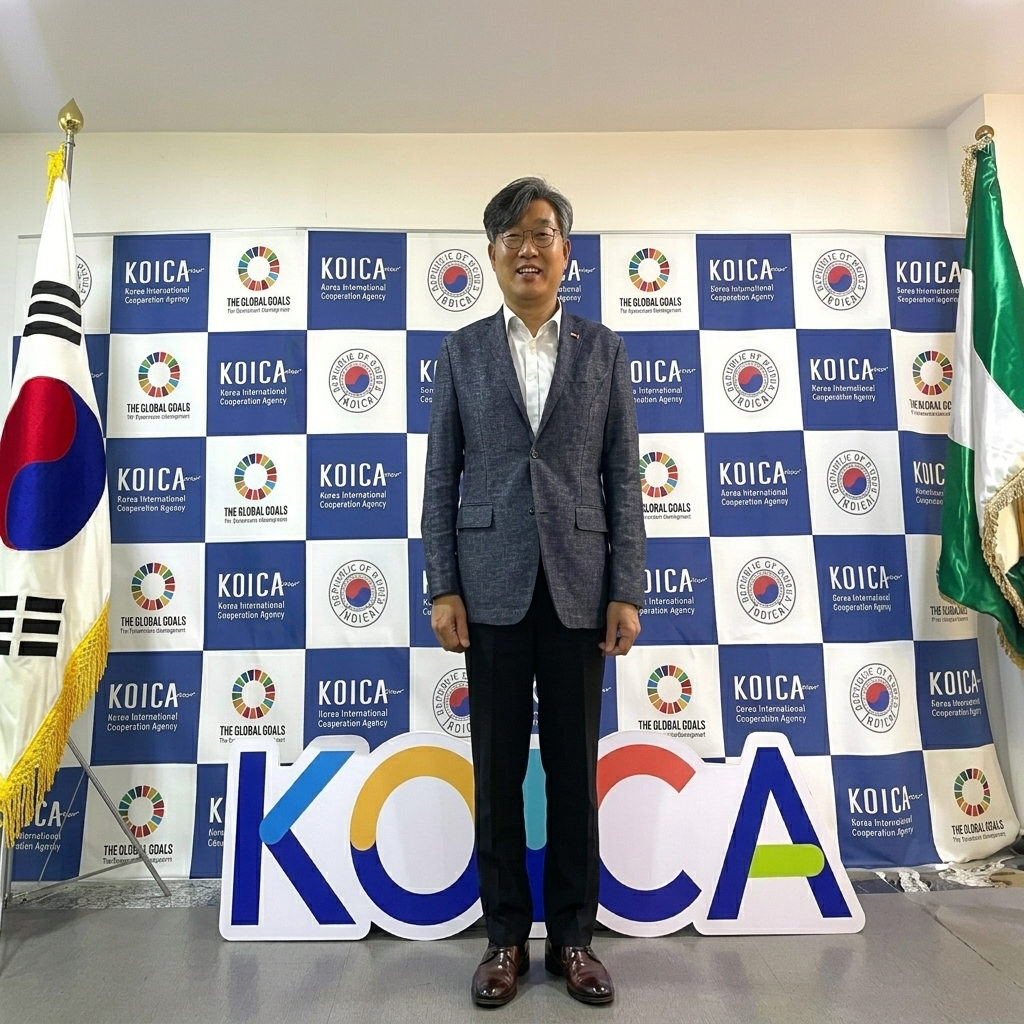
“it is a concrete expression of the strong and growing partnership”
Kim Eunsub
What Comes Next for Winners
One representative from each of the 10 finalist teams is expected to travel to South Korea as part of the programme. The planned visit includes exposure to the country’s startup and investment ecosystems, company visits and an investment-relations demonstration day before investors.
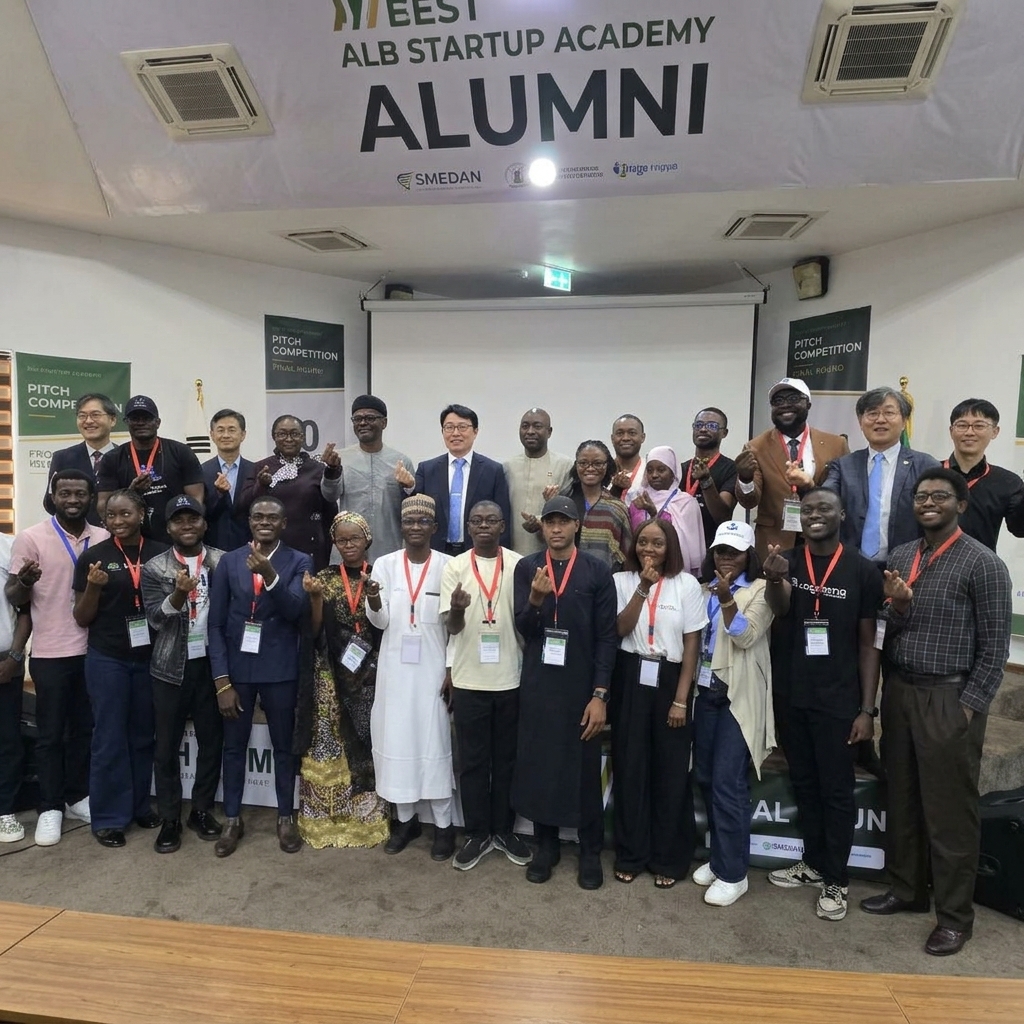
All 10 finalist teams are moving on to participate in the upcoming COMEUP 2026 event in Seoul, South Korea, to pitch before international investors.
For young Nigerian entrepreneurs, this could provide an opportunity to observe how businesses develop products, engage investors and build relationships within a different innovation environment.
International exposure can also help founders examine their own assumptions about product design, customer acquisition, operational processes and business expansion.
However, a visit or investor presentation does not automatically translate into investment, overseas partnerships or commercial success. Those outcomes will depend on each startup’s readiness, product quality, market evidence and ability to follow up on the relationships it establishes.
Conclusion
A ₦21 million grant shared among ten young founders is a bright spot in a tough funding climate. The programme combined a competitive 3,856-applicant selection, 60 hours of training, a high-pressure pitch, a Korea trip and the promise of a $12 million entrepreneurship centre. Still, a headline win is only the starting line.
Beyond the financial awards, the programme offers the successful teams opportunities for further incubation, mentoring and international exposure, including an all-expenses-paid visit to South Korea for one representative from each team. The visit is expected to expose the entrepreneurs to South Korea’s startup and investment ecosystem, with company visits and an investor-facing investment-relations demonstration day also planned.
The partnership between SMEDAN and KOICA also demonstrates the potential of international cooperation to support local entrepreneurship through training, funding, mentorship and exposure to other innovation ecosystems.
For readers following Nigerian startups grant news, bookmark the SMEDAN and KOICA channels, because the winners’ names and next steps should surface there. Share this article with a young founder who needs a push, and check back as the story develops.
Follow Amebopreneur for the latest on Nigeria’s tech ecosystem, startup funding opportunities, and the cross-border partnerships shaping Africa’s innovation future.
Related Posts

French Week Nigeria 2026: Lagos to Host Major France-Nigeria Business and Technology Gathering
French Week Nigeria 2026 runs from October 29 to November 6 in Lagos, bringing together over 1,000 executives, diplomats and entrepreneurs for business, technology, energy and agribusiness events.

French Week Nigeria 2026 Opens in Lagos: “One Week, Infinite Opportunity” for Franco-Nigerian Business
French Week Nigeria 2026 runs 29 October to 6 November in Lagos, uniting over 1,000 C-level executives, diplomats, and entrepreneurs for a week of Franco-Nigerian business networking, innovation, and cross-border opportunity.

The Business of Everyday Needs: How Nigerians Are Turning Daily Problems into Business Opportunities
Discover how Nigerians are turning everyday problems into profitable business opportunities, from laundry and food delivery to cleaning and repairs, with smart strategies for lasting success.

Nigeria’s Payment Data Rule: Essential Risks Before the 2027 Deadline
Nigeria’s January 1, 2027 payment data deadline is approaching. Discover the cybersecurity risks, migration costs and infrastructure challenges banks and fintechs must overcome to comply.
Political Dynamics and Global Realignment: Lessons for Nigerian CEOs
At the 2026 FNCCI CEO Luncheon, business leaders explored how political uncertainty, global realignment and economic reforms are shaping business resilience in Nigeria.