


Tinubu Orders Forensic Audit of IPPIS: Inside Nigeria’s Ghost Worker Scandal
Nigeria’s payroll integrity crisis has finally reached the presidency, and the response is bold, overdue, and potentially transformative. President Bola Ahmed Tinubu has ordered a sweeping forensic audit of the Integrated Personnel and Payroll Information System, widely known as IPPIS, after alarming revelations of ghost workers, fake government agencies, and systemic control failures shook public confidence in Nigeria’s federal bureaucracy.
This is in particular a governance reckoning, a fiscal integrity test, and a wake-up call for every vendor, technocrat, and policymaker who has ever claimed that digitization alone can defeat corruption.
The Directive: A Two-Pronged Audit Systems and Structures
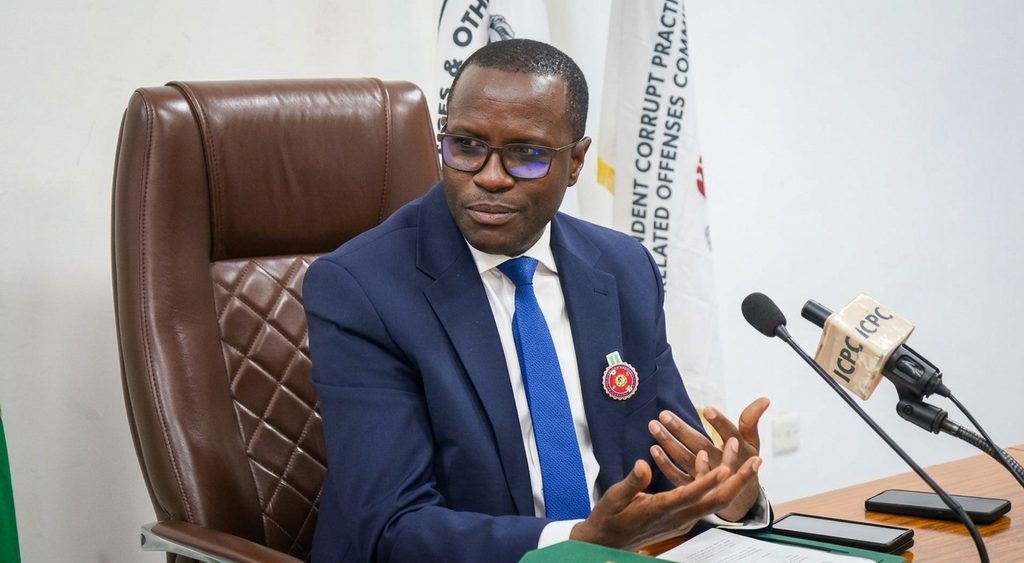
On Friday, August 28, 2026, presidential spokesman Bayo Onanuga announced that President Tinubu had directed a comprehensive forensic audit of Federal Government systems, with IPPIS at the center of the investigation. The directive traces back to a resolution of the Federal Executive Council reached earlier, on Wednesday, August 19, 2026, following disturbing findings by the Independent Corrupt Practices and Other Related Offences Commission, commonly known as ICPC, regarding fake agencies, ghost workers, and other weaknesses in government financial controls.

Tinubu assigned oversight of the exercise to Taiwo Oyedele, the Minister of Finance and Coordinating Minister of the Economy, tasking him with coordinating what the Presidency describes as an audit conducted to the highest standards of independence, professionalism, and forensic integrity.
According to the Presidency, the exercise is structured around two interconnected components, and understanding both is essential to grasping the full scope of what is being undertaken.
The first component is a forensic audit of government payroll and financial-management infrastructure. This means a deep, technical dive into IPPIS itself, along with the platforms it interfaces with, including the Government Integrated Financial Management Information System known as GIFMIS, the Remita payment platform, the Treasury Single Account or TSA, and the Sub-TSA structure.
Investigators are expected to trace how fictitious or ineligible individuals were enrolled into these systems, reconcile figures already flagged by ICPC, and rigorously test whether identity verification, biometric authentication, and bank-account controls are actually functioning as designed rather than merely existing on paper.
The second component shifts focus from payroll to institutional legitimacy. It covers every federal ministry, department, agency, commission, council, parastatal, and other government body, with the explicit goal of establishing a definitive inventory of government entities and verifying their legal status and basis for existence. In plain language, the government is finally asking a startling but necessary question, does every agency drawing public funds actually have a legal right to exist?
The Numbers That Triggered the Alarm
The scale of the underlying scandal is genuinely alarming, and the figures explain why the presidency felt compelled to act. ICPC Chairman Musa Adamu Aliyu disclosed in mid-2026 that a year-long verification exercise uncovered approximately 908 suspected ghost workers across at least 50 federal ministries, departments, and agencies.
Investigators recovered close to N942 million in fraudulent salary payments tied to these fictitious names, and separately, the commission has reported recovering more than N24 billion linked to ghost workers’ pension deductions, alongside forfeiture orders involving more than 900 suspected cases.
The Nigeria Police Force emerged as the single worst-affected institution, accounting for 570 of the 908 suspected ghost workers identified nationwide. The National Water Resources Authority followed with 80 suspected cases, the Federal Ministry of Works recorded 56, the Ministry of Foreign Affairs had 24, and the Ministry of Defence accounted for 19.
Aliyu described one especially shocking case in which a single official was found collecting salaries on behalf of fifteen people, including his own wife, son, and mother-in-law. He explained plainly that ghost workers are essentially non-existent individuals whose names sit on payrolls purely so real officials can pocket the corresponding pay.
The Fake Agency Angle
Perhaps the most jaw-dropping thread in this saga involves entities that do not legally exist at all, yet somehow secured government funding. ICPC investigators exposed an outfit calling itself the National Brands Development and Made in Nigeria Special Project Office, describing it as an unlawful body with no legal basis to function as a government agency, despite reportedly operating out of a highly sensitive federal building.
Separately, reporting has surfaced around another phantom entity, the Presidential Foreign Intervention Promotion Council, which allegedly secured a N1.3 billion allocation in the 2026 federal budget despite having no verifiable legal status. If an agency that does not legally exist can find its way into a national budget, the implications for fiscal oversight are troubling and demand urgent scrutiny.
Here lies the uncomfortable truth at the heart of this story. Nigeria has invested heavily, over more than a decade, in payroll technology, biometric verification, and centralized platforms precisely to eliminate this kind of fraud. IPPIS was introduced as a flagship reform meant to end ghost worker abuse once and for all. Yet the persistence of fictitious names, ineligible personnel, and fraudulent bank accounts inside a supposedly modernized system proves a critical lesson: technology is only as trustworthy as the human processes, oversight culture, and institutional accountability wrapped around it.
A fantastic digital platform placed upon ineffective governance just digitises fraud rather than removing it. Analysts have correctly noted that this is not only a corruption story, but also a data-management story, because employment records, identity information, bank details, and pension records must all communicate with one another, and gaps between these databases are precisely where bad actors can slip through.

Important institutional design lessons can be learned from this experience. Important discoveries include the requirement for ongoing, cross-referenced verification procedures to prevent fraud, the significance of openness and independent audits, and the necessity of formalising cooperation between agencies and forensic teams.
Institutional expansion difficulties are brought to light by the growing number of federal agencies, which calls for a renewed focus on rationalisation initiatives like the Oronsaye Report. Last but not least, strong fraud-detection systems that are incorporated from the beginning by technology partners are essential to effective deterrence, coupled with accountability and prosecutions.
Conclusion
This audit is particularly improtant for companies and consultants in Nigeria’s public-sector digitization, particularly those supplying payroll and financial-management systems.
With an emphasis on interconnection between systems like IPPIS and GIFMIS, companies may anticipate greater scrutiny and more stringent procurement rules. There are risks and opportunities in this situation: companies with strong, auditable systems might be awarded contracts, whereas poorly integrated solutions might encounter serious difficulties. A crucial step in re-establishing fiscal integrity and public confidence in the administration of public funds is Tinubu’s forensic audit of IPPIS.
The revelations of hundreds of ghost workers, billions of naira in fraudulent payments, and entirely fictitious agencies drawing budget allocations paint a sobering picture of institutional vulnerability. Yet within that sobering picture sits real opportunity.
Nigeria has the tools, the talent, and now the political spotlight required to fix this. What remains to be seen is whether this moment produces lasting structural reform or simply another headline that fades once the news cycle moves on.
Follow Amebopreneur for the latest on Nigeria’s tech ecosystem, startup funding opportunities, and the cross-border partnerships shaping Africa’s innovation future.
Related Posts
NITDA Builders Festival 2026: Smart Way to Unlock Startup Opportunities
NITDA Builders Festival 2026 offers Nigerian startups a path to ₦3bn in potential investment and pilot contracts by connecting real solutions with institutions.

Nigeria’s Internet Traffic: The Essential Growth Drivers Behind a 168% Surge
Nigeria’s internet traffic surged 168% in three years. Discover the key drivers behind the growth and what it means for businesses, SMEs and entrepreneurs.

Konga And Defence Headquarters Launch Nationwide Discount Scheme for Serving, Retired And Veteran Military Personnel
Konga and Defence Headquarters launch a nationwide discount scheme giving serving, retired and veteran military personnel access to essential goods at reduced prices.

Askya Offers African AI Startups Up To $200,000 In Investment Through New Growth Platform
Askya Investment Partners has launched a six-week AI Growth Platform for 10 African startups, offering zero-equity participation, business support and potential investment of up to $200,000

Cabo Verde Telecom and DE-CIX Plan New South Atlantic Connectivity Corridor
DE-CIX and Cabo Verde Telecom have signed a non-binding Letter of Intent to explore a South Atlantic connectivity corridor linking Lisbon and São Paulo, strengthening direct digital infrastructure across Europe, Africa, and Latin America.