

Breaking Barriers: Women’s Financial Inclusion Through Tech EFInA and fintech
The Growing Movement of Digital Financial Inclusion for Women
Across Nigeria and much of Africa, the financial ecosystem is undergoing a huge transformation. Women’s financial inclusion through technology has emerged as one of the most important pillars of economic growth, and it is being highly pursued by fintech startups, policymakers, and development-focused organisations like EFInA. This movement is about empowerment, economic liberty, and achieving long-term national success.
At its heart, financial inclusion refers to individuals’ ability to obtain inexpensive and usable financial products and services such as savings, credit, insurance, and payments. However, for many women in underdeveloped nations, these services have historically been restricted by structural impediments, cultural constraints, and a lack of infrastructure. The arrival of fintech innovation has shattered this long-standing exclusivity, providing a daring, dynamic, and revolutionary avenue into formal financial systems.
Women’s Financial Inclusion
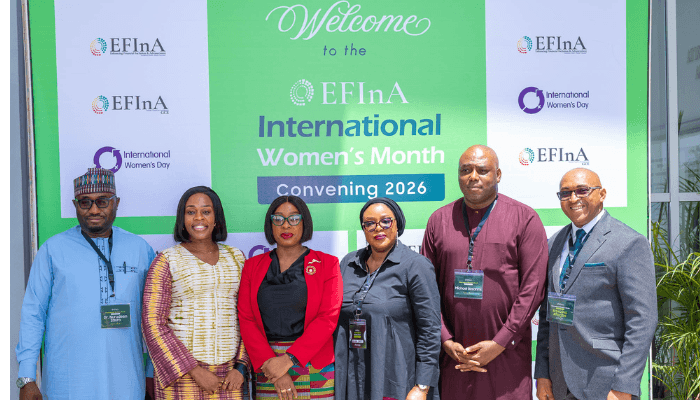
The event themed “Gather, Gain, Grow” brought together women’s associations, financial service providers, regulators, development partners, and ecosystem leaders to discuss practical methods to improve women’s access to and use of formal financial services.
The meeting, held in honour of International Women’s Day with the worldwide theme “Give to Gain”, provided a forum for women’s groups to discuss their lived experiences, showcase grassroots solutions, and highlight ongoing challenges to financial inclusion.
Women’s inclusion in formal financial systems is a major economic driver in this. Research regularly shows that when women have access to financial services, home welfare improves, small companies grow faster, and national productivity increases dramatically. In Nigeria, where women dominate informal trade and entrepreneurship, the impact of financial inclusion is particularly dramatic.
EFInA and fintech players claim that barring women from financial systems causes huge economic leakage. When women are unable to obtain credit or digital banking tools, their enterprises remain small, their earning potential is limited, and their contribution to GDP is underestimated. When digital financial instruments become more accessible, women gain economic mobility, freedom, and increased involvement in the formal sector.
Speaking during the event, EFInA’s CEO, Foyinsolami Akinjayeju, stated that the gathering was intended to move beyond conversations and toward tangible solutions.

“This convening goes beyond celebration. It is a call to commitment, stronger partnerships, and deliberate action. Inclusive growth cannot be achieved without intentional investment in women, particularly women entrepreneurs who drive economic activity across Nigeria.”
Foyinsolami Akinjayeju
The narrative is thus shifting from exclusion to empowerment, from constraint to expansion, and from disparity to opportunity.
The Impact of Fintech on Digital Empowerment
Fintech innovation has emerged as the backbone of financial inclusion in Nigeria. Mobile banking applications, digital wallets, USSD payment systems, and micro-lending platforms are breaking down traditional barriers that formerly made banking unavailable to millions of women, particularly in rural and semi-urban areas.
Traditional banking methods frequently fail to provide speed, ease, and accessibility, but these platforms do. Women may now open accounts without requiring physical documentation, obtain microloans in minutes, and make transactions with simple mobile phones. This technology disruption has resulted in a more inclusive, nimble, and customer-focused financial environment.
In her goodwill message, Aisha Isa-Olatinwo, Director, Consumer Protection and Financial Inclusion Department, Central Bank of Nigeria (CBN), stressed the importance of policy and product design in reducing the gap.
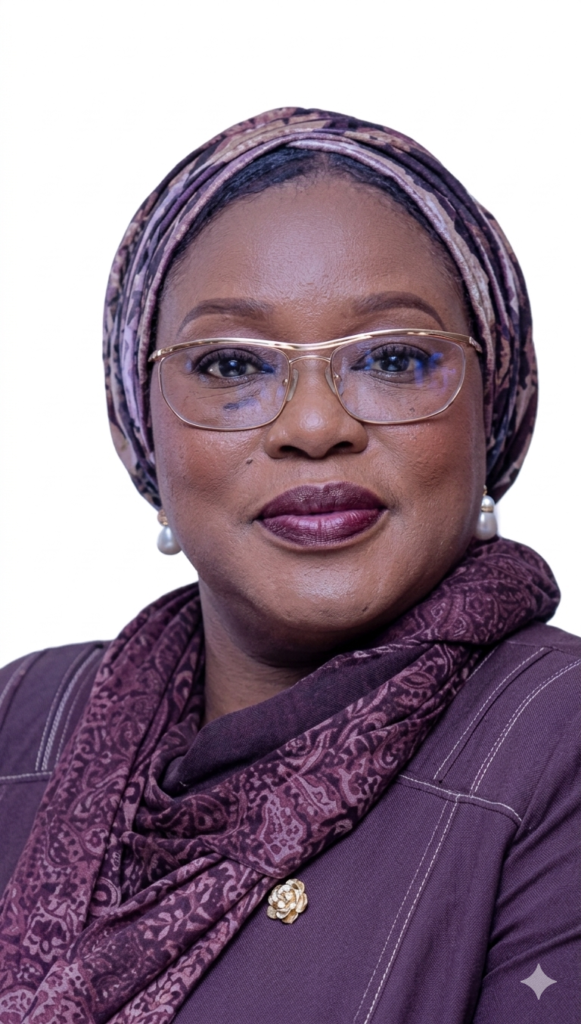
“Advancing women’s financial inclusion requires clear and enabling policy pathways. Financial service providers must develop products and services that are responsive, affordable, and relevant to women’s realities.”
Aisha Isa-Olatinwo
The event included panel discussions from throughout the financial sector, as well as a keynote address by Hadiza Maina, who represented Minister of Women Affairs and Social Development Imaan Sulaiman-Ibrahim.
The conversation between grassroots organisations and institutional players was a major feature of the event, as it enabled them to reconcile perspectives on community concerns and new solutions.
Also addressing this, Nurudeen Zauro, the president’s technical adviser on financial inclusion, emphasised the relationship between women’s empowerment and national growth.
“Supporting women is equivalent to supporting national development. Women remain a priority segment under the National Financial Inclusion Strategy, and ongoing efforts are focused on improving outcomes for them.”
Nurudeen Zauro

Emezino Afiegbe, EFInA’s Gender Lead, emphasised the necessity of engaging women through trusted networks when explaining the organisation’s approach.

“Women’s groups and associations are platforms for trusted interactions and pathways for early and consistent engagement with formal financial services. Supply-side actors must focus on these collectives, understand them, and adopt women-centred design methodologies to build solutions around women’s lived realities.”
Emezino Afiegbe
He said that EFInA’s Gender Centre of Excellence will continue to assist financial service providers in establishing productive lending solutions for women entrepreneurs and smallholder farmers, as well as collaborate with regulators to maintain an enabling environment.
However, while fintech growth has been swift and exciting, there have been some obstacles. Issues such as digital literacy gaps, cybersecurity hazards, limited internet access, and financial fraud remain major concerns. These unpleasant realities underline the critical need for strengthened regulatory frameworks and ongoing financial education efforts.
EFInA’s Strategic Role in Promoting This Most Sought After Inclusion
EFInA has helped put together Nigeria’s financial inclusion agenda. Through research, lobbying, and stakeholder collaboration, EFInA has continually emphasised the necessity of closing the gender gap in financial access.
One of the significant findings from EFInA’s ongoing research is that women are still disproportionately excluded from formal financial institutions compared to men, owing to income gaps, a lack of identity, and limited access to financial education. According to EFInA’s research, addressing this issue will necessitate collaborative efforts from government institutions, fintech companies, telecom providers, and development organisations.
Their strategy is founded on data-driven insights and inclusive policy proposals that foster innovation while addressing systematic injustice. EFInA also supports efforts that increase digital literacy for women, ensuring that technology does not disproportionately affect vulnerable populations.
The Future
The future of women’s financial inclusion in Nigeria is bright, lively, and full of opportunities. With ongoing advancements in fintech, artificial intelligence, and mobile technology, the financial environment is becoming more accessible and user-friendly than ever.
We are moving toward a future in which financial services are fully integrated into everyday life, and women may easily access credit, savings, insurance, and investment opportunities via mobile devices without friction or discrimination. This future is bold, disruptive, and economically significant.
However, attaining this vision calls for collaboration, inclusive policymaking, and ongoing investment in education and trust-building. Without these factors, the digital divide may continue, leaving some women behind in an increasingly digital economy.
Conclusion
With organisations like EFInA collaborating with creative fintech stakeholders, the country is seeing a bold drive for equality, empowerment, and economic growth.
The event concluded with stakeholders making concrete commitments to put discussions into action, indicating a transition from dialogue to verifiable progress. These commitments demonstrated a common resolve throughout the ecosystem to move beyond discourse and ensure that the convening’s ideas are translated into actual actions, stronger relationships, and verifiable progress for women in Nigeria.
EFInA reaffirmed its commitment to facilitating a financial system that works for all Nigerians, particularly underprivileged communities, through evidence generation, innovation support, and partnership development that promotes inclusive growth.
The trip is full of both opportunity and obstacles. On the one hand, fintech enables unparalleled access, empowerment, and financial freedom. On the other hand, considerable challenges persist, including digital inequality, infrastructure shortages, and cybersecurity dangers.
Despite these limitations, the general trend is good and revolutionary. Women’s financial inclusion is one of the most important levers for sustainable development, and as fintech evolves, its influence will only get stronger, more inclusive, and economically beneficial.
Related Posts

Political Dynamics, Global Realignment: What Tola Adeyemi Told CEOs at FNCCI-KPMG Luncheon Series 6
As Nigeria heads toward the 2027 election, KPMG’s Tola Adeyemi urges businesses to prepare for multiple outcomes, policy shifts and new opportunities.

NITDA Builders Festival 2026: Smart Way to Unlock Startup Opportunities
NITDA Builders Festival 2026 offers Nigerian startups a path to ₦3bn in potential investment and pilot contracts by connecting real solutions with institutions.

Nigeria’s Internet Traffic: The Essential Growth Drivers Behind a 168% Surge
Nigeria’s internet traffic surged 168% in three years. Discover the key drivers behind the growth and what it means for businesses, SMEs and entrepreneurs.

Konga And Defence Headquarters Launch Nationwide Discount Scheme for Serving, Retired And Veteran Military Personnel
Konga and Defence Headquarters launch a nationwide discount scheme giving serving, retired and veteran military personnel access to essential goods at reduced prices.

Askya Offers African AI Startups Up To $200,000 In Investment Through New Growth Platform
Askya Investment Partners has launched a six-week AI Growth Platform for 10 African startups, offering zero-equity participation, business support and potential investment of up to $200,000