

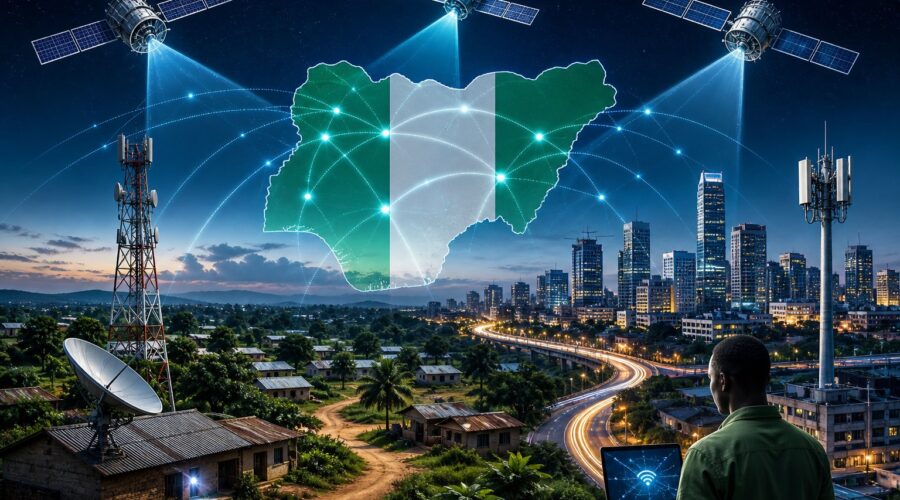
Satellite Internet Expansion: The Rise Of A Multi-Layer Connectivity In Nigeria (LEO Networks: Fibre + Satellite + 5G)
Nigeria’s digital infrastructure landscape and satellite internet expansion are coming along great in one of the most dramatic and transformative ways in decades, thanks to the rapid expansion of satellite internet, brought to light by a worldwide contest between LEO satellite operators such as Starlink and Amazon’s Project Kuiper and a new wave of regulatory approvals that are shaping the way connectivity is delivered across the country.
What is happening is a substantial structural development toward a multi-layer internet ecosystem in which fibre, 5G, and satellite networks work together to create a more resilient, high-capacity, and inclusive digital future.
This breakthrough is especially relevant in a country where millions of individuals are still underserved or completely unconnected to traditional broadband infrastructure. Recent legislative moves by the Nigerian Communications Commission (NCC) have hastened this transformation by giving many new licences to global satellite operators and Internet Service Providers, making a bold and progressive push for universal connectivity.
Recent regulatory approvals underline Nigeria’s decision to open its digital skies to several next-generation operators. The NCC has given landing permissions and operating licenses to a number of satellite internet firms, including Amazon Kuiper, BeetleSat, and Satelio IoT Services, as well as established players such as Starlink. These approvals are part of a larger national goal to increase broadband adoption and close the digital divide in both urban and rural populations.
A Multi-Layer Internet Era: Fibre, 5G, and Satellite Integration
The convergence of many connectivity layers into a cohesive digital ecosystem is the most significant development occurring right now. Instead of depending primarily on fibre optic cables or mobile networks, Nigeria is adopting a hybrid architecture that combines fibre broadband, 5G networks, and satellite internet into a single, interconnected system.
This progress is brought to light by both necessity and ingenuity. Fibre networks continue to form the backbone of high-capacity internet in cities; 5G is fast extending mobile broadband capabilities; and satellite internet is filling a key gap in rural, isolated, and hard-to-reach locations where terrestrial infrastructure is too expensive or impracticable to install.
According to global telecommunications trends, LEO satellites are progressively being integrated into 5G and future 6G systems to provide uninterrupted coverage, scalability, and global connection.
In Nigeria, this means a more resilient internet system where connectivity is no longer dependent on a single infrastructure type but instead supported by multiple overlapping technologies that reinforce each other.
Accelerating Rural Connectivity and Digital Inclusion
One of the most significant benefits of satellite internet growth in Nigeria is the ability to drastically increase rural connectivity. Millions of Nigerians in distant villages continue to have unstable or nonexistent broadband connections, limiting their participation in the digital economy.
Satellite internet fundamentally alters this equation by removing traditional infrastructure limits entirely. Instead of relying on fibre cables or cellular towers, communication is delivered straight from space, allowing access to even the most remote areas.
This transformation is likely to create significant potential in digital education, telemedicine, remote work, agricultural technology, and financial inclusion, particularly in areas that were previously excluded from the digital economy.
Beyond rural access, satellite internet expansion is also set to transform enterprise connectivity in Nigeria. Industries such as oil and gas, maritime logistics, aviation, mining, and agriculture require stable, wide-area connectivity that traditional networks often fail to deliver consistently.
LEO satellite systems enable high-speed, low-latency internet connectivity, which supports mission-critical activities in geographically distributed environments. According to regulatory approvals, these systems are designed to serve enterprise-grade applications such as mobile connection for transportation systems, offshore communication, and industrial IoT deployment.
This creates a powerful economic advantage, enabling Nigerian businesses to operate more efficiently, reduce downtime, and integrate more deeply into global digital supply chains.
Challenges and Concerns For Satellite Internet Expansion
Despite its promise, Nigeria’s satellite internet growth faces significant hurdles. One big concern is pricing, as satellite broadband services may remain more expensive for average households than mobile data rates.
There are also technical challenges related to integration, spectrum management, and infrastructure coordination between satellite systems and terrestrial networks. Additionally, regulatory oversight must continuously evolve to ensure fair competition, service quality, and national digital sovereignty.
Latency, weather interference, and device compatibility are all practical challenges that might have an impact on user experience, especially during the early stages of implementation.
Conclusion
Nigeria’s accelerating satellite internet expansion marks a defining moment in the country’s technological evolution. The convergence of fibre optics, 5G networks, and LEO satellite systems is creating a powerful new digital architecture that strongly intends to reshape connectivity across urban centres, rural communities, and enterprise sectors.
While challenges such as cost, infrastructure integration, and regulatory complexity persist, the overall direction is unquestionably favourable, progressive, and transformational. Nigeria is not just keeping up with global internet trends; it is actively defining the next generation of global connectivity.
This multi-layered internet era is a huge, revolutionary move toward a more inclusive, intelligent, and digitally empowered nation, where connectivity is really universal, dependable, and future-ready.
Related Posts

Political Dynamics, Global Realignment: What Tola Adeyemi Told CEOs at FNCCI-KPMG Luncheon Series 6
As Nigeria heads toward the 2027 election, KPMG’s Tola Adeyemi urges businesses to prepare for multiple outcomes, policy shifts and new opportunities.
NITDA Builders Festival 2026: Smart Way to Unlock Startup Opportunities
NITDA Builders Festival 2026 offers Nigerian startups a path to ₦3bn in potential investment and pilot contracts by connecting real solutions with institutions.

Nigeria’s Internet Traffic: The Essential Growth Drivers Behind a 168% Surge
Nigeria’s internet traffic surged 168% in three years. Discover the key drivers behind the growth and what it means for businesses, SMEs and entrepreneurs.

Konga And Defence Headquarters Launch Nationwide Discount Scheme for Serving, Retired And Veteran Military Personnel
Konga and Defence Headquarters launch a nationwide discount scheme giving serving, retired and veteran military personnel access to essential goods at reduced prices.

Askya Offers African AI Startups Up To $200,000 In Investment Through New Growth Platform
Askya Investment Partners has launched a six-week AI Growth Platform for 10 African startups, offering zero-equity participation, business support and potential investment of up to $200,000