

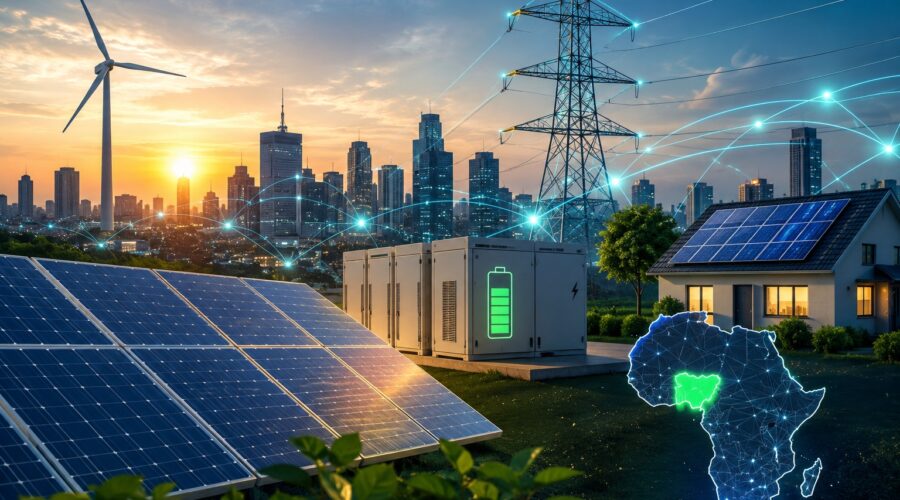
Clean Energy and Tech Is Turning Nigeria’s Energy Crisis Into a Powerful Opportunity
Nigeria is approaching a powerful new era in which clean energy and technology are no longer two distinct businesses. They are merging into a single explosive movement that is swiftly changing how businesses work, how startups raise finance, how homes use electricity, and how Africa’s digital economy will fare over the next decade.
What was previously viewed as an “alternative power solution” is now a dominant economic force. This is no longer merely an environmental discussion. It is now a survival conversation, a business conversation, and an enormous startup opportunity.
Ever since, Nigeria’s electrical issue has quietly emerged as one of Africa’s most promising entrepreneurial chances. Millions of people and companies continue to face inconsistent power supplies, increased diesel prices, fuel scarcity, and regular national grid outages. The circumstance has provided a terrible yet rewarding opportunity for inventors.
More so, as fuel prices climb, businesses are desperately looking for cheaper, more dependable alternatives. Solar energy, battery storage systems, hybrid power systems, and intelligent energy management software are helping to bridge the gap.
Nigerians’ emotional anger with blackouts has now turned into economic urgency. Shops lose money. Hospitals endanger life. Tech startups squander money on diesel. Content creators cannot work regularly. Manufacturers invest billions of dollars to power generators. This flawed system has unwittingly created a favourable environment for renewable energy companies.
According to one projection, Nigeria’s manufacturing sector will spend more than N1.11 trillion on alternative energy in 2024 alone due to inconsistent electricity supply. That astonishing figure explains why sustainable energy technology is expanding so rapidly.
Solar Adoption Battery Technology, Both Becoming Hidden Goldmine
Solar energy is no longer regarded as a luxury item for opulent estates or business headquarters. It’s quickly becoming mainstream.
Nigeria’s abundant sunlight, along with low solar equipment costs and exorbitant fuel prices, has pushed solar adoption in households, SMEs, schools, clinics, fintech offices, logistics enterprises, and rural areas.
African countries have built record levels of solar capacity in recent years, with Nigeria emerging as one of the continent’s fastest-growing renewable energy sectors. According to Reuters, Africa will add 4.5 GW of solar power by 2025, with Nigeria leading the way due to supporting policies and rising demand.
This transition is extremely emotional for Nigerians since solar energy is no longer only about “saving the environment”. It is about eliminating frustration, reducing generator noise, lowering monthly fuel costs, safeguarding businesses from power disruptions, and achieving energy independence.
Also, one of the most underappreciated themes in Africa’s energy-tech revolution is battery technology. Solar panels alone are not sufficient. The true game changer is energy storage.
Battery systems enable homeowners and businesses to store solar electricity during the day and use it at night or during outages. This provides continuous power, lowers diesel reliance, and stabilises operations.
As global battery prices continue to plummet, investors are increasingly interested in businesses focused on lithium batteries, battery swapping, battery financing, battery recycling, and energy storage infrastructure. This is especially important because Nigeria’s future digital economy would require a high level of energy reliability. AI enterprises, fintech platforms, streaming businesses, cloud infrastructure, cryptocurrency activities, and data centres cannot withstand unreliable power.
Smart grids combine artificial intelligence, sensors, software, predictive analytics, and automation to improve the efficiency of electricity flow. They help to reduce energy waste, detect failures, optimise battery consumption, and balance different power sources in real time.
PowerLabs, a Lagos-based firm, is already developing what it calls a “intelligence layer” for Nigeria’s fractured energy system. Their platform controls solar panels, generators, grid electricity, and batteries as a single responsive network
This Indicates A Huge Shift
The future of energy goes beyond hardware. The energy ecosystems of the future will be governed by software.
According to one Reddit post, “The brain of the energy grid is finally becoming more important than the hardware.”
That phrase precisely describes where the market is going, and digital energy infrastructure is becoming Africa’s new oil; perhaps the most important trend is the link between sustainable energy and digital infrastructure. This is why energy and technology businesses are working more intensively.
Recently, in Nigeria, Tetracore Energy Group collaborated with Huawei and Inspirive Technologies to construct a $400 million grid-independent Tier III data centre powered by integrated energy technology. That was one of the major signals that the future generation of African digital infrastructure may not rely solely on national grids. Instead, private energy ecosystems based on solar, batteries, AI management systems, and independent power plants may dominate the future.
The Positive And Negative Aspects
The renewable energy movement brings hope, creativity, employment, and economic development. Small firms can save operating costs. Rural villages can now get energy. Students can study consistently. Hospitals can function more safely.
Tech startups can grow faster. Manufacturing can be more efficient. Carbon emissions can be reduced. Investors can access burgeoning billion-dollar markets.
This movement is also encouraging a new generation of African entrepreneurs that see energy not as a government responsibility but as a technology problem that needs to be solved.
The growth potential is immense, negative realities and harsh challenges
But Despite the optimism, the renewable energy surge faces difficult difficulties; average Nigerians continue to face significant upfront installation charges. Poor-quality solar goods are flooding the market. Technical expertise remains insufficient. Many SMEs continue to struggle to secure financing. Battery imports are pricey. Policy inconsistency causes uncertainty. Infrastructure limitations continue to slow deployment, and there is also a risk of undue hype.
Conclusion
Clean energy and technology are no longer separate topics in Nigeria. They are merging to form an unstoppable movement that is transforming business, infrastructure, and innovation across Africa, and solar adoption is increasing as gasoline prices rise. Battery technology is becoming increasingly important because businesses want dependability.
Smart grids are emerging because traditional power networks cannot meet today’s energy demands. Digital energy infrastructure is expanding because Africa’s tech sector cannot thrive without reliable electricity.
As a result, renewable energy, artificial intelligence, software, batteries, data centres, and infrastructure have combined to create a powerful new industry with enormous economic potential.
Nigeria’s electricity problem is unquestionably awful. However, amid that catastrophe, an exceptional chance arose. The startups, investors, engineers, creators, and innovators who address Africa’s energy difficulties may one day create the continent’s next generation of billion-dollar businesses.
Related Posts

Political Dynamics, Global Realignment: What Tola Adeyemi Told CEOs at FNCCI-KPMG Luncheon Series 6
As Nigeria heads toward the 2027 election, KPMG’s Tola Adeyemi urges businesses to prepare for multiple outcomes, policy shifts and new opportunities.
NITDA Builders Festival 2026: Smart Way to Unlock Startup Opportunities
NITDA Builders Festival 2026 offers Nigerian startups a path to ₦3bn in potential investment and pilot contracts by connecting real solutions with institutions.

Nigeria’s Internet Traffic: The Essential Growth Drivers Behind a 168% Surge
Nigeria’s internet traffic surged 168% in three years. Discover the key drivers behind the growth and what it means for businesses, SMEs and entrepreneurs.

Konga And Defence Headquarters Launch Nationwide Discount Scheme for Serving, Retired And Veteran Military Personnel
Konga and Defence Headquarters launch a nationwide discount scheme giving serving, retired and veteran military personnel access to essential goods at reduced prices.
Askya Offers African AI Startups Up To $200,000 In Investment Through New Growth Platform
Askya Investment Partners has launched a six-week AI Growth Platform for 10 African startups, offering zero-equity participation, business support and potential investment of up to $200,000