

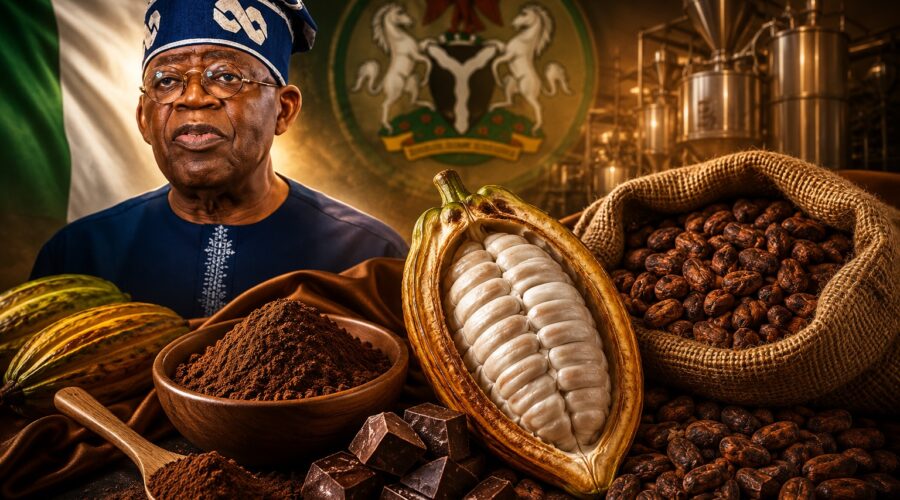
World’s Fourth-Largest Cocoa Producer, Nigeria, Bans The Export Of Raw Cocoa Beans
On July 14, 2026, President Bola Ahmed Tinubu, represented by Senator Abubakar Kyari, Minister of Agriculture and Food Security, announced that Nigeria would no longer export raw cocoa beans while buying pricey finished chocolate products.
For decades, Nigeria has exported millions of dollars in raw cocoa beans to international markets, only to import finished chocolate and cocoa-based products at much higher costs. That long-standing cycle is about to end when the Federal Government unveiled a historic policy that will prohibit the export of raw cocoa beans in favour of local processing and value addition. The decision is being praised as one of the most ambitious agricultural industrialisation initiatives in recent years, and it marks a significant shift in Nigeria’s strategy for participating in the multibillion-dollar global cocoa market.
The declaration was made during the Cocoa Value Addition Summit 2026, held in Abuja with the theme “From Bean to Brand: The Bean in My Hand, The Brand in Our Future”.
The summit brought together government officials, cocoa-producing states, investors, processors, financial institutions, development partners, and international stakeholders to map out a new course for Nigeria’s cocoa industry.
The Federal Government of Nigeria plans to produce and export finished cocoa products such as chocolate, cocoa butter, cocoa powder, beverages, and other high-value derivatives rather than just raw agricultural commodities. The President delivered one of his most powerful messages in a statement that has swiftly become the policy’s defining quote.
He emphasised that this was not just another government promise, but rather a determined industrial strategy targeted at improving Nigeria’s manufacturing capacity, expanding exports, creating jobs, and strengthening the country’s foreign exchange revenues.
Nigeria Is Making Historic Decision By Developing a “Bean-to-Brand” Economy
Although Nigeria is one of the world’s leading cocoa producers, the vast majority of its cocoa is traditionally exported as raw beans. Once exported, countries with advanced manufacturing industries process the beans into chocolate, cocoa butter, cosmetics, pharmaceuticals, and other premium products before reselling them to international consumers at substantially higher costs.
This means that foreign processors have historically received a larger percentage of earnings than Nigerian farmers, manufacturers, and exporters. The Federal Government thinks that this paradigm has stopped Nigeria from realising the full economic worth of one of its most significant agricultural commodities.
The primary goal of the policy is value addition; instead of exporting raw cocoa, Nigeria wants domestic companies to transform it into finished items before exporting.
Tinubu stated that, while Africa supplies over 70% of the world’s cocoa, it receives only a small fraction of the more than $130 billion global chocolate industry since processing, branding, and manufacturing take place elsewhere.
“Nigeria will no longer export raw beans while importing finished value. We will grind our beans at home, we will press our butter at home, we will make our chocolate at home, brand it at home, and sell it to the world on our own terms.
And let no one mistake this for rhetoric. The proof is already rising out of the ground. At Sagamu, Nigerian investors are building a 70,000-tonne processing facility, the largest this nation has ever seen. Our national grinding capacity has crossed 120,000 tonnes a year, and it’s growing.
The Bank of Industry stands ready as a co-convener of this summit, with capital prepared for deployment into bankable projects.“
Bola Ahmed Tinubu
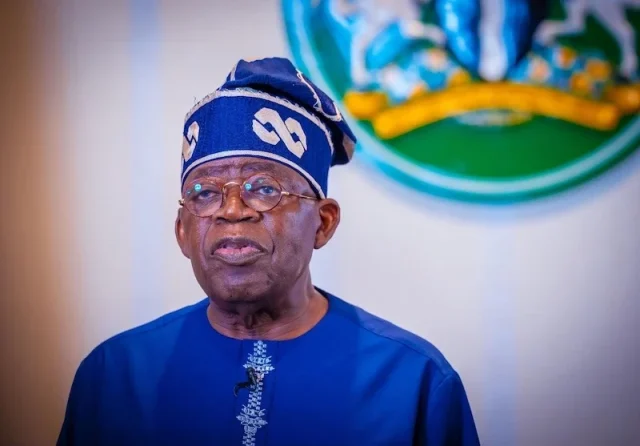
The President stated that over 300,000 Nigerian farming families harvest cocoa on over 1.4 million hectares, making the country one of the world’s major producers, accounting for approximately six to seven percent of worldwide output. He further stated that cocoa earned more than N3 trillion in export earnings when global prices hit $10,000 per tonne but that exporting raw beans was no longer viable.
“There has never been a moment when processing at origin made more commercial sense than it does today. Nigeria is not asking for charity. Nigeria is offering the best open position in the global food economy. We are open for business, and we are serious.” – Bola Ahmed Tinubu
Senator John Owan Enoh, Minister of State for Industry, described the conference as a significant step in implementing the Nigerian Industrial Policy, which aims to increase domestic production and reduce reliance on raw commodity exports.
“We are no longer interested in exporting anonymous sacks.“
“We’re interested in exporting value. If Nigeria actually wants to establish a trillion-dollar economy, it cannot continue to export raw resources while other countries profit from their processing and branding.”
John Owan Enoh

Dr Olasupo Olusi, Managing Director and CEO of the Bank of Industry, stated that the bank was ready to provide long-term financing to expedite investments across the cocoa value chain.

“We are not approaching cocoa as a lending programme; we are building an industrial ecosystem.“
“Our goal is to finance everything from nurseries and cooperatives to grinding plants, ingredient factories, packaging lines, and chocolate manufacturers.”
Olasupo Olusi
He said that the BOI will disburse more than N164 billion to over 3,500 agro-processing and food enterprises by 2025 and that it has received a €60 million credit line from the European Investment Bank to help the cocoa sector.
Ransford Abbey, Chief Executive of the Ghana Cocoa Board, delivered a goodwill message calling for stronger regional cooperation among Africa’s leading cocoa-producing nations, noting that the continent produces 75 – 77 percent of the world’s cocoa but earns less than 10 percent of the global chocolate industry’s value.

“We do not need charity. We deserve equity.““The time has come for Africa to process its own wealth, protect its farmers and negotiate with one voice in the global cocoa market.”
Ransford Abbey
The government hopes that this strategy will enable Nigeria to transcend beyond commodity trading and become a global manufacturing powerhouse for cocoa products.
The Sagamu Processing Facility Marks Nigeria’s New Direction
To show that the programme is supported by actual industrial investments, President Tinubu highlighted the construction of a major cocoa processing facility in Sagamu, Ogun State. According to the President, Nigerian investors have erected the country’s largest cocoa processing facility, with a capacity of 70,000 tonnes.
The project is expected to greatly boost Nigeria’s domestic processing capabilities while reducing reliance on international producers. The facility also demonstrates that private investors are beginning to respond to the government’s industrialisation strategy.
The federal government believes that the new policy has the potential to be a major driver of economic growth. Nigeria hopes to gain far more revenue from processed cocoa products than it does from raw bean exports.
Additional advantages include enhanced industrial growth, higher foreign exchange earnings, higher tax revenues, broader export diversification beyond crude oil, and a more resilient non-oil economy. The government also expects that local processing will boost the packaging, logistics, transportation, warehousing, food production, and retail industries, resulting in multiplier benefits across the economy.
Conclusion
The legislation also comes at a time when international cocoa markets are shifting toward sustainability, traceability, and environmental compliance. European rules, such as the EU Deforestation Regulation, require exporters to verify that cocoa is sustainably obtained.
To remain competitive in premium export markets, Nigeria’s domestic processing industry must be expanded in tandem with tighter traceability systems, quality control, and sustainable farming methods.
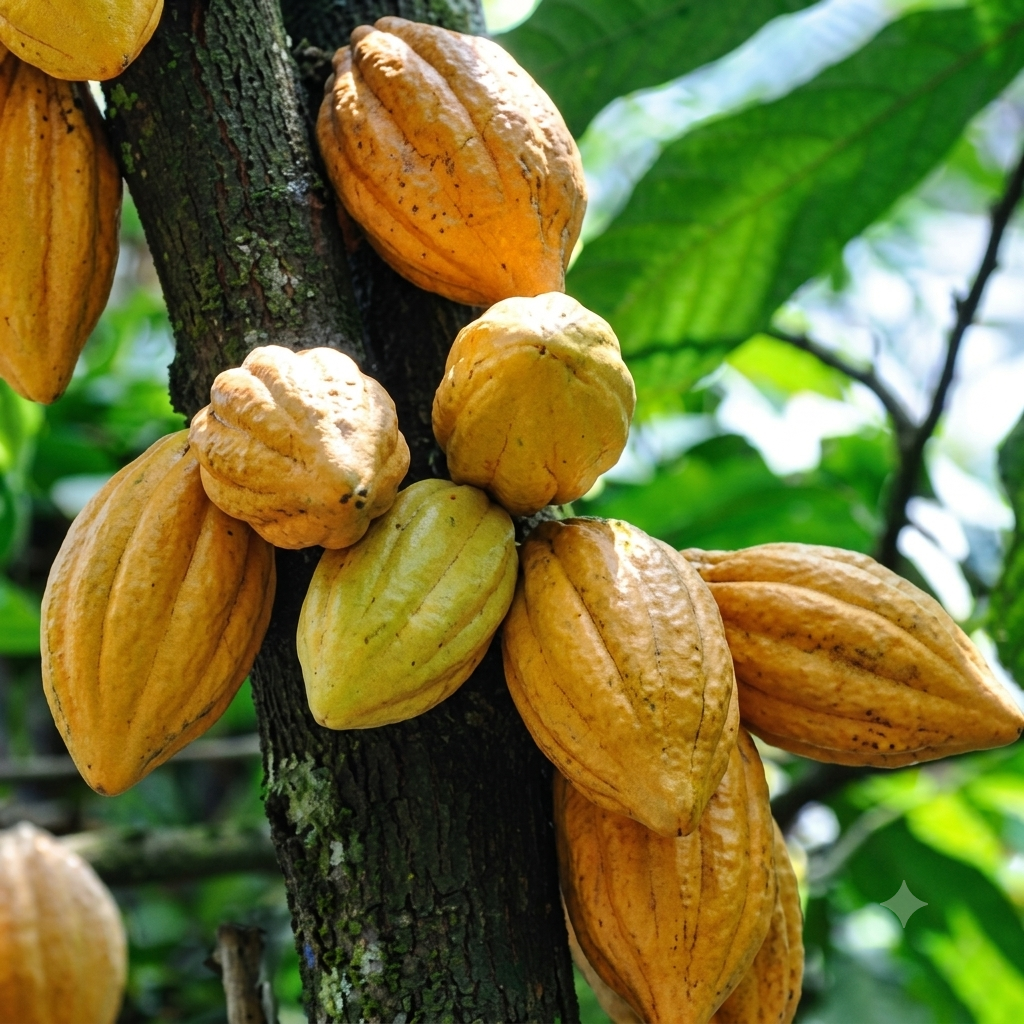
Nigeria’s decision to ban the export of raw cocoa beans is one of the country’s most significant agricultural policy changes in recent years. Rather than continuing to be solely a supplier of raw commodities, the government intends to reposition the country as a competitive producer of finished cocoa products with higher economic value.
The conference concluded with the acceptance of the Cocoa Value Addition Accord and the planned Abuja Declaration, which aim to speed domestic cocoa processing, attract investment, increase farmer incomes, and strengthen collaboration among Africa’s key cocoa-producing countries.
The Tinubu administration stated that reversing Nigeria’s reliance on raw cocoa exports through industrialisation and value addition is critical to its goal of building a $1 trillion economy while increasing non-oil exports, creating jobs, and increasing foreign exchange earnings.
Follow Amebopreneur for the latest on Nigeria’s tech ecosystem, startup funding opportunities, and the cross-border partnerships shaping Africa’s innovation future.
Related Posts

HP and UpSkill Universe Launch Free AI Training for 55,000 African SMEs
HP and UpSkill Universe are giving 55,000 African SMEs free AI training—helping entrepreneurs turn AI from hype into practical business growth.

Meta, 3MTT, NCAIR & RAIN Partner to Accelerate AI Skills and Innovation in Nigeria
Meta, 3MTT and RAIN launch AI Academy Nigeria to equip developers with AI skills, build startups and turn Nigeria’s growing AI talent into global innovation.

Nomba and Synafare Commit ₦2 Billion to Solar Financing for 300 Nigerian SMEs
Nomba and Synafare are committing ₦2 billion to solar financing, helping 300 Nigerian SMEs cut energy costs, boost productivity and power their growth.

Ghana’s Wobil Technologies Is Putting Solar to Work in Rice Farming, And Fighting Africa’s Post-Harvest Crisis
Ghana’s Wobil Technologies is using solar-powered machinery to cut rice losses, lower farming costs and help smallholder farmers keep more of every harvest.

Uber’s Exited Nigeria, Just Weeks After It Acquired ‘Delivery Hero’ (Glovo) for €13 Billion
Uber has exited Nigeria after 12 years, just weeks after launching a €13 billion bid for Delivery Hero, Glovo’s parent. One exit, one massive global gamble.