

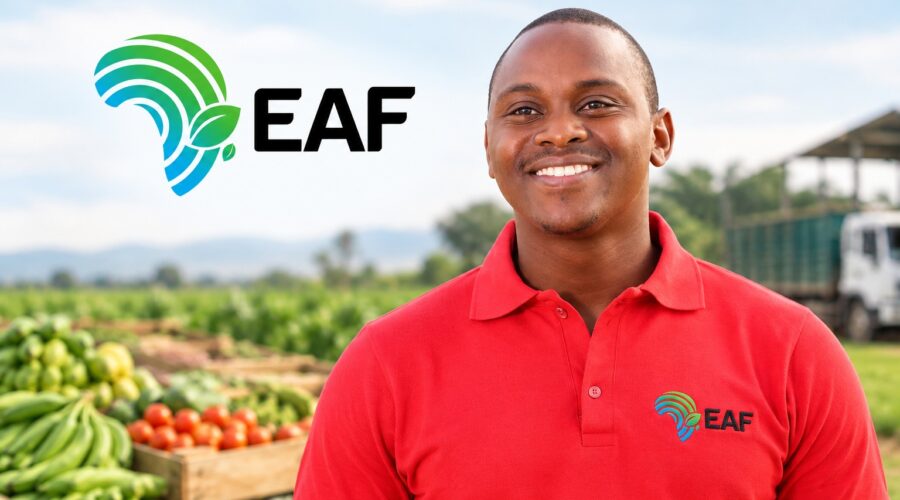
East Africa Foods Secures $40 Million to Power a Food Revolution Across Tanzania and Kenya
Tanzania-based agritech and food distribution company East Africa Foods (EAF) has secured approximately $40 million in funding to expand its physical and digital food supply-chain infrastructure, strengthen its operations in Tanzania and support its expansion into Kenya.
Announced on October 7, 2026, by the Private Infrastructure Development Group (PIDG), the investment combines a $26 million Series B equity round with additional financing and reinvestment from existing shareholders. The funding is expected to help the company expand its processing, storage and logistics capacity while improving how agricultural produce moves from smallholder farmers to urban retailers.
All About East Africa Foods
Founded in 2013 to address one of sub-Saharan Africa’s most persistent economic inefficiencies, East Africa Foods operates an integrated AgriTech and agri-logistics platform in Kenya and Tanzania.
The company is headquartered in Dar es Salaam and connects smallholder farmers with urban retailers through produce aggregation, storage, processing and distribution. EAF sources directly from more than 28,000 registered smallholder farmers and supplies more than 10,000 urban retailers, with its platform covering aggregation, grading, storage, processing and distribution, and produce also reaching consumers through its Onja and Golden Banana brands.
The company was founded and is currently led by Elia Timotheo, who serves as its Founder and Chief Executive Officer.
Tackling a Devastating, Costly Problem
This funding arrives to confront a painful and persistent crisis that has quietly drained value out of East Africa’s food system for years. In Kenya and Tanzania, up to 40 percent of food produced is lost before it ever reaches a consumer. That staggering figure represents wasted labour, wasted land, and wasted income for farmers who can least afford the loss.
Founder Elia Timotheo put the human cost of this crisis in stark, emotional terms. He said bluntly,

“A third of what our farmers grow never reaches anyone’s table, the issue not as a failure of farming itself, but as a solvable infrastructure gap, stating that the problem is not a farming problem: it is an infrastructure problem, and it is solvable.”
Elia Timotheo
The encouraging news is that EAF’s model appears to already be delivering real, measurable results. EAF aims to reach 100,000 smallholder farmers over the next few years, cutting food waste across its network by a third. The company’s own supply chain has already cut post-harvest losses by about one-third, a result it attributes to improved aggregation, storage and transport rather than to insufficient production.
Where the Money Will Go
This fresh capital injection is earmarked for tangible, on-the-ground infrastructure rather than abstract growth metrics. PIDG’s investment is enabling EAF to construct new collection and fulfilment centres, milling, curing, and ripening facilities, as well as to deploy a new fleet of long-haul trucks.
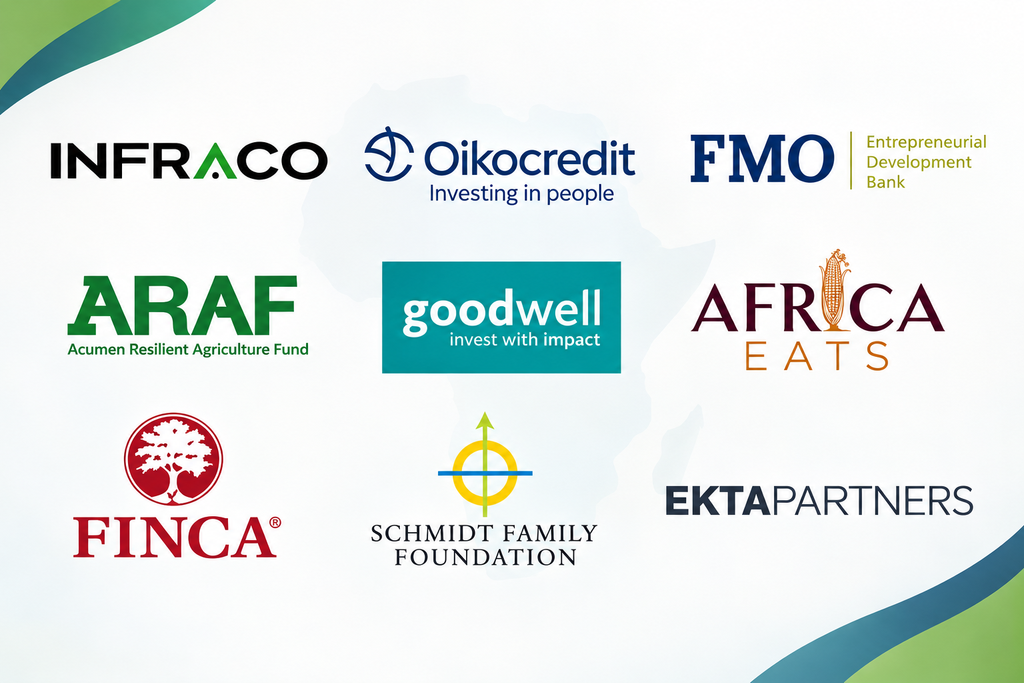
According to PIDG, the $26 million Series B round was led by PIDG through InfraCo, with participation from Oikocredit and FMO, the Dutch Entrepreneurial Development Bank. Existing shareholders ARAF, Goodwell, Africa Eats and FINCA also reinvested. The broader financing includes debt funding from the Schmidt Family Foundation. EKTA Partners served as the exclusive financial adviser.
The remaining approximately $14 million represents other elements of the broader financing package. The individual contributions and exact allocation of that remainder have not been fully itemised in the main announcement.
The Tanzania-based company will use the funding to expand processing, storage and logistics capacity, develop its digital platform and enter new markets, including Kenya.
Beyond physical assets, the digital backbone of the operation is also set to expand significantly. The investment will also expand the digital systems that link farmers, branches, and retailers, built first in Tanzania, to each new market.
East Africa Foods targets a network of 100,000 smallholder farmers across Tanzania and Kenya, with women expected to represent roughly 45 percent of the beneficiaries. That inclusive target adds a meaningful social dimension to what is otherwise a hard-edged infrastructure and logistics story.
The Investors And Partners

The partners behind this raise have been vocal about why they believe this investment matters so deeply for regional food security.
Claire Jarratt, PIDG’s Head of Investment Management for InfraCo, explained that strengthening EAF’s presence in Tanzania, and expanding its efficient, data-driven business into Kenya, will enable the company to mobilise future finance into this vital sector, underpinning improved food security across the region.
Peter Byrde, Director for Private Equity at FMO, offered a similarly optimistic assessment grounded in direct experience with the company.
He said that through the partnership with East Africa Foods, investments in logistics, storage, processing, and digital solutions can reduce food loss, improve market access, and increase income opportunities for smallholder farmers, adding that this is precisely why FMO is pleased to support EAF’s next phase of growth.
Conclusion
East Africa Foods’ approximately $40 million capital raise marks a genuinely significant and encouraging development for agricultural infrastructure across Tanzania and Kenya.
Backed by heavyweight development finance players including PIDG’s InfraCo, Oikocredit, FMO, and The Schmidt Family Foundation, and led by founder Elia Timotheo’s clear-eyed conviction that post-harvest loss is an infrastructure problem rather than a farming failure, the company is positioning itself to tackle one of East Africa’s most costly and persistent economic inefficiencies.
With ambitions to reach 100,000 smallholder farmers, cut food waste by a third, and expand confidently into Kenya even as a once-dominant competitor falters, East Africa Foods appears determined to prove that resilient, technology-enabled food systems are not just a hopeful ideal but an achievable, investable reality.
There are encouraging signs that the model is resonating with serious, long-term development finance institutions rather than short-term speculative capital. By improving supply chain efficiency and creating value across the food system, EAF is positioned to deliver lasting impact, sustainable growth, and attractive financial returns as it scales across East Africa.
Follow Amebopreneur for the latest on Nigeria’s tech ecosystem, startup funding opportunities, and the cross-border partnerships shaping Africa’s innovation future.
Related Posts

Political Dynamics and Global Realignment: Lessons for Nigerian CEOs
At the 2026 FNCCI CEO Luncheon, business leaders explored how political uncertainty, global realignment and economic reforms are shaping business resilience in Nigeria.
Africa Is Building Toward the Next Trillion-Dollar Digital Economy as AfriTECH 6.0 Returns to Lagos
AfriTECH 6.0 returns to Lagos on November 13, 2026, bringing African tech leaders together to tackle the next $1 trillion digital economy opportunity.

World Bank Raises Africa’s 2026 Growth Forecast to 4.3%, Urges Investment in Artificial Intelligence
The World Bank has raised Africa’s 2026 growth forecast to 4.3% and is urging low-cost AI adoption to supercharge small-business productivity, agriculture, and education across the continent.
Nigeria’s Business Future: How Businesses Can Survive Uncertainty
As Nigeria approaches the 2027 election, discover how businesses can navigate uncertainty, manage rising costs, adopt AI wisely and prepare for economic and policy shifts.
African Startups Raise $260.3 Million In September 2026, But Funding Remains Concentrated Among A Handful Of Winners
African startup funding hit $260.3 million in September 2026 across 54 deals, down 40% from August but up 88% year-on-year, as Odyssey Energy Solutions, Paymob, and Arc Ride dominate a highly concentrated month.