


World Bank Raises Africa’s 2026 Growth Forecast to 4.3%, Urges Investment in Artificial Intelligence
A Stronger, More Resilient Africa
A genuinely encouraging piece of economic news has just emerged from Nairobi, and it carries an exciting, practical twist that could reshape how small businesses across the continent operate. Africa’s economic outlook has improved, but the next phase of growth may depend on how effectively the continent adopts artificial intelligence (AI) to solve real-world problems.
The World Bank announced that economic growth in Sub-Saharan Africa is projected to rise to 4.3% in 2026, up from 4.1% in 2025. The revised forecast is 0.3 percentage points higher than the institution’s April 2026 projection. Alongside the improved outlook, the bank called for investment in the foundations needed to make AI more accessible and productive across African economies.
The announcement was reported by Reuters on October 6, 2026.
This upgraded forecast is not an isolated bright spot either. Growth forecasts were lifted for nearly three-quarters of countries, including Zambia, Nigeria, Ethiopia, and Angola, as reforms and better economic management begin yielding results. That is a genuinely impressive and hopeful signal of broad-based resilience rather than a narrow, isolated success story Africa
The Sobering Reality Beneath the Good News
Yet, the picture is far from uniformly rosy, and the World Bank was careful not to gloss over the harder truths. Faster growth is not yet translating into substantial poverty reduction. Per capita income growth is expected to rise only to 1.8% this year from 1.6% in 2025. That is a frustratingly modest improvement given the stronger headline growth figure, and it underscores a painful, persistent gap between macroeconomic progress and the lived reality of ordinary households.
Additional vulnerabilities continue to weigh on the region as well. The region’s debt-to-GDP ratio has stabilised at around 57%, but roughly half of countries are in default or struggling to service their debts, and the region also faces risks from prolonged conflict in the Middle East, El Niño, high interest rates in advanced economies, and costly debt servicing.
The increase from 4.1% to 4.3% represents a modest improvement in the region’s economic outlook. It should not be interpreted as a 4.3% growth rate for every African country, nor as evidence that all industries are expanding at the same pace.
The forecast covers Sub-Saharan Africa, rather than the entire African continent as a single economic region. Country-level growth rates vary according to domestic policies, commodity exposure, investment, inflation and other economic conditions.
The bank also warns that the outlook remains vulnerable to geopolitical tensions, trade uncertainty, tighter financing conditions, climate-related disasters and insecurity. Rising global fuel, fertiliser and food prices are additional concerns.
The World Bank cited resilience despite the Iran war’s energy market impact. These are real, destabilising threats, and they are a sober reminder that optimism must be tempered with caution.
What the World Bank’s Chief Economist Is Saying
Andrew Dabalen, the World Bank‘s chief economist for the Africa region, offered a clear-eyed and encouraging assessment of the continent’s trajectory.
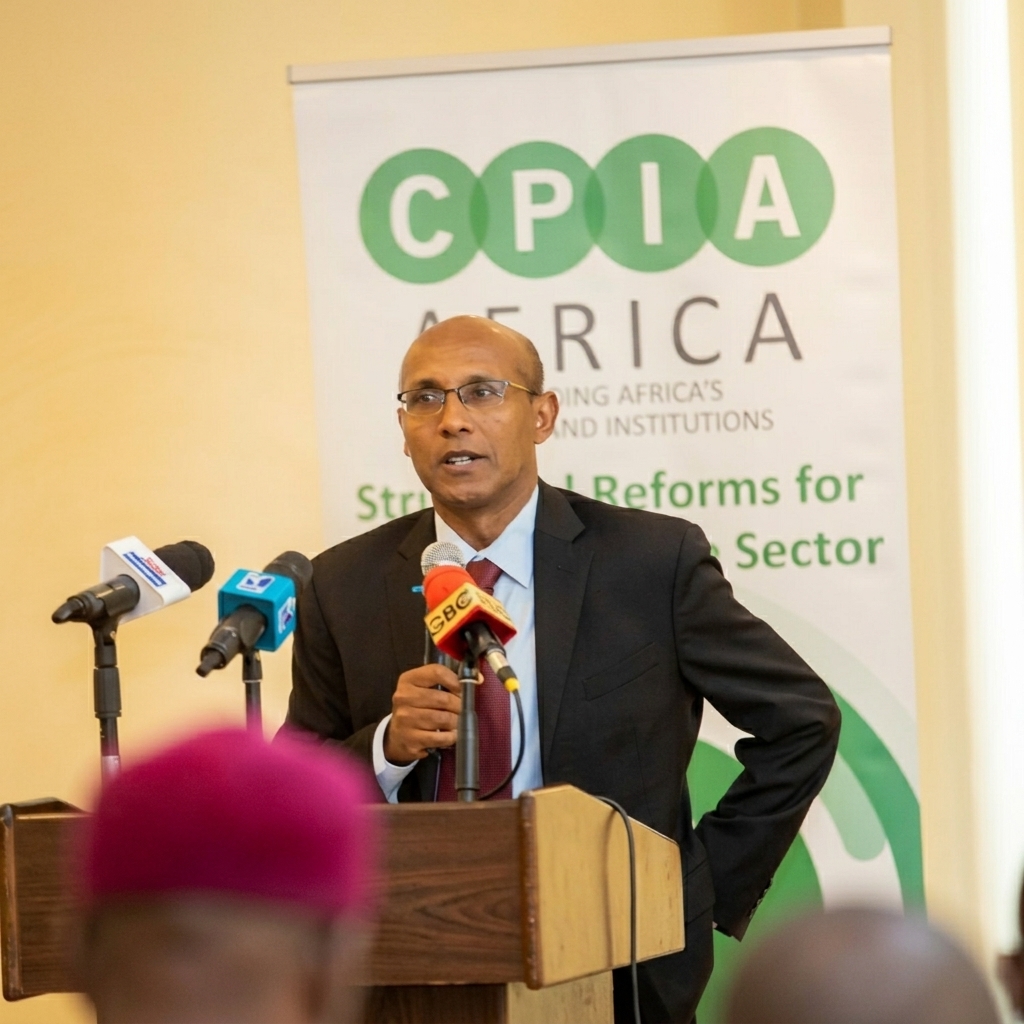
“Economic activity in the Sub-Saharan Africa region continues to show remarkable resilience, with growth forecasts raised for nearly three-quarters of the countries in the region.”
Andrew Dabalen
Dabalen also delivered a pragmatic, refreshingly realistic message on artificial intelligence, one that should resonate powerfully with resource-constrained small businesses. He pointed out that Africa doesn’t need to go head-to-head with wealthier nations in creating costly, cutting-edge AI systems.
He urged governments to focus on AI investments to boost economic growth rates, pointing to massive investments in countries such as the US that lift global growth, while noting that while Africa lacks the infrastructure and capital to compete with larger economies on AI, it can still benefit from practical, low-cost applications on affordable devices.
So, Can AI Really Help African SMEs Without Breaking the Bank?

This is the central, exciting question, and the World Bank’s answer is a confident yes. The pathway is simply about adopting existing, affordable tools that run on devices they likely already own.
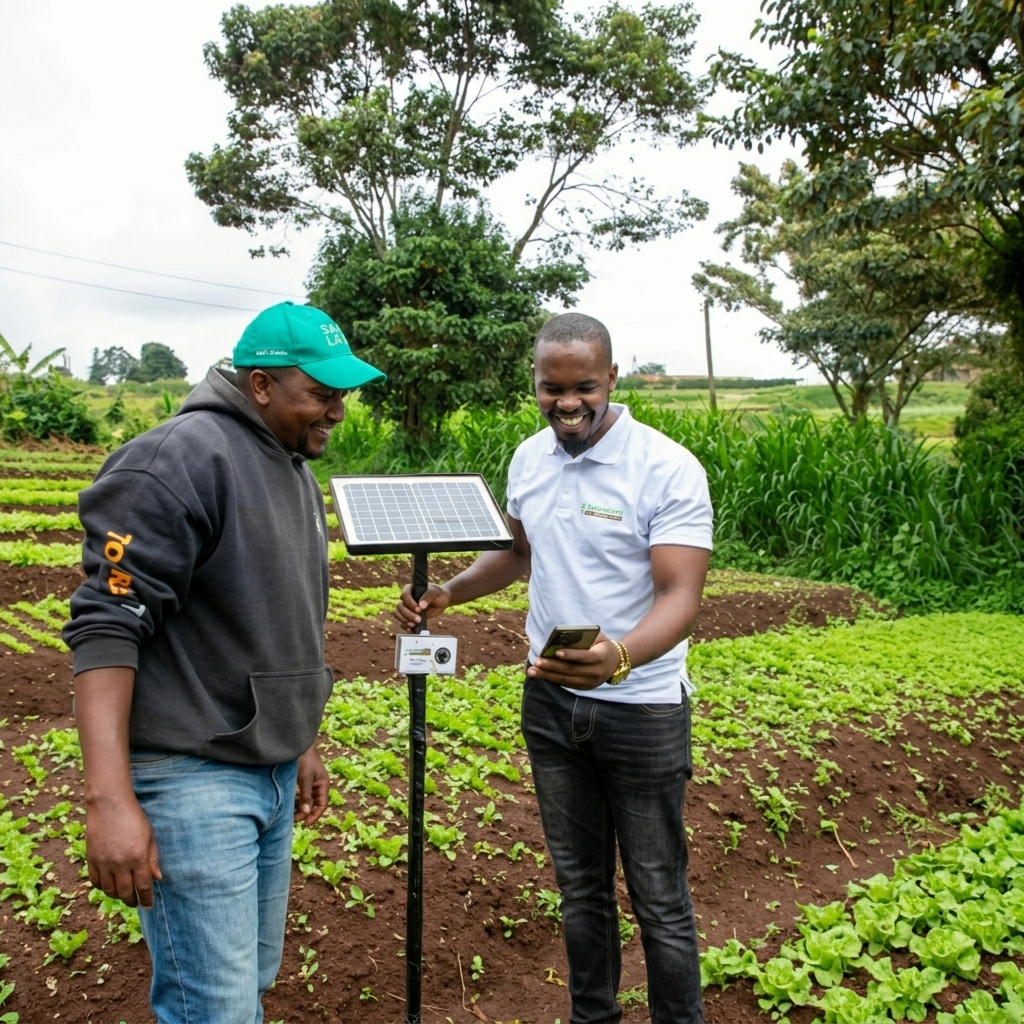
Examples include AI tools that support student learning, help farmers detect and manage livestock diseases, and automate tasks such as accounting for small businesses.
Additional examples include AI tools that support student learning and help farmers monitor and manage livestock diseases.
For a small business owner juggling bookkeeping, inventory, and customer service with limited staff, that last example, automated accounting, is a particularly powerful and liberating proposition.
It means productivity gains without the painful, often prohibitive cost of hiring specialised technology teams or purchasing enterprise-grade software.
This is low-cost empowerment at its most practical, and it represents a genuine opportunity for cash-strapped SMEs to compete more effectively.
The Infrastructure Africa Still Needs to Build
Of course, affordable AI adoption does not happen in a vacuum, and the World Bank was candid about the foundational work still required. Shared data centres and stronger data protection laws could help accelerate AI adoption.
The World Bank urged governments to invest in practical AI applications, stronger data infrastructure, and data protection to boost productivity, jobs, and opportunities.
It urged governments to adopt artificial intelligence to enhance productivity and create job opportunities.
This is an important and admittedly challenging piece of the puzzle.

Without reliable shared infrastructure and robust legal protections around data, even the most affordable AI tools risk being underused, misused, or simply inaccessible to the small businesses that need them most. It is an urgent call to action for policymakers, not just entrepreneurs.
Nigeria and the Wider Regional Picture
Nigeria features prominently among the countries benefiting from this upgraded outlook.
The World Bank has upped its economic growth forecast for Sub-Saharan Africa in 2026 to 4.3%, a slight increase from the 4.1% it projected back in April, with countries like Nigeria, Zambia, Ethiopia, and Angola seeing their growth forecasts improved, with the World Bank crediting this boost to economic reforms and better management practices.
The World Bank’s latest projections paint a mixed picture: while Africa is growing faster than expected and Nigeria is among the economies reaping the benefits of this positive trend, the real challenge lies in turning that growth into actual jobs, increased incomes, and improved living standards.

That final point is the crux of the entire story; impressive growth figures mean little if they fail to translate into tangible improvements for ordinary workers and small business owners.
The World Bank’s guidance deliberately spans three interconnected sectors that touch the daily lives of millions of Africans. In education, low-cost AI tools can support struggling students with personalised learning assistance. In agriculture, AI applications can help farmers detect livestock disease early, potentially saving entire herds and protecting fragile incomes.
And in small businesses, automated accounting and administrative tools can free up precious time and resources that owners can redirect toward growth, customer service, and innovation. Taken together, these use cases paint a hopeful, grounded vision of AI as a practical equaliser rather than an exclusive privilege reserved for wealthy economies.
Why the World Bank Is Urging African Countries to Invest in AI
The bank’s Africa Economic Update: Building AI Readiness examines how artificial intelligence could help address persistent productivity challenges, gaps in human capital and weaknesses in service delivery.
Rather than encouraging every African country to compete with the world’s largest technology companies by developing expensive frontier AI systems, the report emphasises adopting existing tools and adapting them to local needs.
A Nigerian fashion retailer does not need to train its own large language model to improve customer service.
A food distributor does not need to build a proprietary AI forecasting system from the ground up. A small accounting firm does not need to construct its own advanced document-processing platform before it can benefit from AI.
Existing AI-enabled services can help with writing, customer enquiries, document analysis, inventory planning, marketing and other routine business tasks. The key is to select tools that solve actual business problems rather than investing in technology simply because it is fashionable.
Small businesses often operate with limited staff and tight budgets. Owners may be responsible for sales, customer service, marketing, stock management, administration and financial record-keeping at the same time.
AI-powered assistants can help draft emails, prepare product descriptions, summarise documents, develop marketing ideas and organise routine information. These capabilities can reduce the time spent on repetitive tasks, allowing business owners and employees to focus on sales, customer relationships and business development.
Actual savings depend on the quality of the tool, the task being automated and the amount of human review required.
Marketing is another area where SMEs may benefit without investing in custom software.
A business can use AI tools to draft social media captions, generate campaign ideas, adapt product descriptions for different platforms and analyse customer feedback. With suitable human oversight, these tools can help smaller companies maintain a more consistent online presence.
For Nigerian businesses competing for attention on Instagram, TikTok, Facebook, WhatsApp and search engines, that can be valuable.

However, automatically generated content does not guarantee sales. Businesses still need accurate information, a clear brand identity, attractive products, good customer service and a strategy that reflects local buying behaviour.
Many small businesses collect information but lack the time or expertise to analyse it properly.
AI-assisted data analysis can help organise sales records, compare product performance, identify recurring customer complaints and summarise cash-flow patterns. Some tools can also assist with spreadsheet formulas and basic forecasting.
The quality of the result depends on the quality of the underlying information. AI can misinterpret incomplete records or produce inaccurate conclusions, so important financial decisions should be checked against the original data.
Agriculture, A Major Opportunity for AI in Africa
Agriculture is one of the areas highlighted in the World Bank’s discussion of practical AI applications.
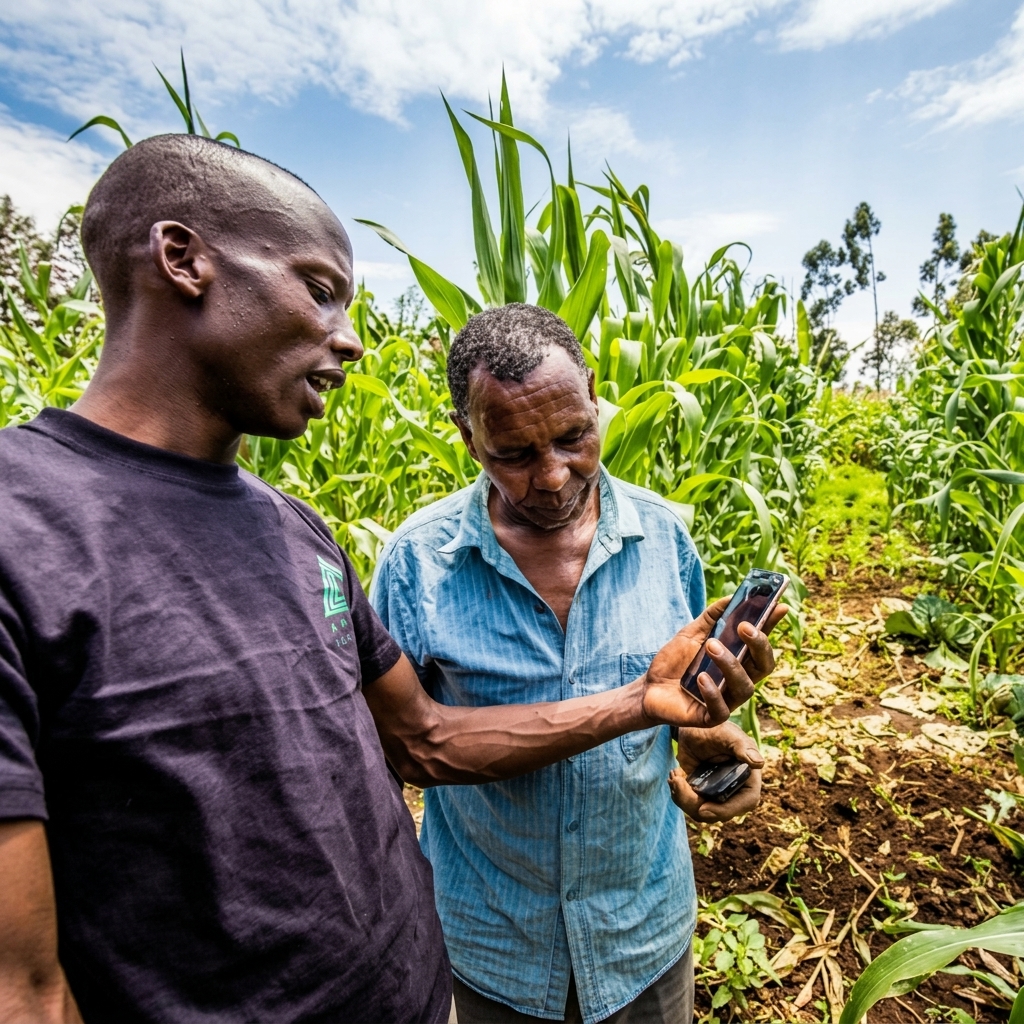
AI-supported services could help farmers and agricultural businesses interpret weather information, identify potential crop diseases, improve planting decisions and plan when to transport produce to market. The usefulness of these services depends on whether the tools have reliable local information and are suitable for the crops, languages and conditions involved.
For agricultural SMEs, the benefits could extend beyond farming itself.
Produce aggregators, food processors, distributors and retailers may use digital forecasting to estimate demand, coordinate deliveries and reduce avoidable spoilage. Such applications could improve the efficiency of the entire supply chain.
However, AI cannot replace physical infrastructure. Farmers still need reliable roads, storage, electricity, affordable connectivity and access to markets. Digital predictions are of limited value when businesses cannot transport or preserve their produce.
The World Bank’s emphasis on infrastructure alongside AI investment is therefore particularly relevant to African agriculture.
Education and Skills
The bank also identifies education and human capital as important areas where AI could improve productivity and service delivery.

AI-enabled learning tools can help students practise skills, receive explanations and access learning materials. Teachers may use them to prepare lessons or develop exercises, while businesses can use AI-assisted training to help employees learn software, communication and other job-related skills.
For SMEs, this could make some forms of staff training more accessible.
Nevertheless, AI-generated educational material can contain errors, and automated tutoring does not replace qualified teachers or practical experience. Effective implementation requires appropriate supervision, reliable information and attention to unequal access to technology.
African countries must also ensure that workers acquire the digital skills needed to use AI productively rather than being excluded because of their education, location or income.
Conclusion
The World Bank’s decision to raise Africa’s 2026 growth forecast to 4.3 percent is a genuinely encouraging development, reflecting real resilience and reform across a majority of the continent’s economies, including Nigeria, Zambia, Ethiopia, and Angola. Yet the accompanying warning is equally important: growth alone is not translating into meaningful poverty reduction, and per capita income gains remain frustratingly slow.
Within this mixed picture lies a powerful opportunity. As chief economist Andrew Dabalen made clear, African SMEs do not need to shoulder the enormous cost of building advanced, homegrown AI systems to benefit from the technology.
Affordable, practical AI tools already exist, and when paired with stronger data infrastructure and firmer data protection laws, they could become one of the most accessible and transformative productivity boosts available to small businesses across the continent.
AI tools are not automatically accurate. They can invent facts, misunderstand context, miscalculate figures or generate unsuitable advice.
Businesses that rely on AI without verification may make costly mistakes. Those that use it as an assistant, while retaining human responsibility for important decisions, are better positioned to benefit.
The opportunity is real, the tools are increasingly within reach, and the responsibility now falls on both governments and entrepreneurs to seize this moment before it slips away.
Follow Amebopreneur for the latest on Nigeria’s tech ecosystem, startup funding opportunities, and the cross-border partnerships shaping Africa’s innovation future.
Related Posts
Political Dynamics and Global Realignment: Lessons for Nigerian CEOs
At the 2026 FNCCI CEO Luncheon, business leaders explored how political uncertainty, global realignment and economic reforms are shaping business resilience in Nigeria.

East Africa Foods Secures $40 Million to Power a Food Revolution Across Tanzania and Kenya
Tanzania’s East Africa Foods has raised approximately $40 million to expand its food supply-chain infrastructure, cut devastating post-harvest losses, and reach 100,000 smallholder farmers across East Africa.
Africa Is Building Toward the Next Trillion-Dollar Digital Economy as AfriTECH 6.0 Returns to Lagos
AfriTECH 6.0 returns to Lagos on November 13, 2026, bringing African tech leaders together to tackle the next $1 trillion digital economy opportunity.
Nigeria’s Business Future: How Businesses Can Survive Uncertainty
As Nigeria approaches the 2027 election, discover how businesses can navigate uncertainty, manage rising costs, adopt AI wisely and prepare for economic and policy shifts.
African Startups Raise $260.3 Million In September 2026, But Funding Remains Concentrated Among A Handful Of Winners
African startup funding hit $260.3 million in September 2026 across 54 deals, down 40% from August but up 88% year-on-year, as Odyssey Energy Solutions, Paymob, and Arc Ride dominate a highly concentrated month.