

French Week 2026: Energy Roundtable Session Explores Nigeria–France Energy Partnership
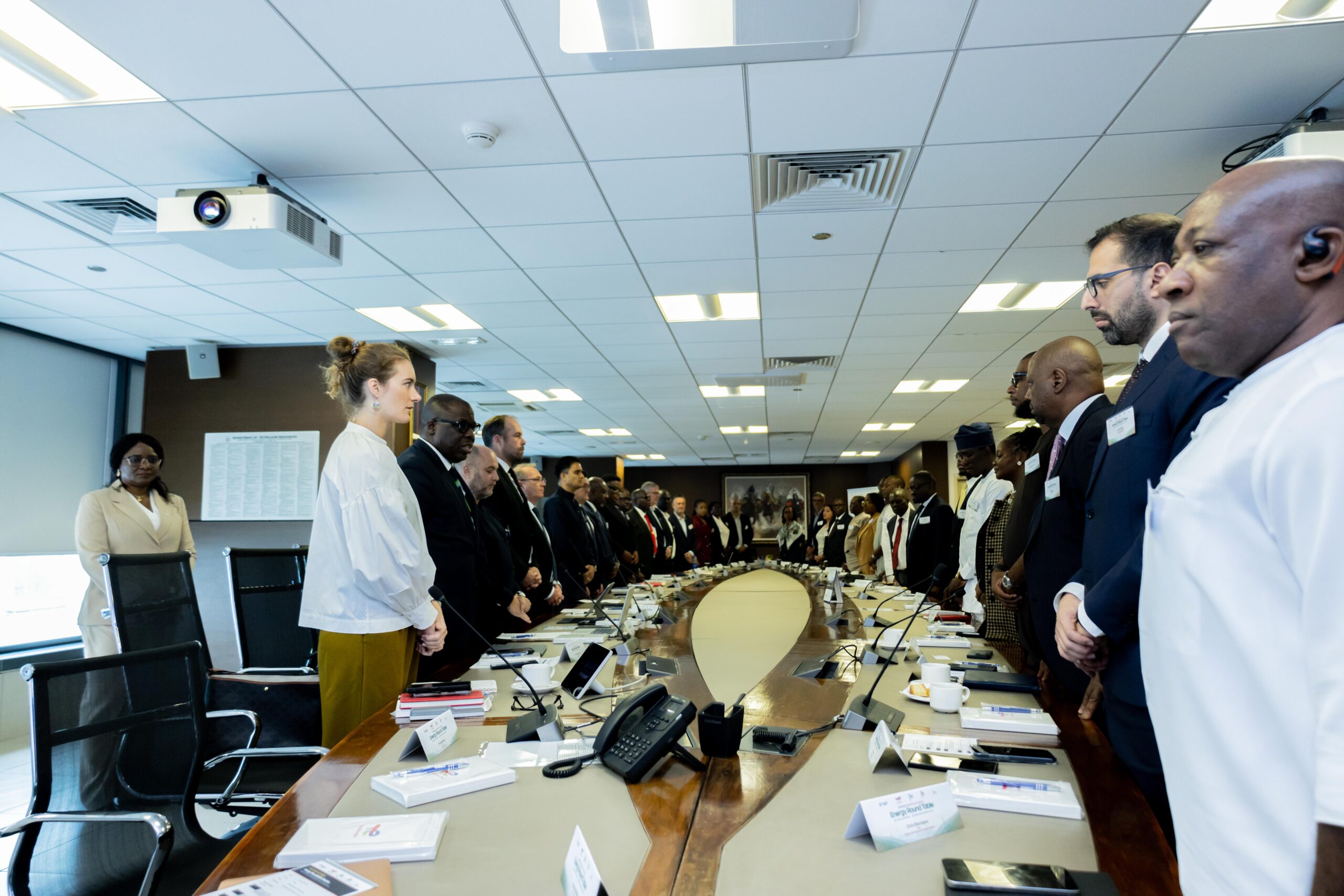
Nigeria’s energy future and France’s place in shaping it were the focus of the Energy Roundtable Session held as part of the 2026 French Week Celebration.
The Franco-Nigerian Chamber of Commerce and Industry (FNCCI) organised the session in partnership with TotalEnergies. It took place on Monday, November 2, 2026, at the TotalEnergies headquarters in Victoria Island, Lagos. Regulators, energy executives and representatives of the French business community attended. The aim was to move from principles to bankable projects across decarbonisation, domestic gas utilisation, local capacity building and commercial frameworks.
The roundtable was co-chaired by Matthieu Bouyer, Managing Director and Chief Executive Officer of TotalEnergies Nigeria, and Guillaume Niarfeix, President of the FNCCI.
A Partnership Built Over Decades
Laurent Favier, Consul General of France in Lagos, delivered the welcome address together with Bouyer and Niarfeix. All three called for closer cooperation between Nigeria and France in developing the energy sector.
Bouyer noted that TotalEnergies has operated in Nigeria for 70 years. More than 100 French companies are now active in the country, and bilateral trade reached about $4.7 billion in 2025. He called for partnerships that help Nigerian companies gain the technical expertise to take part in more complex energy projects.
Favier pointed to both the opportunity and the gap. In 2025, Nigeria’s crude oil and condensate production averaged 1.77 million barrels per day, and gas supply stood at 7.2 billion standard cubic feet per day.
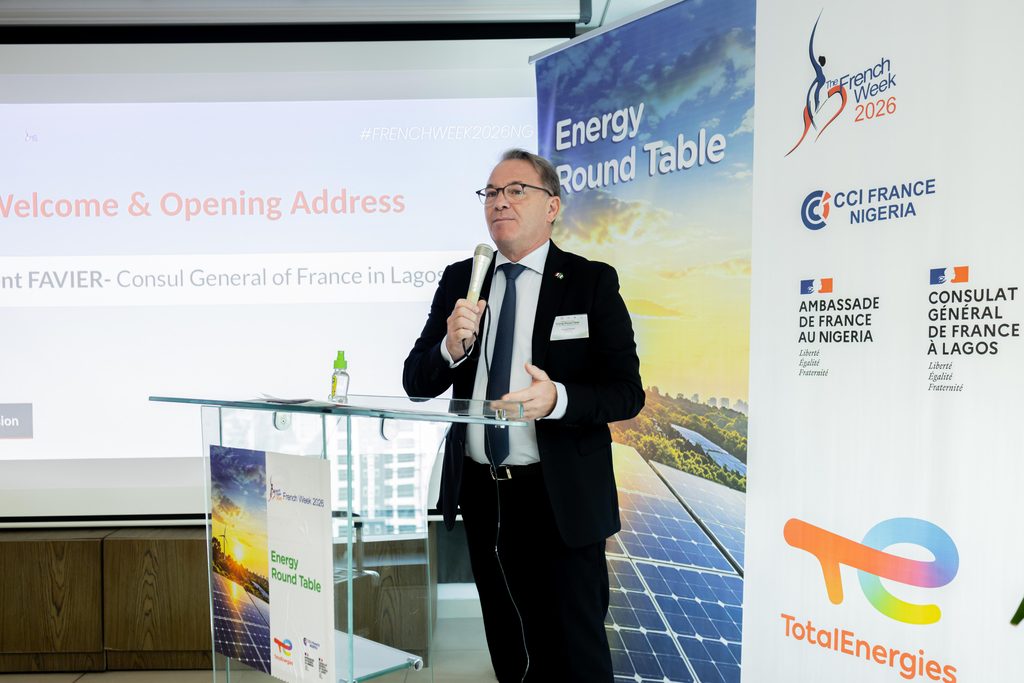
Yet close to 100 million Nigerians still lack reliable electricity. He also highlighted TotalEnergies’ $550 million Ubeta gas development project with NNPC Limited. The project is expected to deliver first gas in 2027 and to supply feed gas to NLNG’s Train 7.
Train 7 and the Decade of Gas
Engr. Adeleye Falade, Managing Director and Chief Executive Officer of Nigeria LNG Limited (NLNG), delivered special guest remarks. He focused on the “Decade of Gas” initiative and the progress of the Train 7 project.
Nigeria’s energy transition must be just, realistic and investable.
Engr. Adeleye Falade
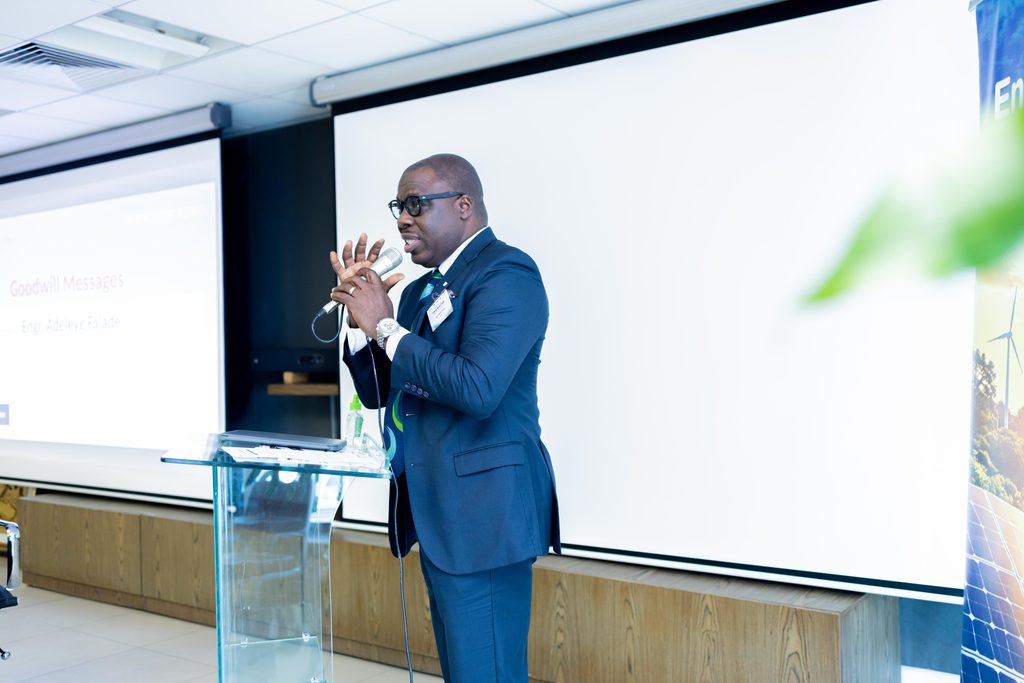
He noted that Africa’s energy challenges differ from Europe’s, particularly in access to reliable electricity.
Nigeria has an estimated 215 trillion cubic feet of proven gas reserves, and broader resource estimates reach about 600 trillion cubic feet. Train 7 is expected to raise NLNG’s production capacity from 22 million tonnes per annum to about 30 million tonnes per annum. On progress, Falade reported:
- Engineering is 99.5% complete, procurement 99.8% and construction about 94%.
- Operations are expected to begin toward the end of 2027.
- After completion, NLNG’s capacity to supply the domestic LPG market should rise by about 50%.
The project also shows what local participation can achieve. Local content stands at about 95%, and Nigerian firms manufactured components including pressure vessels, cables and valves. About 16,000 people, largely young Nigerians, worked on construction, and the wider project supported an estimated 40,000 jobs.
Balancing Energy Security with Net-Zero Goals
The first area of discussion was how operations under the Petroleum Industry Act (PIA) can be optimised to support net-zero commitments while keeping the sector attractive for investment.
Participants recognised a central tension: Nigeria must meet its immediate energy needs while pursuing aggressive carbon-reduction roadmaps. Bouyer said the transition must expand energy supply while gradually cutting emissions, through improved gas recovery, methane reduction and energy efficiency.
Stakeholders reviewed progress on speeding up the infrastructure needed to deliver the Decade of Gas. The roundtable agreed that expanding domestic gas value chains is essential to industrial growth. Gas used at home can power electricity generation, support industrial production and reduce dependence on more carbon-intensive fuels.
Pricing remained a major concern. Participants raised the high cost of doing business and the need for a market-driven pricing structure.
Panellists called for strong commercial frameworks that protect investments and also support genuine technology transfer. The goal is for international partners to bring in expertise while Nigerian companies and professionals build the skills and technical capacity to participate more actively in the industry.
Industry Leaders Weigh In
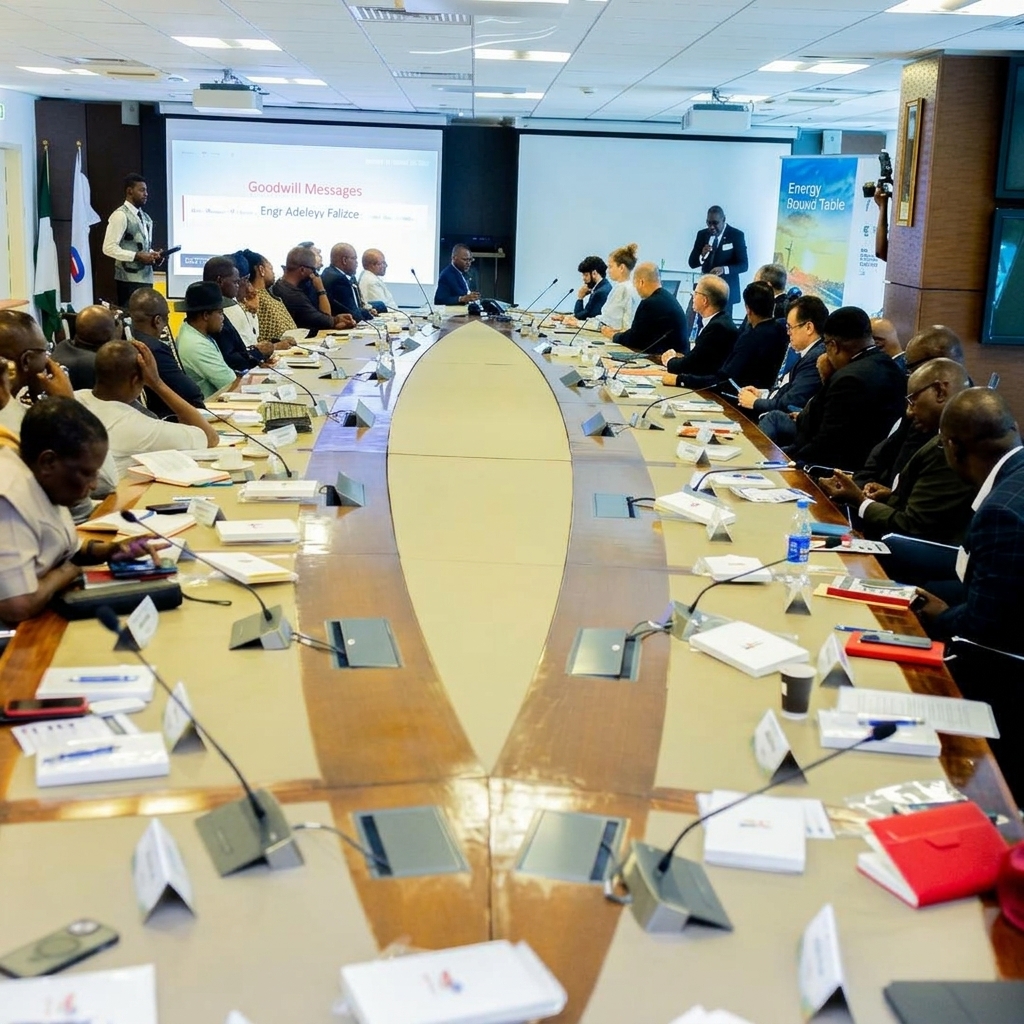
The interactive segment focused on industry readiness, operational efficiency and technical capability.
- People before pipelines. The Managing Director of ExxonMobil opened the session by stressing that building and sustaining human and technical capacity is the ultimate prerequisite for long-term growth in Nigeria’s energy sector.
- Smarter grids, lower emissions. The Managing Director, West Africa, of Schneider Electric explained how digital automation and smart energy management solutions can improve grid efficiency and reduce emissions.
- Unlocking local capital. The Managing Directors of Ashgrove Group and Gove Energies addressed the financial and structural frameworks needed to unlock local equity and sustain midstream projects.
- Keeping assets and talent offshore. Executives from Bourbon and SPIE discussed offshore logistics efficiency, retaining specialised engineering talent and standardising asset maintenance across the industry.
Agreed Next Steps
The session closed with three resolutions:
- Strengthen human capital. Stakeholders committed to joint institutional training frameworks to close the specialised skills gap highlighted by operator leadership.
- Accelerate gas infrastructure. Public-private partnerships will be prioritised to clear the bottlenecks holding back domestic gas distribution.
- Harmonise PIA implementation. Participants agreed to work with regulators to keep the PIA’s commercial frameworks transparent, predictable and attractive to foreign direct investment.
Conclusion
The roundtable showed that Nigerian and French stakeholders broadly agree on what the sector needs: more gas infrastructure, a skilled workforce, supportive technology, workable pricing and a stable regulatory environment. Nigeria has the reserves, and Train 7 shows what partnership and local participation can deliver. With close to 100 million Nigerians still lacking reliable electricity, the real test is how quickly these resolutions turn into projects.
Follow Amebopreneur for the latest on Nigeria’s tech ecosystem, startup funding opportunities, and the cross-border partnerships shaping Africa’s innovation future.
Related Posts
Beyond the Yield: Nigeria’s Critical Challenge of Turning Portfolio Interest into Long-Term Investment
Nigeria is attracting billions in foreign capital, but is the money building businesses or simply chasing high returns? Discover the investment gap.

Google.org Awards Helium Health $2.5 Million for AI Maternal Healthcare
Google.org has awarded Lagos-based Helium Health a $2.5 million grant to deploy AI-powered maternal healthcare solutions across Nigeria. Learn how the HeliumMum initiative aims to reduce maternal mortality, the states involved, key quotes, dates, facts, and why the project matters for healthcare innovation.
Nigeria’s Credit Ratings: From Fragile to Credible – What the Upgrades Really Mean
Nigeria’s credit rating upgrades signal renewed investor confidence after major economic reforms. Discover what changed, what it means for businesses and investors, and what lies ahead.

Beyond the Hype: How Artificial Intelligence Is Reshaping Work, Learning and Business in Nigeria
Discover how AI is transforming work, education and business in Nigeria, the opportunities it offers, the risks to watch and how to prepare for an AI-driven future.

The Business of Everyday Needs: How Nigerians Are Turning Daily Problems into Business Opportunities
Discover how Nigerians are turning everyday problems into profitable business opportunities, from laundry and food delivery to cleaning and repairs, with smart strategies for lasting success.