


Funding is Available, But Are Nigerian Small Businesses Ready for It?
Starting and growing a business in Nigeria is not always easy. One of the biggest challenges many small business owners face is getting enough money to keep their businesses running or expand them. However, while funding opportunities exist through banks, government programmes, investors and fintech companies, many small businesses are still unable to access them.
The issue is therefore not only whether money exists, but whether businesses have the structure, records and capacity needed to qualify for it and use it well.
Recent evidence shows how serious the financing gap is. PwC’s 2024 MSME Survey, based on a survey of 557 MSME operators across 29 states, reported that 35% of surveyed businesses identified inadequate access to finance as their top challenge to growth. The same report also identified poor infrastructure, multiple taxes and levies, and lack of skilled manpower as other major obstacles. This shows that funding readiness must be considered alongside the wider business environment.
Overview of the Nigerian MSME Landscape

Micro, Small and Medium Enterprises (MSMEs) are an important part of Nigeria’s economy. They provide employment, offer goods and services and help many people earn a living.
These businesses operate in different areas, including fashion, food, agriculture, transportation, technology and retail. According to the NBS/SMEDAN 2021 MSME survey, cited by PwC, MSMEs accounted for 96.9% of businesses and 87.9% of employment in Nigeria, while contributing 46.32% to GDP.
These figures show why access to finance matters beyond individual business owners: when small businesses struggle to grow, employment, household income and local economic activity can also be affected.
At the same time, MSMEs are not all the same. A small fashion business, a food processor and an agricultural enterprise may need different forms of funding and may face different requirements. This means business owners need to identify the type of capital that fits their stage and business model rather than simply looking for the largest available amount.
Current State of Available Funding Sources
Funding can come from different sources. Government agencies provide grants, loans and intervention program, while banks and microfinance institutions offer credit for working capital, equipment and expansion. Investors can provide equity to businesses with strong growth potential, and fintech companies have introduced digital lending options for some businesses.
There are also named programmes that small business owners can explore.
The Bank of Industry (BOI), for example, provides SME lending and business advisory services and lists products for areas such as manufacturing, agriculture, fashion and beauty. Its current intervention platform, iProgrammes, also brings several intervention-fund opportunities together in one place.
The Tony Elumelu Foundation (TEF) provides another route. For its 2026 Entrepreneurship Programme, selected entrepreneurs are offered US$5,000 in non-refundable seed capital alongside training and mentorship.

Older initiatives such as YouWiN! also show that government-backed entrepreneurship funding has been part of Nigeria’s SME support landscape. These opportunities are useful examples, but each programme has its own eligibility rules, application process and funding terms. Having funding sources available does not automatically mean every business can qualify for them.
Assessment of Current Funding Infrastructure
Nigeria’s funding infrastructure is broader than simply asking a commercial bank for a loan. Government agencies, development finance institutions, foundations and private financial institutions all play different roles.

SMEDAN, for example, says part of its mandate is to facilitate specialised funding schemes for MSMEs, including low-interest loans and grants. In 2024, the agency reported that it had facilitated over ₦7 billion in funding for SMEs during the first 100 days of its then-new Director-General’s tenure.
Bank of industries also combines finance with business advisory support. Its SME Directorate says it provides loans with longer tenors for eligible registered businesses and offers guidance in financial management, business planning, corporate governance and other areas.
For agricultural businesses, NIRSAL’s current finance-facilitation work shows another model: it helps structure transactions and uses credit guarantees to encourage financial institutions to lend. In 2025, NIRSAL said it facilitated more than ₦70 billion in commercial financing for agribusiness by the third quarter.
Critical Barriers to Funding Readiness
One major problem is that some businesses operate informally. They may not be registered or have clear ownership structures.
This can make it difficult for lenders and investors to assess them. Formalization does not automatically guarantee funding, but it can make a business easier to verify and may open access to programmes that require registration.
Another issue is poor financial documentation. Some business owners do not separate personal money from business money or keep proper records of sales and expenses.Without these records, it becomes difficult to show how the business is performing or how much it can realistically repay. This is important because lenders need evidence that a business can meet its obligations.

Some businesses also lack a clear plan for growth. Having a product that sells is important, but business owners also need to know how they intend to expand, what the money will be used for and how the business will generate sustainable profits. Corporate governance also matters, especially when dealing with investors. Clear ownership, transparent use of funds and basic accountability can make a business more credible.

The readiness gap is not only a problem for the business owner. In a 2024 interview, SMEDAN Director-General Charles Odii said that formalization remained a significant challenge because it affects SMEs’ ability to access opportunities, including finance.
This suggests that improving readiness requires both business-level effort and a support system that makes formalization, training and applications easier to understand.
Operational and Technical Capability Gaps
Technology can help businesses operate more efficiently, but not every business is making full use of digital tools. Basic skills in digital marketing, online payments, accounting software and customer management can improve business operations and make it easier to monitor sales and expenses. Digital records can also help an owner prepare information requested by a lender or investor.
Human resources are equally important. A business may receive funding but still struggle if it does not have people with the right skills to manage the money and carry out its plans. Business owners therefore need to understand their customers, competitors and market before taking on new capital. Without proper market research, they may invest money in products or services that have limited demand.
Risk management is also important. Businesses should prepare for changing prices, supply problems, competition, unexpected expenses and other shocks. Funding can provide room to grow, but it does not remove these risks. In fact, taking a loan without a realistic repayment plan can create a new problem. The goal should be to use funding to strengthen a business model that already has a clear path to revenue.
Socio-Economic Factors Impacting Eligibility
It is also important to recognise that not every funding problem is caused by business owners. Nigeria’s economic environment can make running a small business difficult. Inflation can increase the cost of raw materials, transportation, rent and other expenses. Poor infrastructure, especially electricity and transportation challenges, can also increase operating costs.

PwC’s 2024 MSME Survey found that 21% of surveyed businesses identified poor infrastructure as a major challenge, while 12% pointed to multiple taxes and levies. These pressures can reduce the amount of money available for expansion and make financial projections harder to maintain. A business that was profitable under one cost structure may need to adjust its prices, suppliers or operations when costs change sharply.
There is also an information gap. Some business owners may not know where legitimate funding opportunities are available or what requirements they need to meet.
This creates room for misinformation and fraudulent funding offers. Business owners should therefore verify programmes through the official websites of agencies and organizations before submitting documents or paying anyone for access.
Strategic Pathways to Enhancing Readiness
Small businesses can improve their chances of accessing funding by becoming more organised. Business owners should register their businesses where necessary, keep proper financial records and separate business finances from personal finances. A simple record of sales, expenses, profit and cash flow can make a major difference when preparing a funding application.
Training and business incubation programmes can also help owners understand financial management, marketing and business planning. The TEF experience illustrates why funding and knowledge often work together.
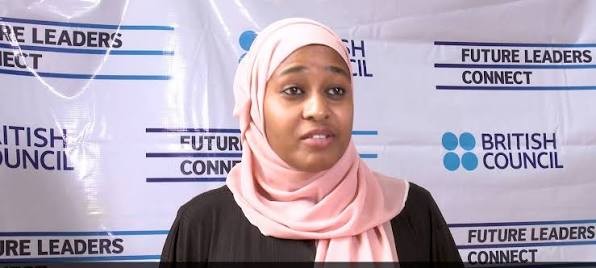
“It is not just about the seed capital, but what really fascinates me about the Programme is the knowledge.”
Hauwa Liman
The point is not that every business needs the same programme, but that capital is more useful when the owner has the skills to manage it.
Networking is another useful strategy. Building relationships with entrepreneurs, financial institutions, mentors and industry professionals can expose business owners to opportunities and useful information. Most importantly, businesses should work towards becoming funding-ready. This means having a clear business model, proper records, realistic financial projections, a clear use for the money and a good understanding of the market.
Government and financial institutions also have a role to play. They can make application requirements clearer, expand business education, improve access to reliable information and design funding products that match the realities of micro and small businesses. Making finance available is only one part of the solution; making the pathway to finance understandable and practical is another.
Conclusion
Funding opportunities exist for Nigerian small businesses, but access to funding is not simply about finding someone willing to provide money. Businesses also need to show that they are prepared to manage that money effectively.
The examples of BOI, AGSMEIS, NIRSAL and the Tony Elumelu Foundation show that different forms of funding and support already exist, while the evidence from PwC and SMEDAN shows that access, formalization, skills and wider economic pressures remain important issues.
Business owners should focus on proper registration, financial record keeping, digital skills, market research, planning and risk management. Government and financial institutions can also help by making funding requirements clearer, reducing information gaps and strengthening business-support programmes. In the end, the question is not simply whether funding is available. It is whether businesses are prepared to meet the requirements, use the money responsibly and turn capital into sustainable growth.
Follow Amebopreneur for the lastest on Nigeria’s tech ecosystem,startup funding opportunities,and the cross-border partnership shaping Africa’s innovation future.
Related Posts

Political Dynamics, Global Realignment: What Tola Adeyemi Told CEOs at FNCCI-KPMG Luncheon Series 6
As Nigeria heads toward the 2027 election, KPMG’s Tola Adeyemi urges businesses to prepare for multiple outcomes, policy shifts and new opportunities.
NITDA Builders Festival 2026: Smart Way to Unlock Startup Opportunities
NITDA Builders Festival 2026 offers Nigerian startups a path to ₦3bn in potential investment and pilot contracts by connecting real solutions with institutions.

Nigeria’s Internet Traffic: The Essential Growth Drivers Behind a 168% Surge
Nigeria’s internet traffic surged 168% in three years. Discover the key drivers behind the growth and what it means for businesses, SMEs and entrepreneurs.

Konga And Defence Headquarters Launch Nationwide Discount Scheme for Serving, Retired And Veteran Military Personnel
Konga and Defence Headquarters launch a nationwide discount scheme giving serving, retired and veteran military personnel access to essential goods at reduced prices.

Askya Offers African AI Startups Up To $200,000 In Investment Through New Growth Platform
Askya Investment Partners has launched a six-week AI Growth Platform for 10 African startups, offering zero-equity participation, business support and potential investment of up to $200,000