

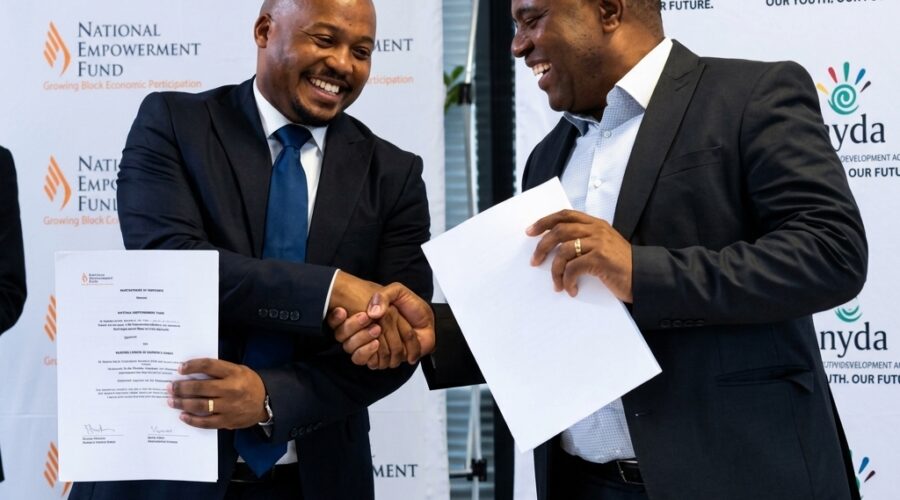
South Africa Launches Bold R100 Million ($6.1m) Youth Business Fund To Fight The Unemployment Crisis
South Africa has taken a promising step toward rescuing its struggling young entrepreneurs from a punishing funding drought. The initiative brings together the National Youth Development Agency (NYDA) and the National Empowerment Fund (NEF) in a five-year partnership aimed at helping youth-owned businesses move from early-stage development towards investment readiness, expansion and job creation, an initiative worth roughly R100 million ($6.13 million), expressly designed at expanding access to finance for youth-owned businesses across the country.
The partnership agreement was signed on Monday, September 14, 2026, at the NYDA’s head office in Sunninghill, Johannesburg, on behalf of the two organisations by NEF Chief Executive Officer Mziwabantu Dayimani and NYDA Chief Executive Officer Ndumiso Kubheka.
The structure is significant because it is not designed simply as another standalone grant. Instead, it combines NYDA grant and enterprise-development support with NEF loan finance, creating a pathway intended to help young businesses progress from early development to larger-scale financing.
News of the launch continued to spread through South African media over the following days, with detailed coverage appearing as recently as September 18 and September 20, 2026.
Breaking Down The Numbers Behind The R100 Million ($6.13 million) Commitment
The structure of the funding is transparent, and it reveals a deliberate division of labour between the two institutions. The NEF is contributing the lion’s share, committing R90 million, while the NYDA is putting in R10 million of its own.
Converted at prevailing exchange rates, the combined R100 million translates to approximately $6.13 million, a figure that sounds substantial on paper but that NYDA Executive Deputy Chairperson Bonga Makhanya was candid about. He acknowledged the scale of the challenge significantly reduces the current commitment, noting that estimates place South Africa’s national MSME financing gap at roughly R350 billion, a sobering statistic that puts the new fund’s size into painful perspective.
The R100 million ($6.13 million) commitment comes from both institutions, but their contributions serve different purposes.
The NEF is committing R90 million, while the NYDA is contributing R10 million. The NYDA’s contribution is intended to support enterprise development and investment readiness, including areas such as business development, feasibility studies, certification and incubation. The NEF, meanwhile, brings its investment assessment capabilities and loan-financing capacity to the partnership.
This means the fund is designed around a combination of grant support, business-development assistance and repayable financing, rather than treating access to capital as the only challenge facing young entrepreneurs.
Beyond capital alone, entrepreneurs who qualify will also gain access to mentorship, investment readiness coaching, compliance assistance and market linkages, a holistic support package intended to address the practical, non-financial barriers that so often sink promising young businesses before they ever get off the ground.
The programme will prioritise businesses operating in high-potential sectors including manufacturing, infrastructure, renewable energy, the green economy, digital industries and agriculture, positioning the fund as an instrument for future-facing economic growth rather than a scattergun handout. Importantly, the partnership has been structured to run for five years, giving both institutions a long runway to build on the initial R100 million commitments rather than treating it as a one-off gesture.
The partnership includes a joint steering committee made up of representatives from the NYDA and NEF.
Who Is the National Youth Fund For?
The initiative is sorely aimed at youth-owned businesses and entrepreneurs between 18 and 35 years old, supporting businesses across sectors including manufacturing, infrastructure, renewable energy, the green economy, digital industries, agriculture and small and medium-sized enterprises.
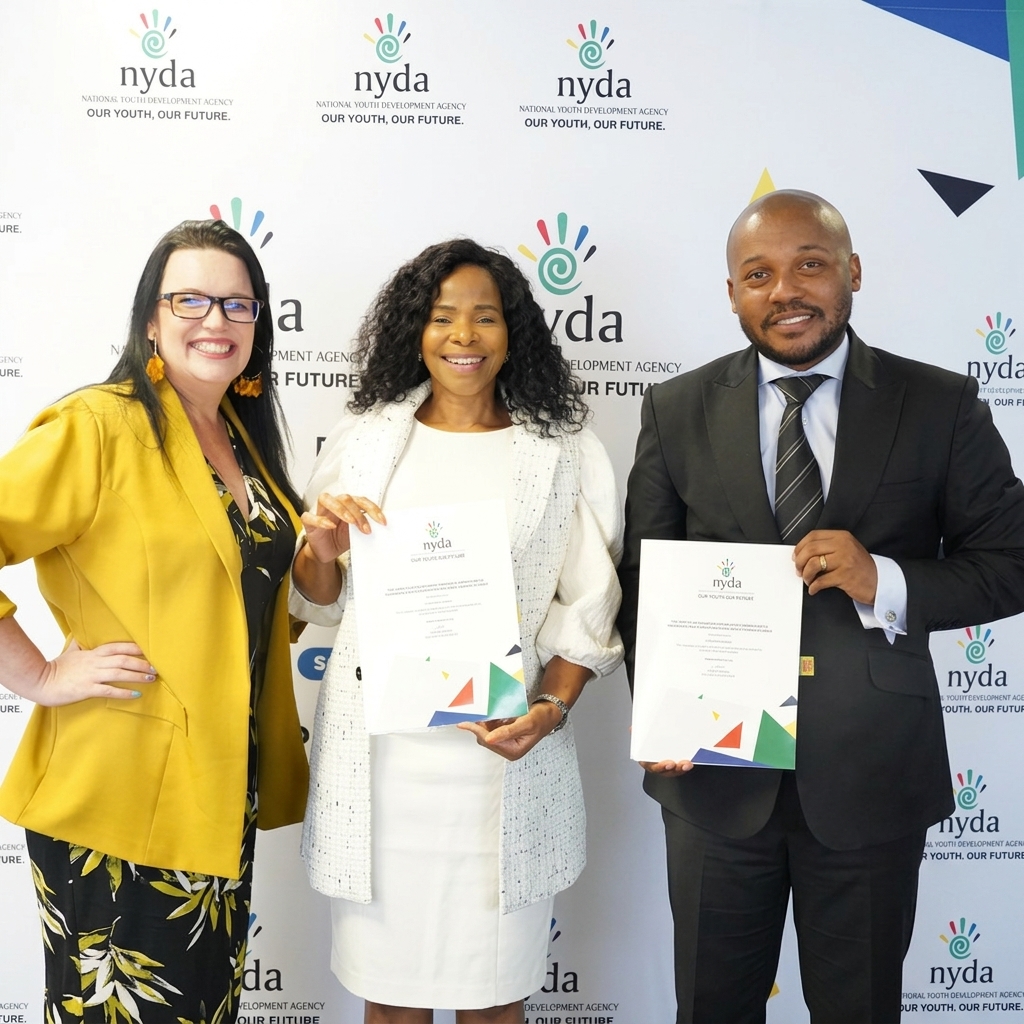
The bigger objective is to create a coordinated pipeline through which young entrepreneurs can receive assistance at different stages of their business journey, particularly where they may struggle to move from a small or early-stage operation into a business capable of Grants and Loans Are Not the Same Thing
An important point for prospective applicants is that the R100 million should not be interpreted as R100 million in free grants. The structure combines different types of support. The NYDA component includes grant and enterprise-development assistance, while the NEF component is primarily associated with repayable loan finance.
That distinction matters because a loan must be repaid, while grant funding is subject to its own eligibility and utilisation conditions. Some reports have indicated that NEF loans under the new arrangement can have repayment terms of up to seven years, with repayment grace periods of up to six months and up to 12 months for businesses led by young women.
However, because the NEF and NYDA have stated that detailed information on the new fund’s application process and qualifying criteria will be communicated through their official platforms, prospective applicants must verify the final terms before making financial decisions.
The emphasis is therefore wider than traditional small-business grants. The institutions want the programme to help businesses develop productive capacity, enter markets, expand operations and potentially create employment.
What the Leaders Said
NYDA CEO Ndumiso Kubheka described the launch as being about far more than the money itself. He told those gathered at the ceremony that it is not simply about announcing a new fund, explaining that it was instead a demonstration that government institutions can cooperate to dismantle the barriers that have long kept young people locked out of finance, markets and sustainable business growth.
Bonga Makhanya, NYDA Executive Deputy Chairperson struck a similarly honest tone, admitting outright that no amount of money would ever feel like enough given the scale of youth joblessness, while stressing that stronger collaboration between government, the NYDA and private-sector partners is what will ultimately deliver greater impact. He described the partnership as an attempt to move away from a one-size-fits-all approach to youth enterprise finance.
Speaking about the financing challenge facing young entrepreneurs, Makhanya said:
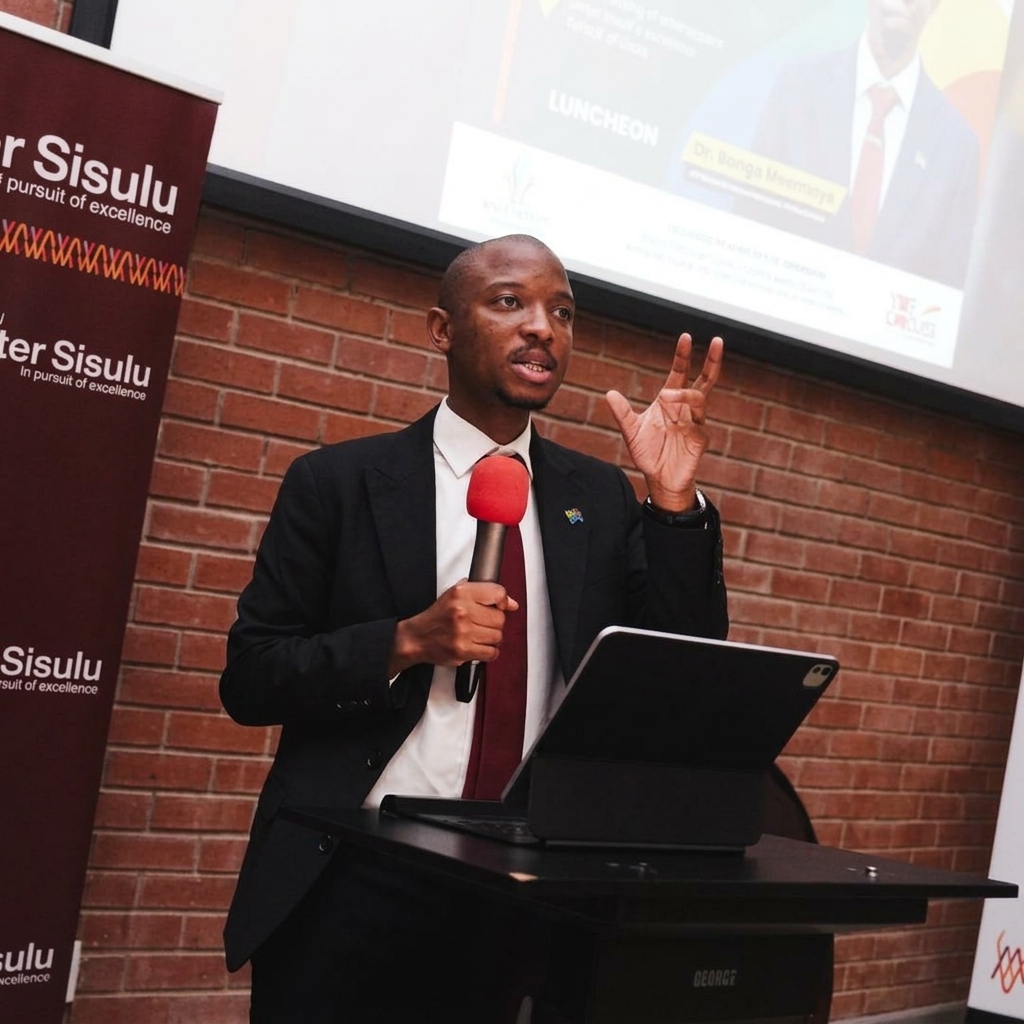
“Young people have no assets, they have limited collateral, they have shorter business track records and a lack of capital to finance their capital expenditure needs.”
Bonga Makhanya
He also acknowledged that the R100 million commitment is small compared with the broader financing requirements of South Africa’s small-business sector.
Mohammed Bhabha, for his part, was blunt about the dysfunction the new partnership hopes to correct, remarking that government institutions too often work in silos and fail to get the best return on their efforts. He was equally clear that signing an agreement is only the beginning, insisting that the real test lies in the hard work of execution that follows the ceremony
What Young Entrepreneurs Should Know About Applying
There is already significant online interest in the new National Youth Fund, but this is also an area where entrepreneurs need to be careful.
The NEF has stated that further information concerning the application process, qualifying criteria and how prospective applicants can access the fund will be communicated through the official NEF and NYDA platforms.
That means entrepreneurs should not assume that every social-media post or website claiming to offer immediate access to the R100 million fund is legitimate. The safest approach is to verify application instructions directly through the official organisations.
National Empowerment Fund (NEF) official website or National Youth Development Agency (NYDA) official website
The NEF’s online funding portal is also referenced in current reporting as online.nefcorp.co.za, but applicants sure needs to confirm that the portal and specific National Youth Fund application route have officially opened before submitting sensitive information.
Conclusion
The launch of South Africa’s R100 million National Youth Fund represents a genuinely encouraging, collaborative response to one of the country’s most urgent and heartbreaking crises, youth unemployment that has climbed to a devastating 47.4 percent among fifteen to thirty-four-year-olds.
By combining the NYDA’s grant-making and mentorship strengths with the NEF’s loan and investment expertise, the two agencies have built a more joined-up support system than either could offer alone, backed by a five-year commitment and a clear focus on high-growth sectors like renewable energy, manufacturing and agriculture.
Yet the leaders behind the initiative have been admirably honest that R100 million is a modest down payment against a R350 billion financing gap, and that success will depend not on this ceremony but on disciplined execution, rigorous tracking of outcomes and a willingness to listen to the young entrepreneurs the fund is meant to serve.
Follow Amebopreneur for the latest on Nigeria’s tech ecosystem, startup funding opportunities, and the cross-border partnerships shaping Africa’s innovation future.
Related Posts
NITDA Builders Festival 2026: Smart Way to Unlock Startup Opportunities
NITDA Builders Festival 2026 offers Nigerian startups a path to ₦3bn in potential investment and pilot contracts by connecting real solutions with institutions.

Nigeria’s Internet Traffic: The Essential Growth Drivers Behind a 168% Surge
Nigeria’s internet traffic surged 168% in three years. Discover the key drivers behind the growth and what it means for businesses, SMEs and entrepreneurs.

Konga And Defence Headquarters Launch Nationwide Discount Scheme for Serving, Retired And Veteran Military Personnel
Konga and Defence Headquarters launch a nationwide discount scheme giving serving, retired and veteran military personnel access to essential goods at reduced prices.

Askya Offers African AI Startups Up To $200,000 In Investment Through New Growth Platform
Askya Investment Partners has launched a six-week AI Growth Platform for 10 African startups, offering zero-equity participation, business support and potential investment of up to $200,000

Cabo Verde Telecom and DE-CIX Plan New South Atlantic Connectivity Corridor
DE-CIX and Cabo Verde Telecom have signed a non-binding Letter of Intent to explore a South Atlantic connectivity corridor linking Lisbon and São Paulo, strengthening direct digital infrastructure across Europe, Africa, and Latin America.