

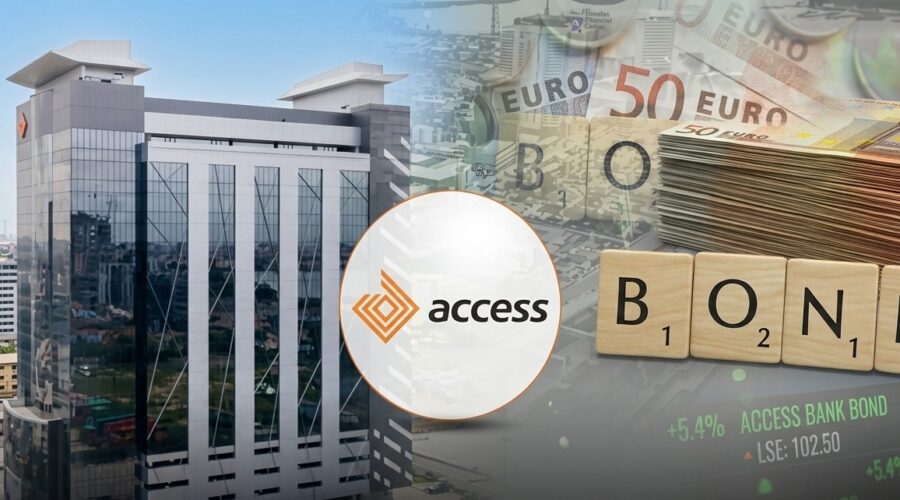
Access Bank $500 Million Eurobond Repayment: An Essential Lesson in Financial Planning
Access Bank has repaid its $500 million Eurobond at maturity. Here is what the repayment means for the bank, Nigerian businesses and the wider banking sector.
When someone borrows money, getting the money is usually the easy part. The real test comes later, when the borrower has to pay it back. The same principle applies to large companies and banks, especially when the amount involved runs into hundreds of millions of dollars.
That is why Access Bank’s $500 million Eurobond repayment is attracting attention.
On September 21, 2026, Access Bank Plc announced that it had fully repaid its $500 million Senior Unsecured Eurobond after it reached maturity. The bank said the repayment was made from its own foreign-currency liquidity and that it had also made all the required interest payments during the five-year period.
The development is important not only for Access Bank but also for Nigeria’s banking sector, particularly at a time when banks are strengthening their capital bases, managing foreign-currency obligations and preparing for a more competitive financial environment.
What Was the Access Bank $500 Million Eurobond For?
The $500 million was not simply a conventional loan taken from one lender. It was a Senior Unsecured Eurobond, a form of debt raised from investors in international financial markets.
Access Bank issued the five-year Eurobond in September 2021 under its $1.5 billion Global Medium-Term Note Programme. The bond carried a fixed annual interest rate, or coupon, of 6.125%, with interest paid twice a year. It was also listed on the London Stock Exchange.
When the bond was issued, the money provided Access Bank with medium-term funding that could be used for its general banking activities.
In return, investors received interest payments and expected the $500 million principal to be repaid when the bond matured in 2026.
It is important to note that the repayment concerns this particular Eurobond. It does not mean Access Bank has no other debts or financial obligations.
How Did Access Bank Repay the Debt?
Access Bank said the $500 million repayment came entirely from its own foreign-currency liquidity resources.In simple terms, the bank did not need to raise another loan specifically to repay this particular debt. Instead, it used foreign-currency resources that it had already built up and managed for its financial obligations.This is significant because the debt was denominated in US dollars.
For Nigerian businesses, foreign-currency obligations can be challenging. A company may earn a large part of its income in naira but still have to repay a dollar-denominated loan. If the naira loses value against the dollar, the naira cost of repaying that debt can become much higher.
Banks also have to pay close attention to this because they deal with different currencies and large amounts of money every day.
Access Bank said it had already incorporated the maturity of the Eurobond into its liquidity management and asset-liability management plans. According to the bank, the repayment did not have an adverse effect on its operations or regulatory liquidity requirements.
In other words, the maturity was not a surprise to the bank. It had been planning for it.
What Does the Repayment Mean for Nigeria’s Banking Sector?
The Access Bank debt repayment comes at an important time for Nigerian banks.
The country’s banking sector has been going through major changes, including the Central Bank of Nigeria’s recapitalization programme. The CBN introduced new minimum capital requirements for banks in 2024. Under the new requirements, international commercial banks are expected to have a minimum paid-in capital of N500 billion, while other categories of banks have different requirements.
The idea behind recapitalization is to make banks stronger and better positioned to absorb financial shocks, provide credit and support economic activity.
Against this background, the ability of a major bank like Access Bank to meet a $500 million international debt obligation from its own foreign-currency liquidity is relevant.
It highlights the importance of strong balance-sheet management for Nigerian banks, particularly those with significant international operations and foreign-currency obligations.
What Does It Mean for Access Bank Customers?
For the average Access Bank customer, there is unlikely to be an immediate change in everyday banking simply because the Eurobond has been repaid.
Customers will still use their accounts, transfer money, withdraw cash, access digital banking services and apply for financial products as usual.The bigger effect is indirect.
A banking system depends heavily on the financial strength and stability of its institutions. When banks manage their obligations properly, it can contribute to confidence in the financial system.
However, customers should not interpret the repayment as a guarantee that there will never be financial challenges in the future. Banks still face risks related to lending, foreign exchange, interest rates, inflation and the wider economy.
What Could It Mean for Businesses?
For businesses, the story offers a broader lesson about borrowing and financial planning.
Strong banks are better positioned to continue providing services such as business loans, personal banking, payments, trade finance and other financial products. The CBN has said that stronger capitalization should improve banks’ ability to perform their financial intermediation role and support economic activity.
Access Bank’s own financial statements show the scale of its operations. At the end of 2024, the group’s total assets stood at about N40.84 trillion, while customer deposits were about N22.52 trillion.
This shows why developments involving large banks can have wider relevance to the economy. Their ability to manage liquidity and meet financial obligations can affect their capacity to continue lending and supporting businesses.

For businesses that borrow in foreign currencies, the lesson is particularly relevant. A dollar loan may appear manageable when it is taken, but changes in the exchange rate can significantly affect the naira cost of repayment.
The Bigger Lesson for Nigerian Banks
The Access Bank $500 million Eurobond repayment also sends a broader message about the changing Nigerian banking environment.Banks are operating in an environment where capital requirements are higher, foreign exchange remains important, and investors are paying attention to how financial institutions manage their balance sheets.

The CBN’s recapitalization programme is designed to strengthen banks’ ability to absorb unexpected losses and support economic growth.
At the same time, banks that raise money internationally must be prepared for the risks that come with foreign-currency obligations.
A dollar debt may become more expensive in naira terms if the naira depreciates, while insufficient foreign-currency liquidity can create repayment pressure.
Access Bank’s repayment therefore highlights the importance of planning ahead rather than waiting until a debt becomes due before looking for the money to repay it.
What Businesses Can Learn From Access Bank’s Repayment
The story goes beyond one bank and one debt obligation.For businesses, borrowing should not be viewed only in terms of how much money is available today. Companies also need to consider the cost of the borrowing, the currency in which the debt must be repaid, possible changes in exchange rates and where the repayment money will come from.
The same principle applies to individuals. Before taking on a financial obligation, borrowers need to think about their ability to meet future payments and what could happen if their financial circumstances change.Access Bank’s repayment demonstrates the importance of preparing for a financial obligation before its deadline arrives.
Conclusion
Access Bank’s repayment of its $500 million Eurobond highlights the importance of liquidity planning and responsible management of foreign-currency obligations for banks and businesses. For more insights into Nigeria’s business, banking and financial landscape, follow Amebopreneur and share your thoughts on the lessons businesses can learn from the development.
Follow Amebopreneur for the latest on Nigeria’s tech ecosystem, startup funding opportunities, and the cross-border partnerships shaping Africa’s innovation future.
Related Posts

Political Dynamics, Global Realignment: What Tola Adeyemi Told CEOs at FNCCI-KPMG Luncheon Series 6
As Nigeria heads toward the 2027 election, KPMG’s Tola Adeyemi urges businesses to prepare for multiple outcomes, policy shifts and new opportunities.
Funding is Available, But Are Nigerian Small Businesses Ready for It?
Funding exists for Nigerian small businesses, but access remains a challenge. Discover what SMEs need to become funding-ready and turn capital into sustainable growth.

Meta, 3MTT, NCAIR & RAIN Partner to Accelerate AI Skills and Innovation in Nigeria
Meta, 3MTT and RAIN launch AI Academy Nigeria to equip developers with AI skills, build startups and turn Nigeria’s growing AI talent into global innovation.
Nomba and Synafare Commit ₦2 Billion to Solar Financing for 300 Nigerian SMEs
Nomba and Synafare are committing ₦2 billion to solar financing, helping 300 Nigerian SMEs cut energy costs, boost productivity and power their growth.
Ghana’s Wobil Technologies Is Putting Solar to Work in Rice Farming, And Fighting Africa’s Post-Harvest Crisis
Ghana’s Wobil Technologies is using solar-powered machinery to cut rice losses, lower farming costs and help smallholder farmers keep more of every harvest.