

Give to Gain”: France Pushes Gender Equality Agenda at Women in Business Luncheon in Lagos
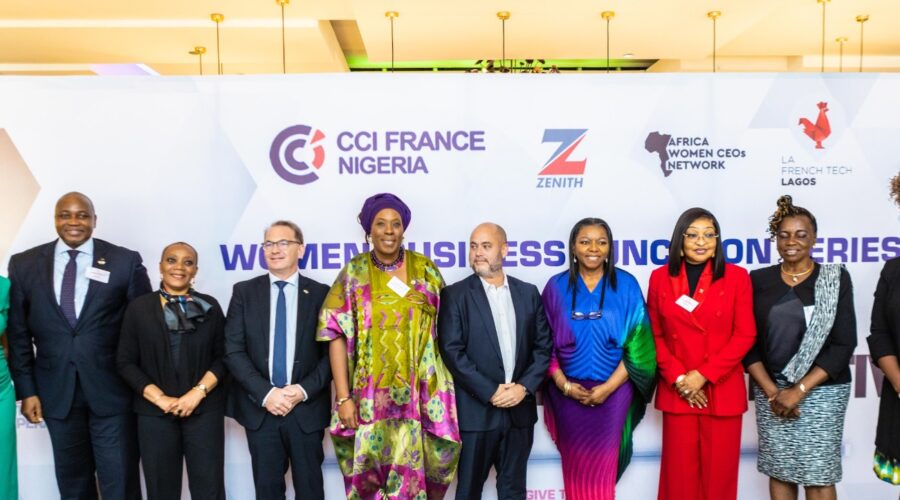
Nigeria’s business and policy leaders gathered for a powerful conversation on gender equality and economic growth as the Franco-Nigerian Chamber of Commerce and Industry hosted its annual Women in Business Luncheon in Lagos.
The event, held in partnership with the Africa Women CEOs Network and Zenith Bank, brought together top executives, policymakers, and development partners under the theme: “Give to Gain: A Strategic Imperative.”
At the center of the conversation was a clear message — investing in women is no longer optional; it is essential for economic growth.
A Theme Rooted in Strategy, Not Sentiment
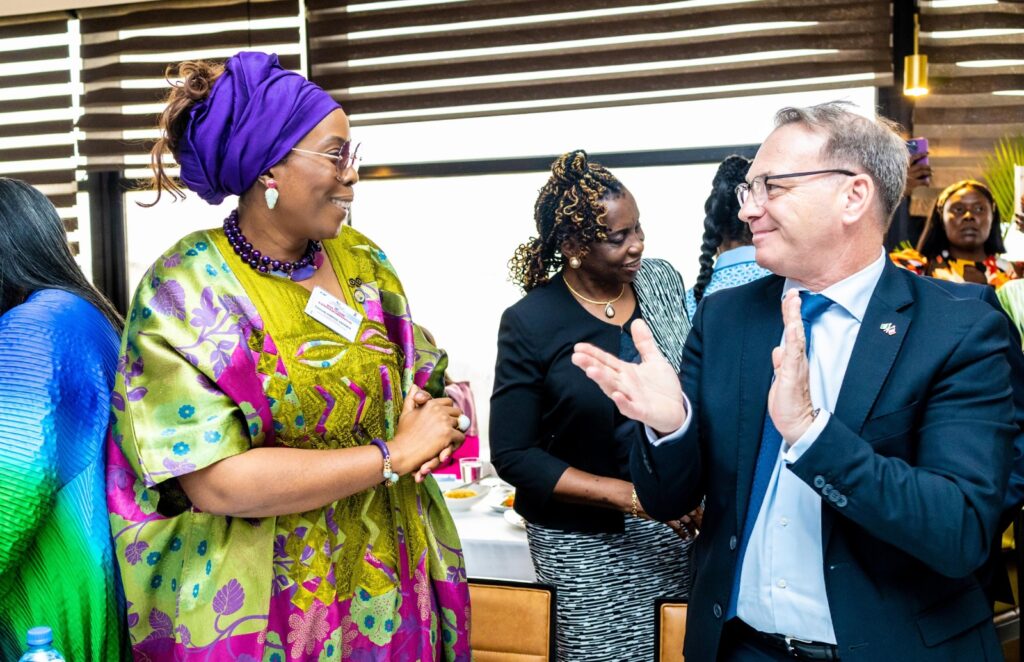
Delivering the welcome address, the Consul-General of France to Nigeria, Laurent Favier, set the tone by framing gender equality as both a moral and economic necessity.

“The theme indeed resonates powerfully as it highlights the philosophy of reciprocity… when we give whether through mentorship, access to capital, or the dismantling of structural barriers, we do not subtract from our own success; we engage in intentional multiplication.
He emphasized that the idea of “Give to Gain” goes beyond symbolism and speaks directly to how modern economies grow.
“Equality between men and women is not simply a matter of principle, it is a necessity. It is a driver of economic growth, prosperity and competitiveness for our societies.”
Laurent Favier, Consul-General of France to Nigeria
This framing shifts the conversation from advocacy to execution — from why gender equality matters to how quickly stakeholders are willing to act.
The Business Case for Gender Equality
The economic argument for inclusion is becoming harder to ignore.
Research consistently shows that companies with gender-diverse leadership outperform their peers in profitability, innovation, and overall firm value. The Consul-General highlighted that broader gender equality could significantly boost economic output, pointing to projections of substantial GDP growth when women are fully integrated into the workforce.
The takeaway is clear:
diversity is no longer a “nice-to-have” — it is a competitive advantage.
France’s Model: From Policy to Measurable Results
France is positioning itself as a leading example of how policy can drive real change.
Over the past decade, the country has implemented strong legislative frameworks to enforce gender parity:
- Women now hold 46% of seats in the French National Assembly
- The Copé-Zimmermann Act introduced a 40% quota for women on corporate boards
- Female representation on major company boards has risen to 45%
- The Rixain Act mandates increasing female representation in senior executive roles to 30% by 2026 and 40% by 2029
These policies demonstrate a shift from intentions to enforceable outcomes, ensuring that gender inclusion is embedded within both political and corporate systems.
France–Nigeria Partnership: Expanding Impact Locally
Beyond domestic reforms, France is extending its gender equality agenda through development partnerships in Nigeria.
Through initiatives led by the Agence Française de Développement (AFD), all funded projects are evaluated for their impact on gender equality, with financing directed toward women-led organisations.
The Consul-General highlighted recent efforts to deepen this collaboration:
“Through 21 supported projects spanning entrepreneurship, empowerment and economic inclusion, France is demonstrating that investing in Nigeria’s women is an investment in Nigeria’s future.”
Laurent Favier, Consul-General of France to Nigeria
He also referenced the launch of the Art X Impact Campaign, a nationwide initiative promoting women’s rights through art and community engagement across multiple states.
“Give to Gain”: What It Means for Business Leaders
The luncheon’s theme ultimately placed responsibility on decision-makers in the room.
“Give to Gain” is not abstract — it is practical.
It challenges leaders to consider:
- Who they mentor
- Who they fund
- Who gets a seat at the table
- How inclusive their corporate strategies truly are
In return, the benefits are tangible: stronger talent pipelines, more innovative organisations, and a more resilient economy.
A Growing Movement, Not a One-Off Event
The event also reinforced the role of the Franco-Nigerian Chamber of Commerce and Industry as a key driver of France–Nigeria business relations, particularly in advancing high-impact conversations around inclusion and economic development.
With continued support from institutions like Zenith Bank and networks such as Africa Women CEOs Network, the momentum behind women’s economic empowerment in Nigeria is clearly building.
Conclusion
The message from the luncheon was clear and consistent:
Gender equality is not charity — it is strategy.
And as Laurent Favier emphasized, the real opportunity lies in action, not intention.
The shift is already happening — from fragmented efforts to coordinated impact, from conversations to commitments.
Now, the question is no longer whether to invest in women,
but how boldly and how urgently that investment will be made.
Related Posts

Political Dynamics, Global Realignment: What Tola Adeyemi Told CEOs at FNCCI-KPMG Luncheon Series 6
As Nigeria heads toward the 2027 election, KPMG’s Tola Adeyemi urges businesses to prepare for multiple outcomes, policy shifts and new opportunities.

Access Bank $500 Million Eurobond Repayment: An Essential Lesson in Financial Planning
Access Bank’s $500m Eurobond repayment offers a powerful lesson in liquidity planning, foreign-currency risk and smart financial management for Nigerian businesses.

Funding is Available, But Are Nigerian Small Businesses Ready for It?
Funding exists for Nigerian small businesses, but access remains a challenge. Discover what SMEs need to become funding-ready and turn capital into sustainable growth.
Meta, 3MTT, NCAIR & RAIN Partner to Accelerate AI Skills and Innovation in Nigeria
Meta, 3MTT and RAIN launch AI Academy Nigeria to equip developers with AI skills, build startups and turn Nigeria’s growing AI talent into global innovation.
Nomba and Synafare Commit ₦2 Billion to Solar Financing for 300 Nigerian SMEs
Nomba and Synafare are committing ₦2 billion to solar financing, helping 300 Nigerian SMEs cut energy costs, boost productivity and power their growth.