

Nigeria’s Data Demand Outpaces Network Growth, NCC Warns
Nigeria’s data consumption is increasing faster than network capacity can comfortably accommodate. With cloud computing, artificial intelligence, digital payments and other data-intensive services becoming increasingly important to businesses, the demand for reliable connectivity is expected to continue growing.
For Nigerian startups, small and medium-sized enterprises (SMEs), technology companies and everyday internet users, the implications are significant. Network congestion, unreliable connectivity and the high cost of infrastructure could undermine productivity if investment does not keep pace with demand.
The NCC’s Warning
The scale of Nigeria’s data boom becomes even clearer when the numbers are stacked side by side. Data consumption recorded by the NCC reached 1.66 million terabytes in July 2026, the highest monthly volume in the regulator’s published series.
Between January and July 2026 alone, Nigerians consumed approximately 10.18 million terabytes of data, compared with roughly 7.09 million terabytes during the same period of 2025, according to BusinessDay’s reporting, a jump of around 43.6 per cent.
The figures highlight the scale of the country’s expanding digital activity. More people and businesses are relying on internet-enabled services for communication, entertainment, education, commerce and work.
However, growing consumption also creates a challenge for telecommunications operators. They must continually invest in network equipment, fibre connections, spectrum-efficient technologies, power systems and other infrastructure to accommodate additional traffic while maintaining acceptable service quality.
The NCC’s Executive Vice Chairman and Chief Executive Officer, Dr. Aminu Maida, said the investment challenge extends beyond expanding coverage to ensuring that existing users receive better service.
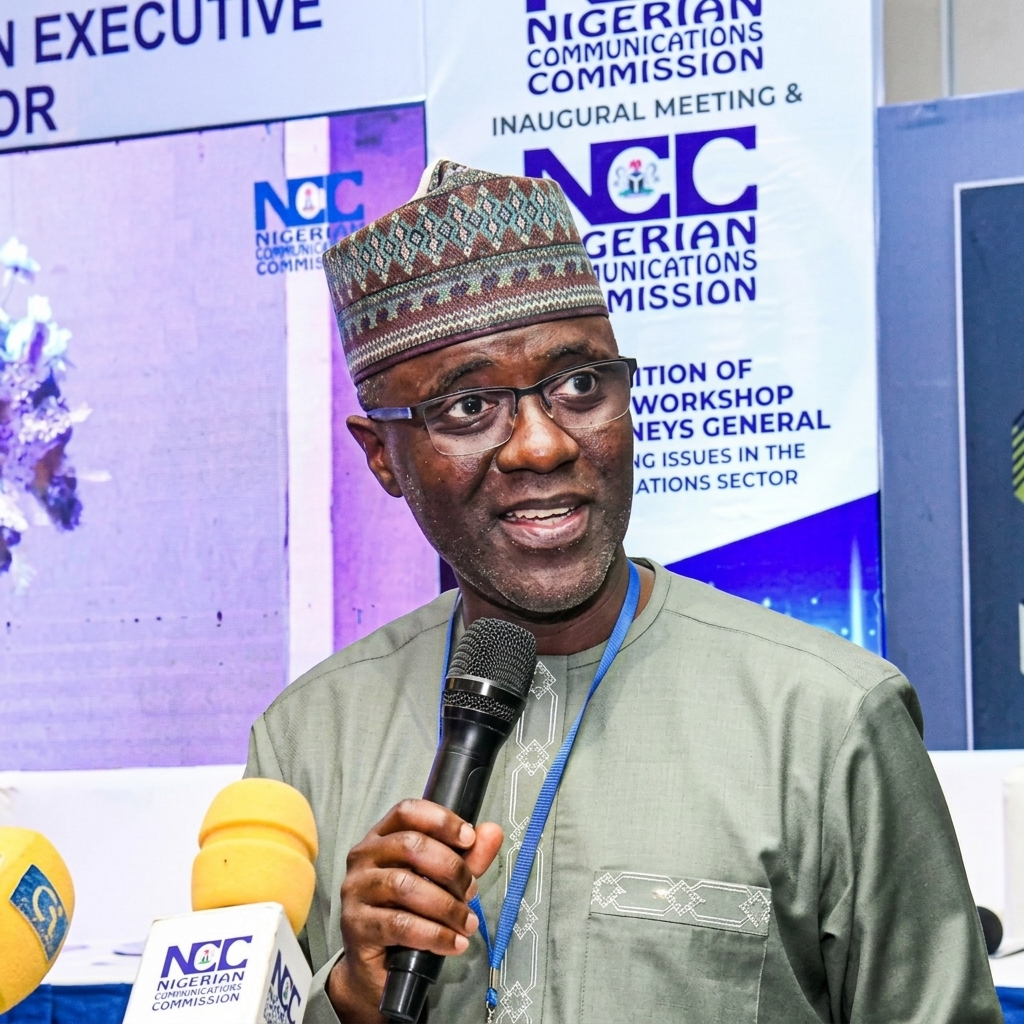
“The investment challenge before us is not merely one of expanding coverage.
It is also about ensuring that those already connected enjoy better service quality, improved user experiences, and infrastructure capable of supporting future technologies.”
Dr. Aminu Maida
Part of what makes this warning so urgent is the sheer economic weight that telecommunications now carries in Nigeria. Telecommunications and information services accounted for 9.72 per cent of Nigeria’s real GDP in the second quarter of 2026, a genuinely impressive contribution that signals how deeply connectivity is woven into everyday economic activity.
On a continental scale, mobile technology contributed an estimated 240 billion dollars to Africa’s economy in 2025, reinforcing the argument made at the forum that telecommunications can no longer be treated as a narrow, isolated sector but must instead be understood as core economic infrastructure, as essential to national productivity as roads or electricity.
Nigeria’s position as co-champion of the African Continental Free Trade Area Protocol on Digital Trade and its status as the very first state party to ratify that protocol were also cited as strategic opportunities, one that positions Nigeria’s digital infrastructure as a potential platform for serving the broader African market, provided the capacity exists to support it.
Why Data Demand Is Growing So Quickly
Nigeria’s data demand is being driven by a combination of consumer activity, business digitalisation and the adoption of technologies that require greater connectivity.
Cloud computing allows businesses to use remotely hosted software, storage and computing resources rather than maintaining every system locally. Video conferencing, streaming, online collaboration, digital advertising and cloud-based business applications also contribute to data traffic.
Artificial intelligence could add to this demand. Many AI services rely on cloud infrastructure for processing, while businesses increasingly use online platforms to access AI-powered assistants, analytics tools and automated workflows.
Digital payments and e-commerce also depend on reliable connectivity. A retailer processing online orders, a logistics company tracking deliveries or a fintech startup serving customers across Nigeria needs a dependable network to keep its operations running.

The NCC’s forum communiqué specifically warned that cloud computing and AI would increase pressure on networks, data centres and electricity infrastructure.
This creates an important distinction. Rising data consumption can indicate greater digital participation and economic opportunity, but it also exposes weaknesses in the infrastructure supporting that growth.
One of the most striking findings highlighted by the NCC is the gap between the availability of mobile broadband and actual adoption.
The commission reported that mobile broadband covers approximately 90% of Nigerians, while smartphone ownership stands at around 27%, and broadband penetration is 57.4%, below the national target of 70%.
These figures measure different things. Network coverage indicates that service is available in an area, while broadband penetration reflects adoption under the regulator’s reported measure. Smartphone ownership is a separate indicator and should not be treated as equivalent to broadband subscriptions.
The Infrastructure Problem: Fibre, Power and Financing
The NCC’s warning is not simply a call for telecom operators to build more mobile towers. The investment challenge extends across several interconnected parts of the digital infrastructure ecosystem.
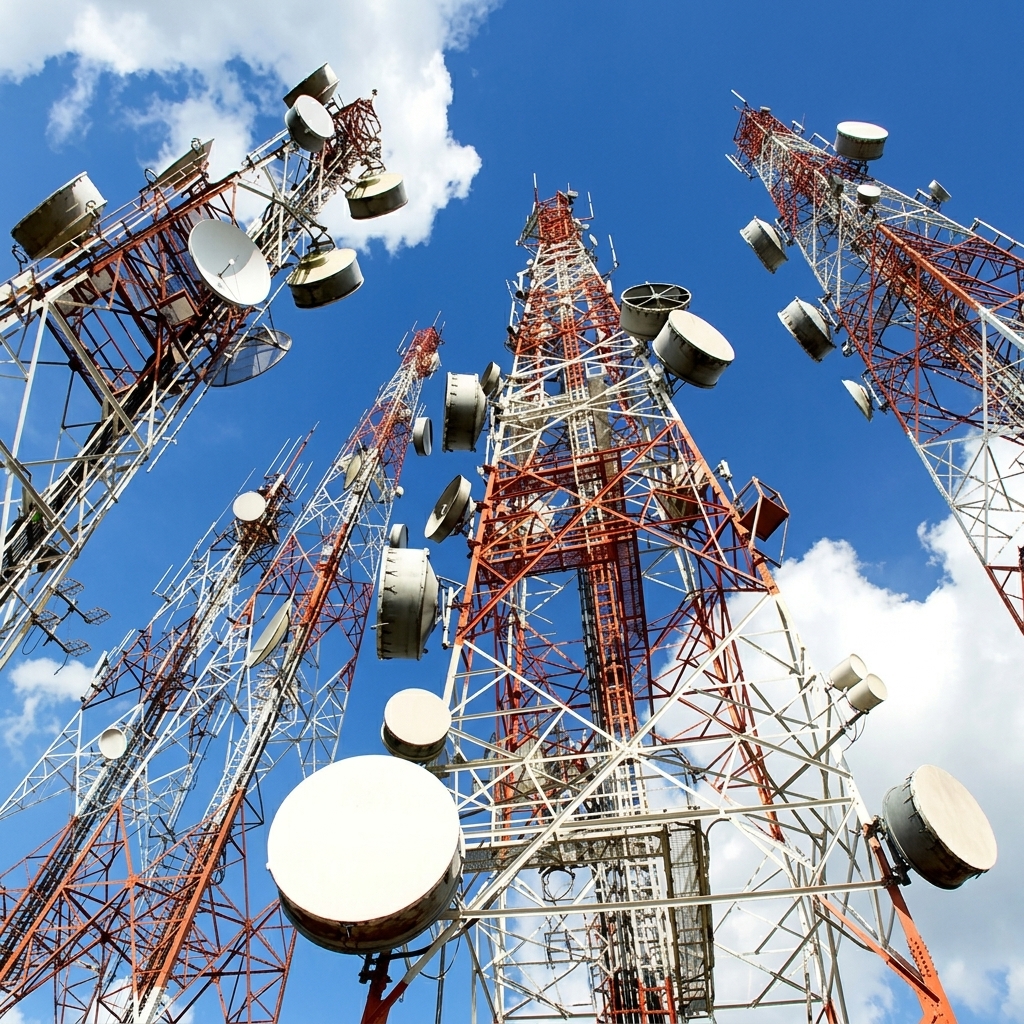
Fibre-optic networks carry large volumes of data between cities, network facilities, data centres and local access points. Inadequate inland or “middle-mile” connectivity can limit how effectively operators extend services beyond major metropolitan areas.
Electricity is another critical constraint. Telecommunications sites, data centres and network equipment require reliable power. Where grid electricity is unreliable, operators may have to rely on alternative power systems, increasing operating expenses.
Financing presents a further challenge because digital infrastructure requires substantial upfront investment and can take many years to generate returns.
According to the NCC’s forum communiqué, digital infrastructure assets typically have lifespans of 20 to 30 years, making long-term financing particularly important. Participants called on investors and development finance institutions to provide longer-tenour naira capital that better matches the lifespan of these assets.
Project BRIDGE: Nigeria’s Proposed 90,000-Kilometre Fibre Backbone
One of the major initiatives highlighted at the forum was Project BRIDGE, the Federal Government’s proposed 90,000-kilometre national fibre-optic backbone.
The initiative is intended to expand the fibre infrastructure needed to improve connectivity between major networks and local access points. The forum participants urged the government to accelerate the project as part of a wider response to Nigeria’s middle-mile connectivity challenges.
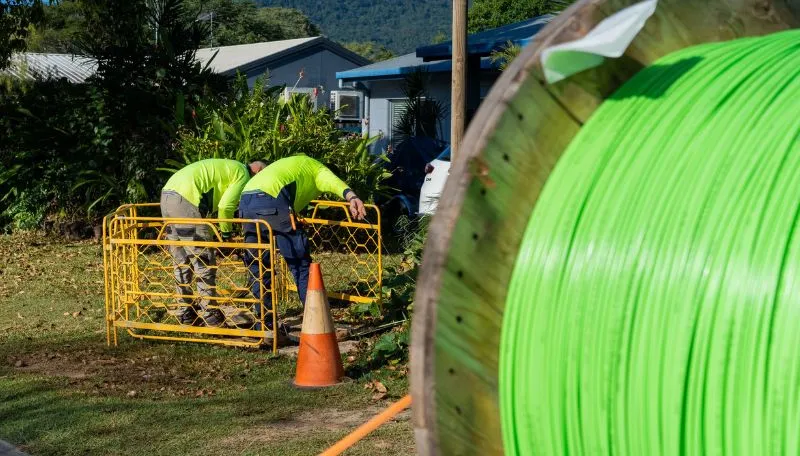
A stronger fibre backbone could help create the infrastructure needed for operators to extend broadband services, support data centres and deliver higher-capacity connections to more locations.
However, the proposed network should not be confused with a completed nationwide system. Its eventual impact will depend on implementation, investment, access arrangements and how effectively the backbone connects with local networks and end users.
The broader objective is to make it easier and more commercially viable to extend reliable connectivity beyond the areas that currently attract the greatest concentration of infrastructure investment.
States Urged to Reduce Right-of-Way Fees
The cost of deploying fibre is also influenced by state-level policies and approval procedures.
Telecommunications infrastructure providers often need permission to install cables, access roads and deploy equipment. Right-of-way fees, site permit charges and administrative delays can increase the cost and time required to build networks. The NCC’s forum participants urged state governments to harmonise and reduce these charges and shorten approval timelines.
According to the commission, 12 states now charge zero right-of-way fees, compared with seven in December 2024. The communiqué also reported that a pilot of the Nigeria Digital Connectivity Index across 12 states associated right-of-way reforms with fibre growth ranging from 22% to 95% in states implementing reforms.
The policy challenge is to create a more predictable environment for investment while ensuring that infrastructure deployment is coordinated with roadworks, public utilities and other development priorities.
Conclusion
Nigeria’s rising data consumption is evidence of an increasingly connected economy, but it also exposes a serious challenge. The country’s digital infrastructure must keep pace with the demands created by online commerce, cloud computing, artificial intelligence and everyday internet use.
The NCC’s warning is therefore both a concern and an opportunity. Without sufficient investment, network congestion, service disruptions and high connectivity costs could undermine the productivity gains that digital services promise. With better financing, stronger fibre infrastructure, more reliable power and coordinated government policies, Nigeria can build a more resilient foundation for its digital economy.
The next phase of Nigeria’s digital growth will depend not only on getting more people online but also on ensuring that the networks they rely on are fast, reliable, affordable and capable of supporting the businesses of the future.
Follow Amebopreneur for the latest on Nigeria’s tech ecosystem, startup funding opportunities, and the cross-border partnerships shaping Africa’s innovation future.
Related Posts

Political Dynamics and Global Realignment: Lessons for Nigerian CEOs
At the 2026 FNCCI CEO Luncheon, business leaders explored how political uncertainty, global realignment and economic reforms are shaping business resilience in Nigeria.

East Africa Foods Secures $40 Million to Power a Food Revolution Across Tanzania and Kenya
Tanzania’s East Africa Foods has raised approximately $40 million to expand its food supply-chain infrastructure, cut devastating post-harvest losses, and reach 100,000 smallholder farmers across East Africa.

Africa Is Building Toward the Next Trillion-Dollar Digital Economy as AfriTECH 6.0 Returns to Lagos
AfriTECH 6.0 returns to Lagos on November 13, 2026, bringing African tech leaders together to tackle the next $1 trillion digital economy opportunity.

World Bank Raises Africa’s 2026 Growth Forecast to 4.3%, Urges Investment in Artificial Intelligence
The World Bank has raised Africa’s 2026 growth forecast to 4.3% and is urging low-cost AI adoption to supercharge small-business productivity, agriculture, and education across the continent.
Nigeria’s Business Future: How Businesses Can Survive Uncertainty
As Nigeria approaches the 2027 election, discover how businesses can navigate uncertainty, manage rising costs, adopt AI wisely and prepare for economic and policy shifts.