

Nigeria’s Project BRIDGE (Fibre Expansion Initiative) Has now Crossed $900 Million in Funding From Global Institutions
Nigeria is now again at the heart of a high-stakes digital transformation tale, with Project BRIDGE surpassing an astonishing $900 million in investment. This ambitious fibre expansion represents a significant, foundational shift that has the potential to transform the country’s digital economy. With global institutions backing the rollout, the stakes are high, as are the expectations.
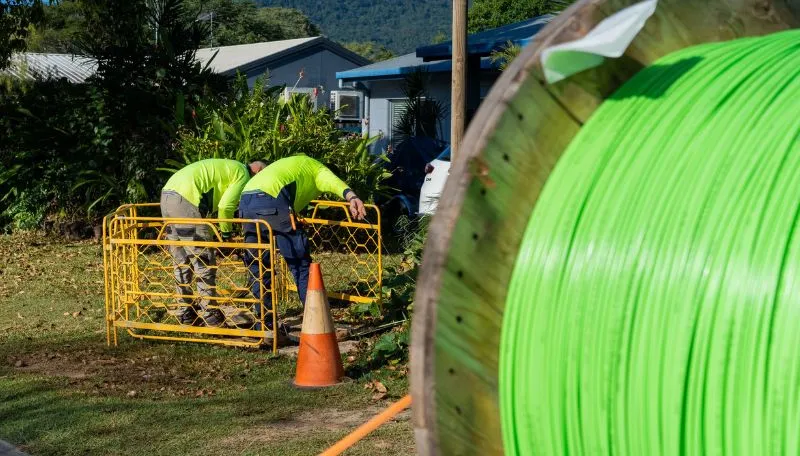
Project BRIDGE is Nigeria’s ambitious attempt to construct nationwide fibre-optic infrastructure, focusing on underprivileged and unconnected areas while reinforcing current urban networks.
The effort is closely aligned with the larger goals of the Federal Ministry of Communications, Innovation, and the Digital Economy, as well as the Nigerian Communications Commission‘s regulatory oversight, all of which have emphasised the urgent need to increase broadband penetration. Without it, ambitions for finance innovation, AI deployment, and SaaS scalability are severely limited.
The $900 Million Milestone, A Powerful Vote of Confidence
Crossing the $900 million financing mark is both an impressive feat and a serious responsibility. The funding inflow from global development finance institutions demonstrates substantial international support for Nigeria’s digital future. Investors are effectively betting that improved connectivity will unlock massive economic value across sectors.
However, this milestone adds a degree of strain. Large-scale funding frequently comes with stringent performance standards, timetables, and accountability systems. If execution fails owing to bureaucratic bottlenecks, right-of-way concerns, or uneven policy enforcement, the results could be dire. Delays or mismanagement could turn a potentially transformative accomplishment into a cautionary tale of wasted opportunities.
The value of fibre cannot be emphasised. Every modern digital service requires high-speed, low-latency communication. Nigeria’s thriving fintech sector, which includes globally recognised firms, is primarily reliant on a solid internet connection to conduct transactions in real-time.
Similarly, artificial intelligence systems require massive volumes of data flow and computing performance, both of which are impossible without a reliable broadband infrastructure. Fibre is the unseen motor that drives the entire digital ecosystem. Without it, growth slows, innovation stagnates, and global competitiveness declines.
Despite its hopeful outlook, the effort has some significant problems that must be addressed. One of the most recurring concerns is the high expense and complexity of right-of-way clearances in several states. Inconsistent policies and high costs have historically hindered fibre expansion, resulting in hindrances that pull back growth.
The Challenges
There is the issue of infrastructure security. Fibre cables are susceptible to vandalism, incidental damage during construction, and theft, all of which can disrupt services and raise maintenance expenses.
Furthermore, coordination across federal, state, and local governments remains a challenge, resulting in irregular implementation. Economic instability, currency changes, and inflation all worsen the situation. These issues can increase project costs and strain financing allocations, thereby affecting schedules and overall efficiency.
The Positive Outlook
Despite these challenges, the overall outlook remains hopeful. Nigeria’s young population, expanding technology environment, and increased demand for digital services all contribute to the country’s success. With the correct policy alignment, open governance, and strategic execution, Project BRIDGE has the potential to become one of the most significant infrastructure projects in the country’s history.
The project also resonates with worldwide trends that recognise digital inclusion and connection as fundamental human needs. Nigeria’s expansion of broadband access creates potential for education, healthcare, financial inclusion, and social mobility, in addition to infrastructural development.
Conclusion
Nigeria’s $900 million internet expansion under Project BRIDGE is a huge moment, full of both strong promise and considerable risk. It is a big move toward establishing the digital infrastructure needed for financial innovation, AI advancement, and tech improvement. The opportunity is huge, but so is the duty to perform.
Success will require rigorous execution, policy consistency, and a dedication to eliminating structural obstacles. If Nigeria gets this right, the results might be transformative, establishing the country as Africa’s top digital economy. If it falls short, the implications might stymie progress at a vital point.
Nigeria’s digital progress is literally dependent on the strength of the fibre beneath its feet.
EU and EBRD back Nigeria’s 90,000km fibre dream with €22 million grant major funding push
Related Posts

Political Dynamics, Global Realignment: What Tola Adeyemi Told CEOs at FNCCI-KPMG Luncheon Series 6
As Nigeria heads toward the 2027 election, KPMG’s Tola Adeyemi urges businesses to prepare for multiple outcomes, policy shifts and new opportunities.

Access Bank $500 Million Eurobond Repayment: An Essential Lesson in Financial Planning
Access Bank’s $500m Eurobond repayment offers a powerful lesson in liquidity planning, foreign-currency risk and smart financial management for Nigerian businesses.
Funding is Available, But Are Nigerian Small Businesses Ready for It?
Funding exists for Nigerian small businesses, but access remains a challenge. Discover what SMEs need to become funding-ready and turn capital into sustainable growth.
Meta, 3MTT, NCAIR & RAIN Partner to Accelerate AI Skills and Innovation in Nigeria
Meta, 3MTT and RAIN launch AI Academy Nigeria to equip developers with AI skills, build startups and turn Nigeria’s growing AI talent into global innovation.

Nomba and Synafare Commit ₦2 Billion to Solar Financing for 300 Nigerian SMEs
Nomba and Synafare are committing ₦2 billion to solar financing, helping 300 Nigerian SMEs cut energy costs, boost productivity and power their growth.