


National Economic Council (NEC) of Nigeria Approves 112 As The Unified National Emergency Number
A Unified Emergency Response
The Nigerian National Economic Council (NEC) has officially designated 112 as the unified, toll-free national emergency number, bringing disparate response systems together into a single, coordinated framework. This program, announced at the 157th NEC meeting in late April/early May 2026 and chaired by Vice President Kashim Shettima, aims to decrease bureaucratic delays in responding to accidents, fires, robberies, and medical emergencies.
Nigeria is welcoming this new era of public safety with the implementation of 112 as a unified national emergency number, a significant step that demonstrates the country’s commitment to digitised governance, rapid response systems, and contemporary civic infrastructure.
This initiative aligns Nigeria with global best practices already observed in places such as the European Union, where 112 is used as a universal emergency contact number, and signifies a paradigm shift in how residents interact with emergency services.
This strategy is fundamentally about creating a responsive, intelligent, and integrated safety ecosystem in one of Africa’s largest and most complicated countries, rather than just a number.
The Vision Behind 112
The adoption of 112 as a unified emergency number is based on a simple but strong concept: in times of catastrophe, simplicity saves lives. Instead of dialling various emergency lines for police, fire, or medical aid, Nigerians will now have a single, easy-to-remember number that connects them to help right away.
This program is part of a bigger strategic push toward smart governance, which uses digital infrastructure to improve efficiency, accountability, and accessibility. It is a forward-thinking vision for integrating telecommunications, police enforcement, and emergency medical systems into a unified, coordinated network.
According to a policy insider, A unified emergency number removes confusion, reduces response time, and creates a centralised command structure that is critical in life-threatening situations.
The 112 system is intended to serve as a centralised emergency response hub, combining different agencies into a single coordinated framework.
When a citizen contacts 112, the call is routed through telecom providers to a control centre staffed by skilled operators and using advanced dispatch technologies.
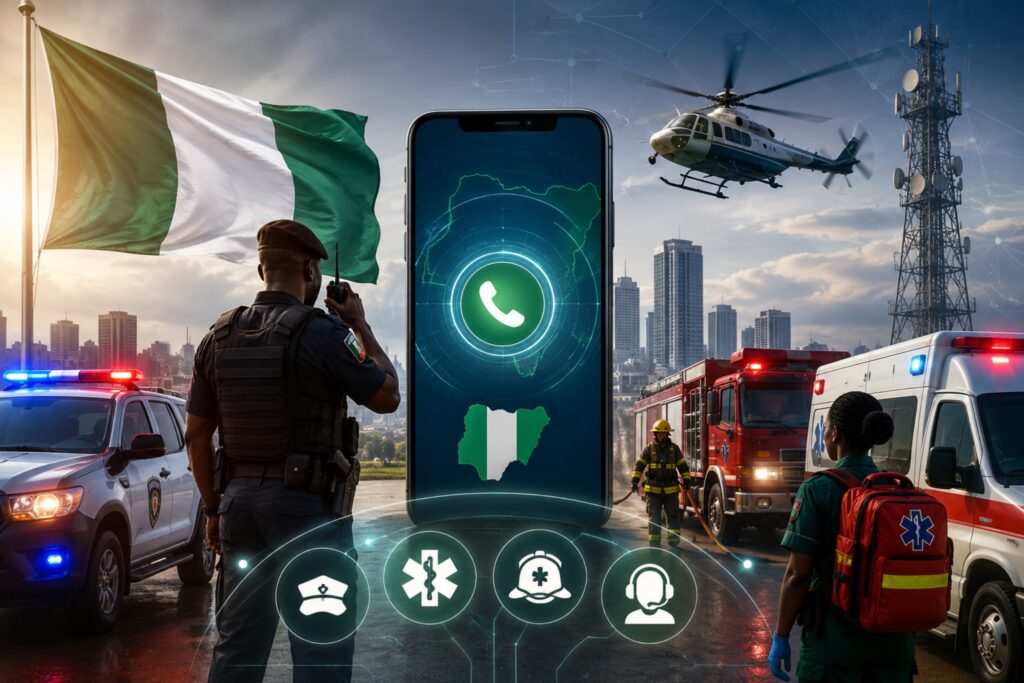
From there, requests are triaged and routed to the relevant agency, whether it’s the police, fire department, or medical personnel. The integration of telecom infrastructure guarantees that calls may be made even in adverse conditions, with future improvements likely to include position tracking, linguistic support, and real-time data exchange.
This level of integration represents a substantial departure from Nigeria’s previously fragmented emergency response system, where delays, confusion, and a lack of coordination have frequently resulted in tragic outcomes.
A Shift Toward Digitized Public Safety
The implementation of 112 is a huge breakthrough with far-reaching repercussions for Nigeria’s public safety infrastructure. It symbolises a shift away from reactive, disconnected systems and toward a proactive, technology-driven model that values speed, coordination, and efficiency.
In a country of over 200 million people, the ability to simplify emergency communication is critical. The action reinforces Nigeria’s position as Africa’s digital leader and demonstrates the country’s commitment to developing a centred, citizen-focused government structure.
The incorporation of telecom networks into emergency response also enables sophisticated capabilities such as caller geolocation, data analytics, and predictive emergency management. These improvements have the potential to save thousands of lives each year by significantly improving response times and resource allocation.
The Promising Benefits, Challenges And Risks
The rollout of 112 brings with it a wave of positive, high-impact benefits that could further strengthen public trust in government services. By simplifying access to emergency assistance, the system enhances inclusivity, ensuring that even vulnerable populations can quickly reach help when needed.
It also introduces a level of operational efficiency that has long been missing. With centralised coordination, agencies can respond more quickly and effectively, reducing duplication of efforts and minimising delays. Perhaps most importantly, the system has the potential to rebuild public confidence in emergency services. A reliable, responsive system can transform perceptions, turning scepticism into trust and frustration into reassurance.
Despite its promise, 112 implementation presents significant hurdles and potential downsides. Nigeria’s infrastructure shortcomings, such as irregular network coverage and power supply concerns, have the potential to compromise the system’s effectiveness, particularly in rural areas.
There is also the possibility of system overload, especially in the early stages of adoption. Without proper capacity planning and public education, the system may become overloaded by non-emergency calls, prank dialling, or misuse.
Another important consideration is funding and maintenance. Maintaining a high-quality emergency response system necessitates ongoing investments in technology, training, and manpower. Without this, the system may become inefficient or unreliable over time. Cybersecurity adds an extra element of complication. As the system grows more digitised, it becomes more exposed to cyber attacks that might interrupt operations or compromise important data.
Conclusion
Nigeria’s adoption of 112 as a unified emergency number is a big, daring, innovative, and potentially life-saving action that represents a huge step forward in modern administration and digital transformation. It promises speedier reaction times, better coordination, and increased public trust, establishing Nigeria as a forward-thinking leader in public safety innovation.
At the same time, the road ahead is riddled with difficulties that necessitate careful planning, consistent investment, and steadfast dedication. The 112 system’s effectiveness will ultimately be determined by its execution, public engagement, and flexibility to adjust to changing circumstances.
Yes, this effort has the potential to become a strong symbol of progress, showcasing how technology can be used to save lives and enhance the link between citizens and the state, but if mishandled, it risks becoming another grandiose notion that fails to deliver on its transformative potential.
The true tale of Nigeria’s 112 emergency system lies somewhere between these two outcomes, unfolding in real time and shaping the future of public safety for years to come.
Related Posts

Nigeria’s Startup Ecosystem Just Had Its Strongest Month In Years; Raises $113.7 Million in June 2026
A record-breaking June saw Nigerian startups secure $113.7M in funding. Explore the standout deals, emerging trends, and what’s driving investor confidence.

15 African AI Startups Graduate from Google for Startups Accelerator Africa 2026
Google graduates 15 African AI startups from its 2026 Accelerator, spotlighting innovators transforming fintech, agriculture, healthcare, mobility and more.
Lebara Nigeria Partners With India’s ‘Forever 7 Entertainment’ Launches ‘LebaraPlay’, Africa’s First Telecom-Owned Micro-Drama Platform
Lebara Nigeria shakes up Africa’s digital entertainment space with LebaraPlay the continent’s first telecom-owned micro-drama platform, blending Nollywood and Bollywood storytelling.

How French Tech Lagos 2.0 Is Quietly Rewriting the Rules of African Innovation
France and Nigeria are building a powerful tech bridge. Here’s how French Tech Lagos 2.0 could reshape startup funding, AI, and innovation across Africa.

Paystack’s ‘SME-Focused Growth Initiatives’ Roll Out $2,900 Support Package For Nigerian SMEs
Paystack launches a $2,900 SME support package, offering digital tools, grants, logistics, bookkeeping, and growth resources to help Nigerian businesses scale faster.